
WINERY OPERATIONS · 7 MIN READ
Winery Production Equipment: How to Plan a Connected Facility
Understand the main equipment families and the questions that determine a reliable, scalable winery production layout.
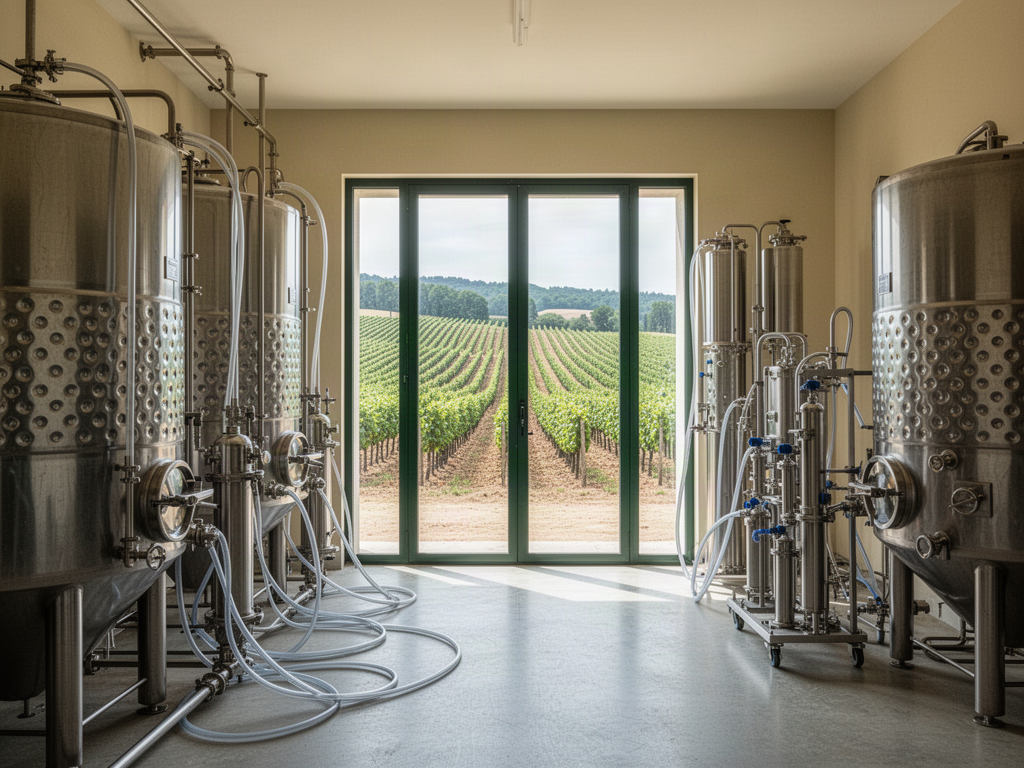
A new winery is best considered as an interconnected production facility, not a shopping list of tanks and machines. Harvest season, fruit handling and cleaning requirements make the interfaces between equipment particularly important.
Start with fruit, wine style and peak throughput
Establish expected grape tonnage by variety, harvest window, peak daily intake and any plans for contract winemaking. Separate annual volume from peak-day processing; a winery may require significant short-duration capacity.
Determine intended wine styles, fermentation methods, tank turnover, desired temperature control, barrel ageing and bottling schedule. These decisions influence tank geometry, material, available floor area and refrigeration loads.
Build a process flow that starts at grape reception and finishes with a packaged, traceable product. Note where transfer pumps, hoses, valves and sample points are required.
Design around the key equipment families
Depending on the winemaking programme, a facility may require receiving hoppers, sorting systems, destemmers, crushers, presses, pumps and must handling equipment. The requirement for red and white wine processing can differ significantly.
Fermentation and storage tanks should be sized for usable working volume and cleaning, rather than just a nominal capacity. Cooling jackets, temperature sensors, fittings, access platforms and hygienic drainability deserve explicit attention.
Filtration, stabilisation, blending, barrel handling, bottling and packaging are commonly underestimated in early budgets. Plan space and connections for those operations even where some services will be outsourced initially.
Utilities and sanitation govern reliability
Refrigeration, power, water supply, hot water, wastewater capacity and food-contact cleaning systems have to match the production plan. Confirm load calculations with local specialists rather than adopting generic consumption figures.
Specify material compatibility, cleanability, appropriate sanitary fittings and documentation that can support local food safety obligations. Ask suppliers for drawings, electrical requirements, spare parts and service documentation before approval.
Design safe traffic routes between harvest deliveries, cellar operations and dispatch. Mobile equipment, forklifts and hoses can create hazards when layouts are overcompressed.
Buy for the first operating years
A flexible winery can be phased. Identify infrastructure and core process capacity needed at launch, then plan for future fermentation vessels or bottling equipment without disrupting the first installation.
Compare total delivered scope, not just base equipment prices. Import terms, accessories, freight, customs, electrical compatibility, local installation and support are material elements of a real procurement decision.
For VINEKORVA enquiries, prepare a short technical brief identifying destination, planned production, facility stage, preferred process arrangement and equipment categories.
What to include in your initial project brief
- Country, site status and local compliance pathway
- Grape tonnes per year and peak intake per day
- Wine styles and anticipated tank capacities
- Cooling, water, drainage, electrical and packaging assumptions
- Drawings, technical documentation, delivery and installation responsibilities
Educational guidance only. This article does not provide legal, engineering, financial or licensing advice. Confirm local requirements with licensed, qualified professionals before purchasing or operating equipment. Product availability, supplier rights and technical specifications require individual verification.