
PROCESS AUTOMATION · 7 MIN READ
Distillery Automation: Choosing Controls That Support Consistency
Where sensors, logging and process control can support operators—and where safety-critical decisions still need independent engineering.
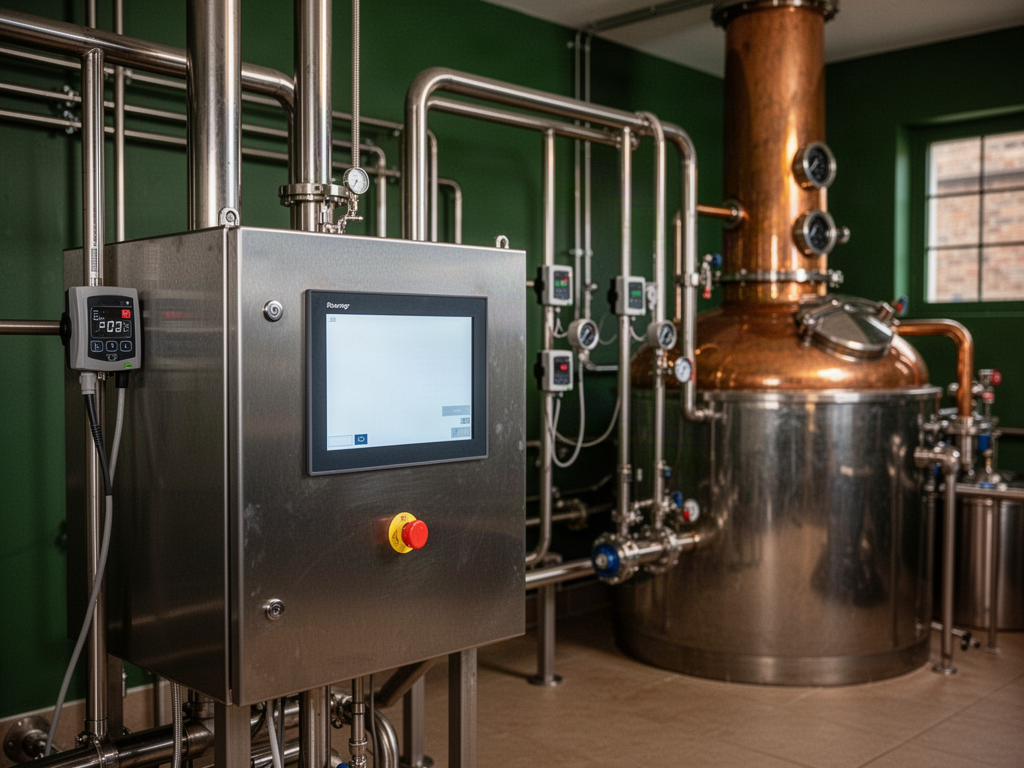
The value of automation is not the number of screens on a control panel. It lies in a documented process, reliable measurements, appropriate operator control and safe response to abnormal conditions.
Choose the problems automation should solve
Identify repeated process variables that affect batch consistency, utilities, recordkeeping and operator workload. Prioritise measurable business needs rather than purchasing a comprehensive control package on appearance alone.
Map the process stages and each operator intervention. Mark which functions are monitoring only, which can be controlled and which involve independent protective systems.
A well-designed system preserves operator understanding and manual operating procedures, rather than making essential activities impossible when software or communications fail.
Develop an instrument schedule
Consider temperature, pressure, flow, level, density, conductivity and other measurements only where they serve the process. Specify measurement ranges, materials compatibility, cleaning methods, calibration access and required accuracy.
Record each instrument's location, electrical classification, data interface, maintenance needs and calibration ownership. Sensors near alcohol vapour or flammable atmospheres require appropriately engineered equipment selection.
Define which records the business actually needs: batch number, time stamps, process conditions, alarms, operator acknowledgements and change history.
Separate process controls from safety systems
A touchscreen or cloud dashboard is not a substitute for engineered overpressure protection, appropriate ventilation, emergency stops or independent safety controls.
A qualified local process and controls engineer should assess applicable hazardous-area classification, protective interlocks, electrical standards and functional safety obligations. Avoid publishing generic set points as safety specifications.
Require a formal commissioning plan with alarm tests, sensor verification, operator training and documented acceptance criteria.
Plan for support and long-term ownership
Confirm data ownership, access rights, offline operation, backups, software licensing, cybersecurity and parts availability before choosing a controller or monitoring platform.
Ask suppliers for electrical drawings, I/O lists, operating manuals, service access and integration protocols. The controls should be maintainable without dependence on an undocumented proprietary arrangement.
VINEKORVA can help coordinate equipment requirements and supplier documentation but does not undertake on-site electrical work or commissioning.
What to include in your initial project brief
- Process flow and proposed automation objectives
- Instrument and I/O list with measurement ranges
- Local electrical and hazardous-area engineering review
- Data logging, alarms, backup and cybersecurity requirements
- Commissioning, training, spares and support responsibilities
Educational guidance only. This article does not provide legal, engineering, financial or licensing advice. Confirm local requirements with licensed, qualified professionals before purchasing or operating equipment. Product availability, supplier rights and technical specifications require individual verification.