
BRAND DEVELOPMENT · 8 MIN READ
Private-Label Wine and Spirits: From Brand Idea to Production Partner
A grounded guide to commissioning a beverage brand through qualified producers, packaging partners and clearly defined manufacturing agreements.
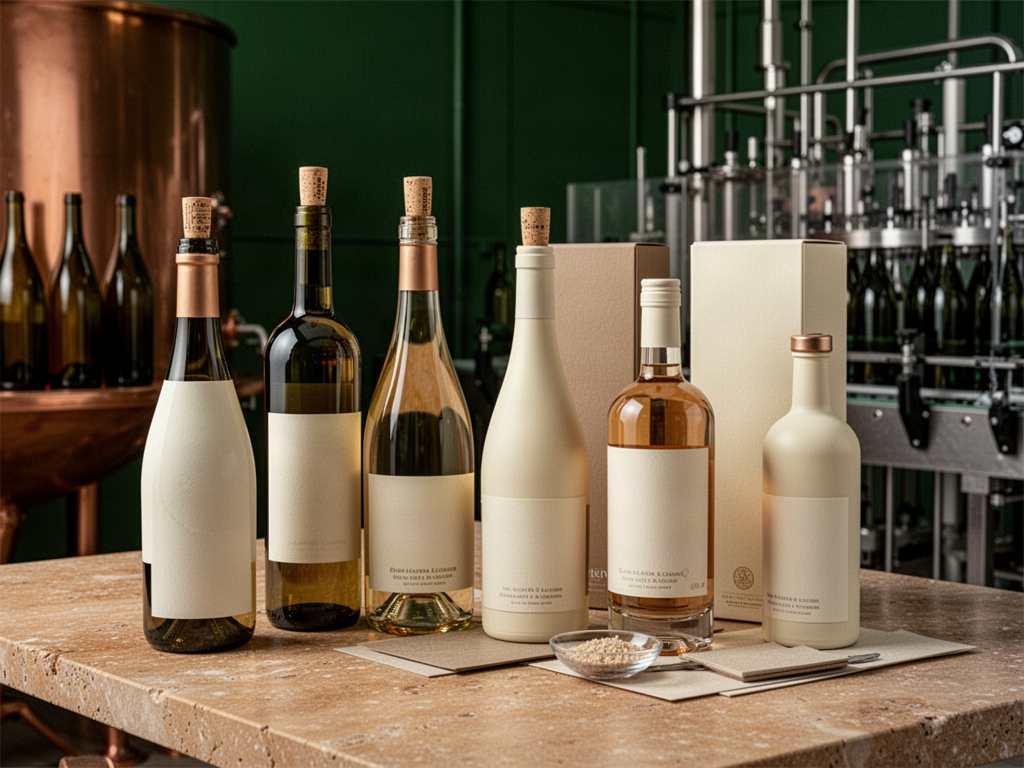
Private-label production can allow a new beverage business to focus on its brand and market while an established producer handles some or all production. It does not remove the need for commercial diligence, quality controls and lawful distribution.
Choose what you want to own
Clarify whether you are commissioning an existing liquid with your label, developing a proprietary formulation, buying bulk wine or spirit for licensed bottling, or using a contract producer from development through packaging.
Each structure affects recipe ownership, product differentiation, minimum quantities, lead times and intellectual property rights. Define your intended markets and alcohol category early so that permissible product descriptions and labelling can be assessed.
A compelling brand narrative should never imply a production origin, ageing history, distillery ownership or appellation that cannot be documented.
Prepare a serious producer brief
A useful brief states the beverage style, flavour profile, indicative ABV where relevant, target bottle format, packaging direction, anticipated batch quantities, destination countries and intended launch timeline.
Ask potential manufacturers what is actually produced in-house and what is subcontracted. Clarify sampling and approval stages, product specifications, quality documents, origin records and available packaging components.
Technical capabilities and supplier willingness to work under your brand must be independently confirmed. No particular producer relationship should be represented as agreed until both parties have accepted it.
Contract terms that deserve attention
Define ownership of formulas and artwork, rights to reorder, ingredient or liquid substitutions, responsibility for nonconforming batches, product recalls, insurance and confidentiality.
Price comparisons must use a consistent basis: ex-works versus delivered terms, liquid versus filled and labelled units, taxes, duty, storage, quality testing and freight. Ask for landed-cost structures from appropriate professionals; avoid assuming duties are included.
Local lawyers and licensing advisers should confirm contractual and regulatory obligations in both production and destination markets, including import, distribution and age-restricted marketing rules.
Design the route to market before the first batch
Work backwards from the intended distribution channels and realistic sell-through. Packaging quality, shelf format, case size, recycling requirements and storage are operational choices, not merely aesthetic ones.
For founders who later decide to establish their own production capability, VINEKORVA can discuss relevant equipment categories such as processing, blending, filtration, filling and packaging systems.
The Guild can provide professional information and potential introductions as its network develops; it is not itself offering alcoholic products for sale or guaranteeing introductions.
What to include in your initial project brief
- Brand-owner entity and intended destination markets
- Beverage category, origin and truthful product description
- Production route: contract manufacturing, bulk supply or licensed bottling
- Packaging format, label review and indicative order size
- Sample approvals, QA responsibilities, agreements and commercial logistics
Educational guidance only. This article does not provide legal, engineering, financial or licensing advice. Confirm local requirements with licensed, qualified professionals before purchasing or operating equipment. Product availability, supplier rights and technical specifications require individual verification.