
DISTILLERY DEVELOPMENT · 8 MIN READ
How to Start a Boutique Distillery: From Concept to Production Brief
A practical roadmap for establishing a small commercial distillery, defining production requirements and preparing an equipment procurement brief.
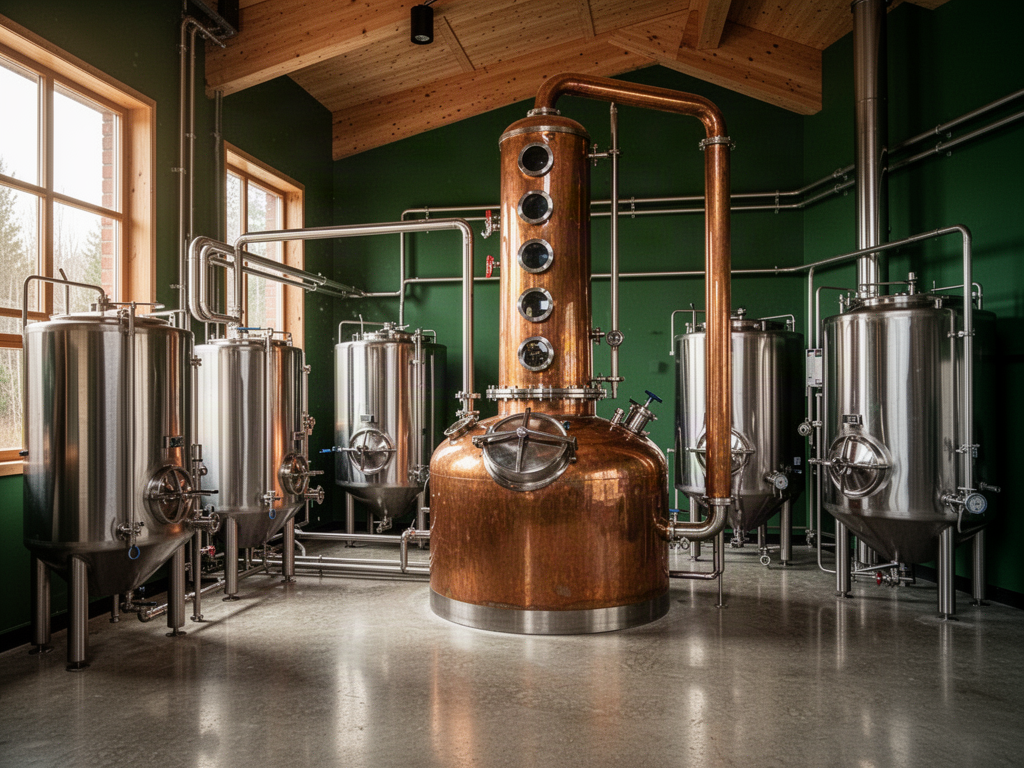
A distinctive label and a promising spirit recipe are only part of a working distillery. A viable facility also needs a lawful operating model, consistent production processes, suitable utilities, safe equipment and a plan for the finished product.
Begin with the operating model, not the still
Decide whether the business will distil on its own premises, use a licensed contract distiller, blend or bottle purchased spirit, or develop a mixed model. These routes have very different capital requirements and facility obligations.
Define the initial spirit styles, annual and batch output targets, intended markets, packaging sizes and expected sales channels. For aged spirits, distinguish spirit production from maturation inventory: revenue may be delayed for years while stock and storage costs accumulate.
Before committing to a building or machinery, obtain local professional advice on alcohol manufacturing permissions, excise, fire safety, zoning, hazardous substances, wastewater and food or beverage production rules. Requirements vary by country and sometimes by state or municipality.
Map the process and the building
Draw a process from raw material receipt through mashing or preparation, fermentation, distillation, spirit collection, storage, blending and bottling. Record what flows between each operation, required cleaning access and the movements of staff, ingredients and finished goods.
A realistic layout separates incompatible activities, allows safe service access, provides drainage and wash-down provisions and considers ventilation, fire protection and the handling of flammable alcohol vapour. Equipment placement should be assessed by qualified local engineers and regulators.
Do not infer that a still photographed in a beautiful room is suitable for a particular site. Commercial stills, boilers, cooling systems and controls must be selected around applicable technical and safety standards.
Specify equipment as a complete system
The equipment brief may include raw-material handling, mash preparation, fermentation tanks, still configuration, condensers, cooling equipment, process water, instrumentation, hygienic transfer, cleaning systems, blending tanks, filtration and packaging interfaces.
For each major item, request a defined working capacity, materials of construction, utility demand, controls, cleaning provisions, conformity documents, commissioning requirements and after-sales spares arrangements. Ask suppliers to state exactly which components are included or excluded.
Size bottlenecks together: a large still without enough fermentation, cooling or holding capacity does not deliver its nominal throughput. Use a qualified process designer to reconcile throughput, cleaning cycles and production schedules.
Plan for quality, finance and local delivery
Develop written quality control, batch traceability, sampling and records before launch. Treat product consistency and legal labelling as system requirements rather than last-minute marketing details.
Build a business case with realistic staffing, energy, water, waste, packaging, insurance, local approvals and equipment maintenance. Include contingency and working capital; do not rely on assumed premium margins or projected cask appreciation.
VINEKORVA's role is wholesale and project equipment supply. Local licensed consultants, contractors and service providers remain responsible for site assessment, statutory approvals, installation and commissioning.
What to include in your initial project brief
- Country and proposed manufacturing/operating licence route
- Spirit styles, recipes/process owner and production targets
- Facility dimensions, utilities, ventilation and water/waste assumptions
- Fermentation, distillation, storage and bottling scope
- Required conformity documentation, site contractor and project timeframe
Educational guidance only. This article does not provide legal, engineering, financial or licensing advice. Confirm local requirements with licensed, qualified professionals before purchasing or operating equipment. Product availability, supplier rights and technical specifications require individual verification.