Five Rings
Site → Perimeter → Shell → Life Systems → Recovery
 Request Project Review
Building Resilience · site, shell, life systems and recovery
Building resilience means understanding how the property can fail, interrupting the most important pathways first, preserving essential functions where practical and making recovery easier when protection is exceeded.
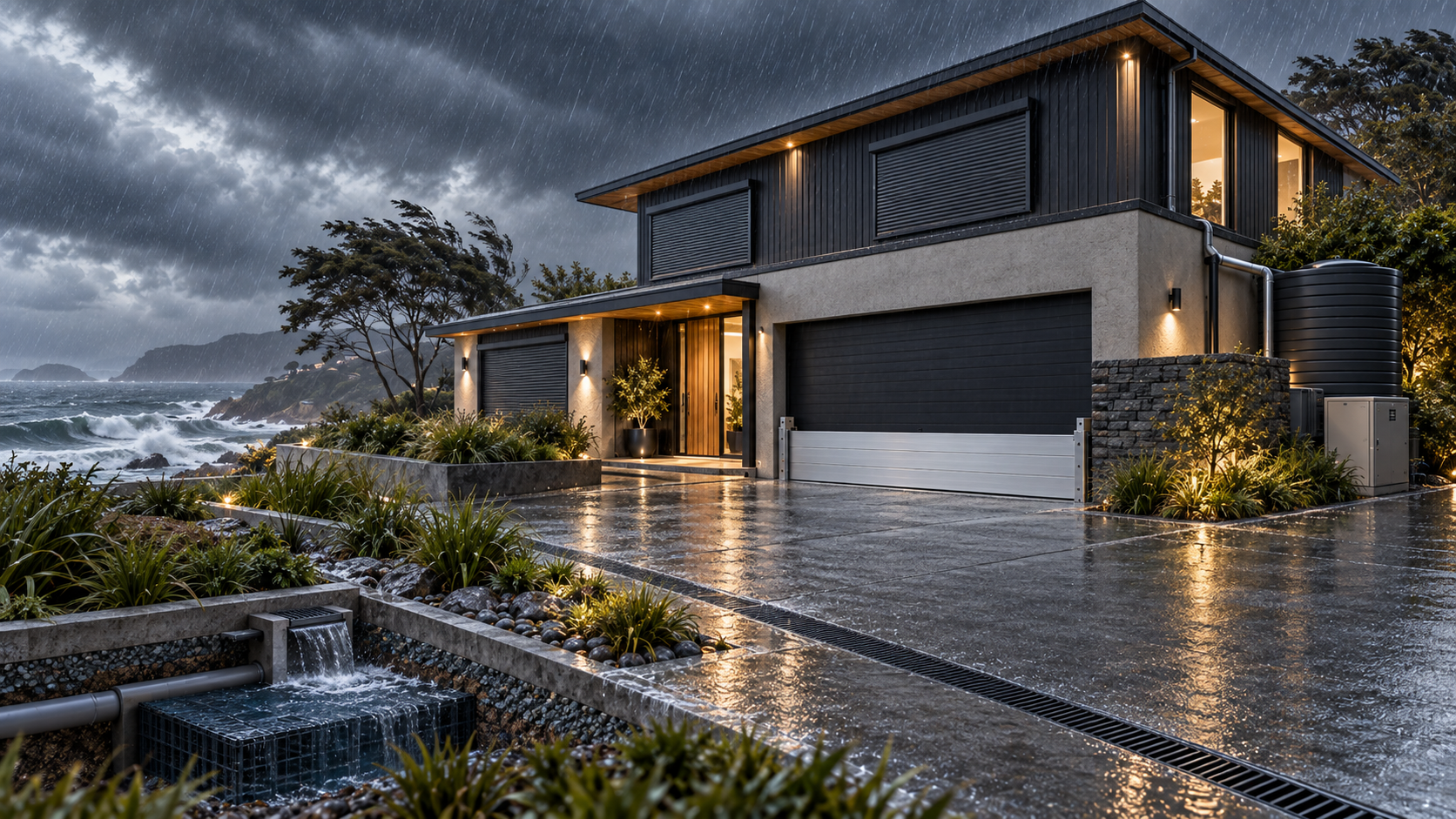
Whole-property method
Weather resilience is strongest when the site, building shell, essential systems and recovery pathway are considered together.
Site → Perimeter → Shell → Life Systems → Recovery
What fails first, what happens next, and where can the chain be interrupted?
Protect the structure, preserve essential use, shorten the recovery path.
Compare everyday value as well as hazard-day value.
Stress-test shelter, water, sanitation, food, communications and temperature.
Record evidence, limits, maintenance and the next useful intervention.
Protection pathways
Set levels, orientation, drainage, openings, service locations and continuity requirements before finishes are fixed.
Start with evidence, maintenance and the highest-consequence weak links before major replacement.
Define essential functions, reduce loads and then size future backup, transfer and islanding pathways.
Separate potable and utility-water needs, storage, pressure, pump power, isolation and safe use.
Keep low-power network equipment, charging and critical property information available during disruption.
Stress-test shelter, water, sanitation, food preservation, lighting, communications and indoor temperature.
Open pathwayChoose details, access and records that make drying, repair and safe isolation easier after an event.
Apply the same failure-pathway logic to resorts, schools, councils, commercial buildings and critical facilities.
Open pathwayRange development
Coming Soon means the category belongs in the Weather Protection programme, but the final supplier, model, technical evidence and project limits are still being verified before Apollo publishes a product specification.
Tank, flexible storage and modular storage pathways for residential, commercial and remote projects.
Water and flood-pump pathways with explicit power, starting-load and manual-access assumptions.
Battery, solar-plus-storage and transfer/islanding pathways will remain on hold until electrical compliance, freight, warranty and service models are verified.
Low-load backup and property-information planning rather than specialist radio products by default.
Wind, water, fire, heat and infrastructure interruption should be mapped against the actual site. A resilient new build can set levels, orientation, access, critical service locations and maintenance routes before those decisions become expensive to change.
Maintenance and low-cost weak-link removal come first. Medium budgets should finish one or two high-consequence pathways well. Major capital work should change the architecture of risk rather than merely add premium finishes or more equipment.
One room or small area can be easier to keep powered, shaded, cooled, warmed or filtered during disruption. That can reduce the backup-system size needed and give occupants a practical continuity mode without trying to make the whole building autonomous.
A tank is not a complete water strategy if the pump cannot operate during an outage. Potable and non-potable uses should be separated, with local plumbing, treatment and backflow requirements confirmed before connection.
Photographs of hidden work, accessible shutoffs, labelled services, raised vulnerable equipment, inspectable assemblies and records of installed systems can reduce uncertainty and repair time after severe weather.
Apollo method
Map the hazard and building interfaces. Prioritise where failure has the greatest consequence. Verify the exact product evidence and local design requirements. Integrate structure, drainage, power, access and recovery. Maintain the system so the protection remains real rather than historical.
Technical evidence standard
The planning framework helps identify what to protect and which questions to ask. Actual structural, flood, electrical, wildfire, drainage and product-performance decisions remain tied to current local requirements, exact supplier documentation and qualified professional input where required.
Apollo NZ Global · International project supply
Send the location, plans, photos, opening dimensions and the weather risks you are trying to manage. If a product family is still marked Coming Soon, we can also use the project brief to guide sourcing and technical verification.