Apollo NZ GlobalStart Smart Quote

Apollo Pickleball · installation planning

Subfloor preparation for pickleball flooring starts with a stable, clean and correctly prepared concrete base.

Existing concrete should be inspected, repaired, mechanically prepared and moisture-checked before a pickleball flooring system is installed. The flooring follows the quality of the base beneath it, so cracks, uneven areas, contaminants, excess moisture and drainage problems should be addressed before the finished sports surface is laid.

Inspect + testRepair + levelMechanical grindingMoisture + drainage checks
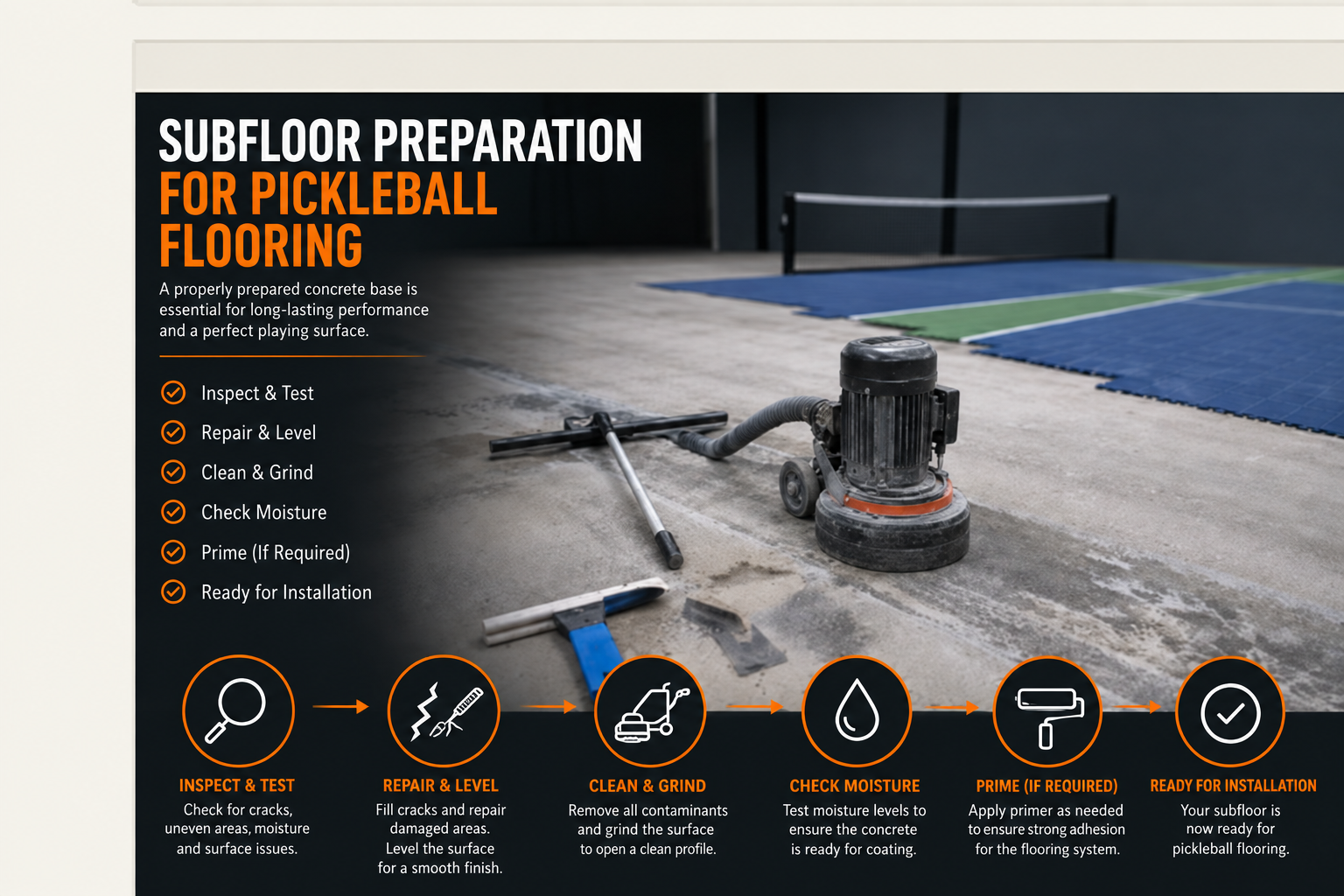
Apollo NZ Sports subfloor preparation guide for pickleball flooring showing concrete inspection, repair, grinding, moisture testing and priming

Technical overview

Existing concrete preparation sequence

The sequence below is taken from Apollo's current pickleball subfloor preparation guide. The exact preparation method, primer, moisture treatment and adhesive system still depend on the selected flooring system and actual slab condition.

0101 · Inspect the existing base
Structure + conditionCheck cracks, movement, loose concrete, uneven areas, moisture issues, old coatings and surface contamination. The slab should be structurally stable before flooring work begins.
0202 · Check surface flatness
Smooth + levelIdentify high spots, low spots, previous repairs, waves and uneven joins. Grind high areas and use suitable levelling compounds where required.
0303 · Repair cracks + damage
Repair before coveringRepair minor static cracks with suitable compounds. Expansion joints should be treated correctly rather than simply covered, and loose or deteriorated concrete should be removed and repaired.
0404 · Remove contaminants
Clean concreteRemove dust, oil, grease, paint, old adhesives, sealers, silicone contamination and debris before installation.
0505 · Mechanical grinding
Diamond grinding recommendedMechanical grinding helps remove weak laitance and contaminants and improves the prepared surface for bonding. Vacuum thoroughly after grinding.
0606 · Moisture testing
Test before installationExcess moisture can contribute to adhesive failure, bubbling and flooring separation. Moisture barriers or sealers may be required where readings are too high.
0707 · Outdoor drainage
No standing waterOutdoor slabs should drain correctly without ponding. Minor falls are generally recommended for outdoor pickleball courts.
0808 · Primer / sealer
System-specificA primer or moisture sealer may be required depending on the flooring system and slab condition. Follow the selected flooring manufacturer's installation specification.
0909 · Final cleaning
Dry + dust-freeVacuum the full slab and confirm the surface is dry, clean and free of debris immediately before installation.

This guide is for project planning and does not replace slab assessment, flooring-manufacturer instructions or site-specific installation advice. Final substrate preparation, moisture treatment, drainage, primers, adhesives and joint treatment are confirmed for the selected system and site conditions.

Pickleball subfloor preparation process diagram

Preparation sequence

The finished court is only as reliable as the base beneath it.

For bonded and semi-permanent sports-flooring systems, slab stability, flatness, cleanliness, moisture and drainage should be checked as one preparation package rather than as separate afterthoughts.

Project fit

Key checks before the sports surface is installed.

Structural condition first

Flooring should not be used to hide movement, loose concrete, failed repairs or an unstable base. Repair the slab before specifying the finished surface.

Expansion joints need correct treatment

Existing expansion joints should be identified and handled correctly for the selected flooring system rather than simply bridged over without review.

Moisture can undermine adhesion

Complete moisture testing before installation and confirm whether a moisture-control layer or sealer is required for the selected adhesive and flooring system.

Outdoor drainage matters

A pickleball surface does not correct a slab that ponds. Falls, drainage paths and low points should be reviewed before the court surface is installed.

Portable and permanent systems differ

Portable systems may use loose-lay or perimeter-fixing methods, while permanent installations commonly use full adhesive bonding. The preparation standard should match the selected installation method.

Final clean means installation-ready

The prepared slab should be stable, level, mechanically prepared where required, dry, dust-free and ready for the exact adhesive or flooring system being used.

Common applications
Existing concrete pickleball courtsTennis-to-pickleball conversionsIndoor sports hallsClubsSchoolsCommercial venuesCommunity facilitiesOutdoor hard courts

Need the right configuration?

Send us your dimensions, site details or intended use.

Start Smart Quote