
Apollo NZ GlobalRequest Project Review

Priority life-safety systems

Storm safe rooms and hurricane shelters for homes, facilities and community projects.

Apollo is developing a specification-led shelter pathway for severe-wind regions. The starting point is not a steel room or a marketing wind speed: it is the required shelter classification, hazard, occupant load, site, structural anchorage and jurisdiction. In the United States, ICC 500 establishes storm-shelter requirements, while projects described as FEMA safe rooms also need to follow the applicable FEMA P-361 criteria.

ICC 500 pathwayResidential → facility → communityHurricane + severe-wind project review
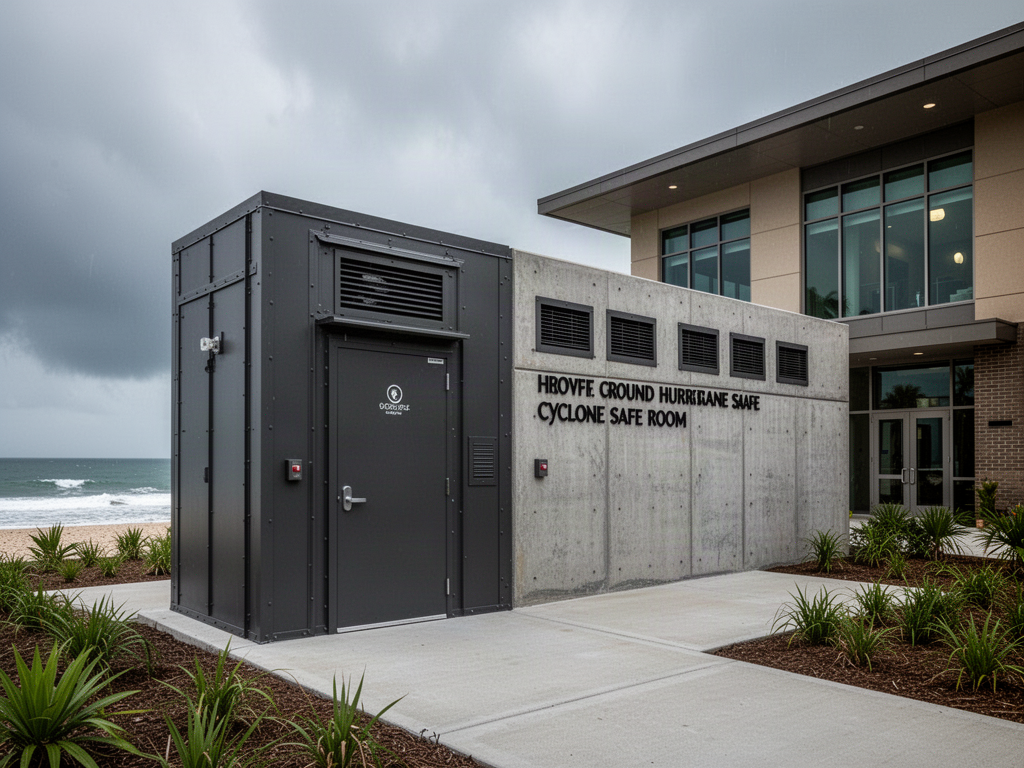
Purpose-built above-ground hurricane and cyclone storm shelter integrated beside a modern civic building
Storm shelters are life-safety systems · structure, anchorage, doors, ventilation, egress, accessibility and siting must work together.

Protection system · direct answers

What project teams need to know about Storm Safe Rooms & Hurricane Shelters.

Use this page for early system selection; final performance follows the exact tested, listed or engineered configuration and the actual project.
01

What is Storm Safe Rooms & Hurricane Shelters?

Apollo is developing a specification-led shelter pathway for severe-wind regions. The starting point is not a steel room or a marketing wind speed: it is the required shelter classification, hazard, occupant load, site, structural anchorage and jurisdiction. In the United States, ICC 500 establishes storm-shelter requirements, while projects described as FEMA safe rooms also need to follow the applicable FEMA P-361 criteria.

02

What project information should Apollo receive first?

Send the project location, building type, drawings or clear photographs, relevant dimensions and structural information, and any known wind, design-pressure, impact, flood, shelter, access or local-code requirements that apply to this system.

03

Can this system be specified from website information alone?

No. Site hazard, dimensions, loads, support and anchorage, exact product configuration, installation method, applicable technical evidence and local approvals can all change the final specification.

04

Does Apollo install this protection system?

Apollo is supply-only. Final engineering, fixings, installation, approvals and local code compliance remain with the appropriate manufacturer, approved specialist or client-side project team unless expressly included in the written scope.

05

Can Apollo review this system for international projects?

Yes, where the product and project can be supported. Destination hazard, climate, freight, documentation, local engineering, certification and installation responsibilities are reviewed before supply.

Whole-Property Storm ProtectionMap the shell, structure, refuge, critical systems and water pathway before choosing products.
  • Openings + glazing
  • Roof + load path
  • Safe rooms + shelters
  • Rooftop plant
  • Critical power
  • Solar mounting
  • Flood + surge
01Terminology matters

A storm shelter and a FEMA safe room are not interchangeable marketing terms.

ICC 500 provides minimum requirements for storm-shelter design and construction. FEMA P-361 adds criteria used for FEMA safe rooms. FEMA does not certify manufacturers or approve individual shelter products, so Apollo will not use 'FEMA approved' as a product claim.

02Whole shelter system

The door is not the shelter, and the shell is not the whole shelter.

The project needs a coordinated structural system, foundation and anchorage, impact-protective openings, compliant doors, egress, accessible circulation where required, ventilation, lighting, sanitation and emergency provisions appropriate to the occupancy and shelter type.

  • Structure + anchorage
  • Impact-protective doors/openings
  • Egress + accessibility
  • Ventilation
  • Lighting + emergency power
  • Sanitation + communications
03Hurricane siting

Flood and storm-surge exposure can rule out an otherwise strong shelter location.

Hurricane shelter planning needs to consider flood hazards and storm surge as well as wind and debris. A room designed for high wind is not automatically an acceptable refuge if the site can be inundated. Site selection and local authority review happen before a shelter configuration is frozen.

04Capacity + duration

Residential refuge and community shelter projects solve different problems.

A small residential safe room, an employee refuge, a school shelter and a community hurricane shelter have different occupant loads, duration assumptions, circulation, accessibility, sanitation and operational requirements. Apollo separates these pathways rather than scaling one small-room product indefinitely.

05Evidence gate

Apollo only carries forward shelter systems with a traceable technical pathway.

Supplier literature alone is not enough. The project evidence pack should identify the applicable code edition, hazard use, tested or listed impact-protective components, structural calculations, anchorage, maximum configurations, installation requirements and the role of the project design professional and authority having jurisdiction.

Plan · compare · specify

Use the wider Apollo protection pathway.

Project-specific performance

Performance follows the exact system and project.

For U.S. projects, Apollo treats ICC 500 as the storm-shelter baseline and uses FEMA P-361 criteria when a project is described as a FEMA safe room. Final shelter design, site suitability, flood/storm-surge review, anchorage, occupancy, accessibility, MEP/life-safety provisions and local approval remain project-specific. Apollo does not describe products as 'FEMA certified' or 'FEMA approved'.

Testing, standards & specification

Connected project pathway

Everything you need to take the next project step.

Complete-Building Protection
Planning & specification

Storm Safe Rooms & Hurricane Shelters: what to define before quotation.

Apollo is developing a specification-led shelter pathway for severe-wind regions. The starting point is not a steel room or a marketing wind speed: it is…

Applications
  • homes
  • resorts
  • commercial buildings
  • public facilities
Specification evidence
  • Verified product specifications or documented product facts
  • Clear applications, limitations and configuration boundaries
  • Project inputs required for manual quotation or technical review
  • Apollo supply-only scope and purchaser/local-project responsibilities
Compare before selecting
  • Dimensions, capacity or coverage required for the real site.
  • Materials, finishes and environmental exposure.
  • Installation, interfaces, services and maintenance access.
  • Technical documents, local approvals and project responsibilities.
Regional project pathwayHurricane & Cyclone Complete-Building Protection for Pacific Island projects

Review this system against the actual island, coastal exposure, wind or cyclone criteria, freight route and local project responsibilities before the final configuration is selected.

Technical informationNeed a datasheet, drawing, test report or tender submittal?

No current public document is registered against this exact page yet. Tell Apollo what the project needs and the team can review the current product/configuration-specific information available.

Request technical information

Apollo NZ Global · International project supply

Start with the property. We’ll help map the severe-storm protection pathway around it.

Send the project location, drawings or photos, known wind/code requirements, flood or storm-surge information and any shelter or critical-equipment requirements.

Request a Project Review Upload Plans

Supply-only project model. Final structural design, shelter design, fixings, installation, local approvals and code compliance remain project-specific unless expressly included in the quoted supply scope.

Project