
Apollo NZ GlobalRequest Project Review

Knowledge Centre · life-safety systems

Storm safe room or hurricane shelter? Start with the standard, hazard and site.

A shelter project should begin by defining what the room is required to be. In the United States, ICC 500 sets minimum requirements for storm shelters. FEMA P-361 provides additional safe-room criteria. The distinction matters because a reinforced room, strong door or tornado-only product should not automatically be presented as a hurricane safe room.

ICC 500 storm shelterFEMA P-361 safe-room criteriaHurricane siting + flood review
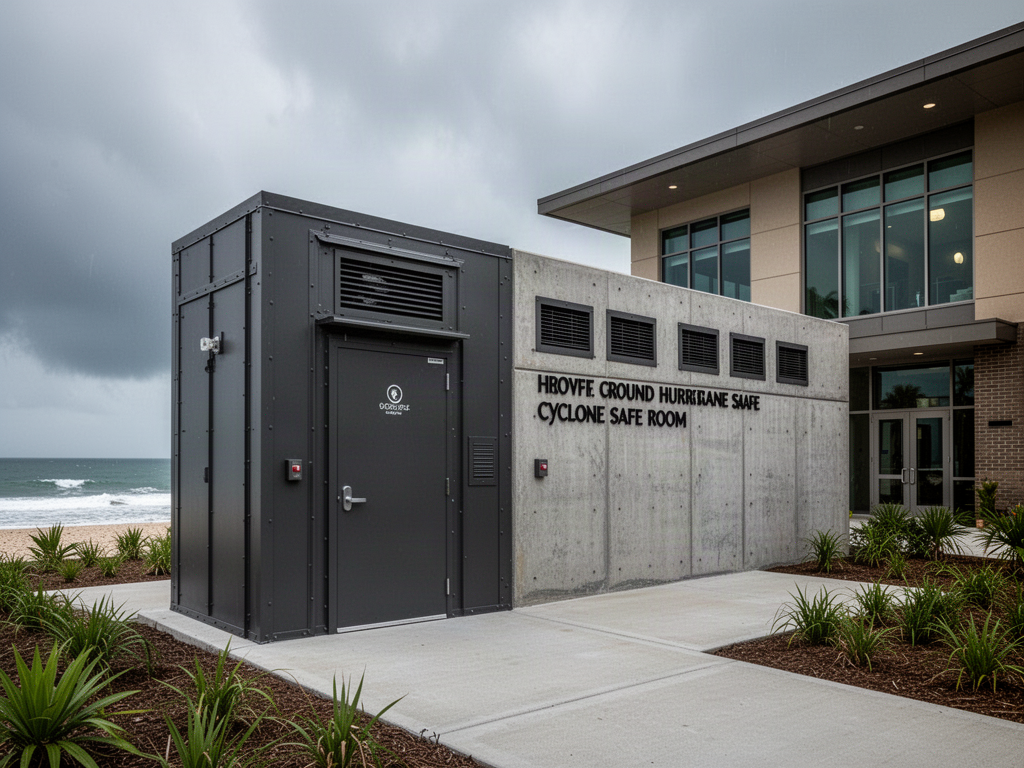
Purpose-built above-ground storm safe room and community hurricane shelter
A genuine shelter pathway coordinates hazard, structure, anchorage, impact protection, occupancy, egress, services and site hazards.

Protection system · direct answers

What project teams need to know about Safe Room & Shelter Planning.

Use this page for early system selection; final performance follows the exact tested, listed or engineered configuration and the actual project.
01

What is Safe Room & Shelter Planning?

A shelter project should begin by defining what the room is required to be. In the United States, ICC 500 sets minimum requirements for storm shelters. FEMA P-361 provides additional safe-room criteria. The distinction matters because a reinforced room, strong door or tornado-only product should not automatically be presented as a hurricane safe room.

02

What project information should Apollo receive first?

Send the project location, building type, drawings or clear photographs, relevant dimensions and structural information, and any known wind, design-pressure, impact, flood, shelter, access or local-code requirements that apply to this system.

03

Can this system be specified from website information alone?

No. Site hazard, dimensions, loads, support and anchorage, exact product configuration, installation method, applicable technical evidence and local approvals can all change the final specification.

04

Does Apollo install this protection system?

Apollo is supply-only. Final engineering, fixings, installation, approvals and local code compliance remain with the appropriate manufacturer, approved specialist or client-side project team unless expressly included in the written scope.

05

Can Apollo review this system for international projects?

Yes, where the product and project can be supported. Destination hazard, climate, freight, documentation, local engineering, certification and installation responsibilities are reviewed before supply.

Whole-Property Storm ProtectionMap the shell, structure, refuge, critical systems and water pathway before choosing products.
  • Openings + glazing
  • Roof + load path
  • Safe rooms + shelters
  • Rooftop plant
  • Critical power
  • Solar mounting
  • Flood + surge
01Project guidance

1 · Define the required classification.

Use 'storm shelter' when the project is being designed to the applicable ICC 500 pathway. Use 'FEMA safe room' only when the project also follows the applicable FEMA P-361 criteria. FEMA does not certify, approve or endorse individual manufacturers or shelter products.

02Project guidance

2 · Confirm the hazard use.

Tornado and hurricane shelter design are related but not identical. A product or listing that only establishes tornado use should not be represented as hurricane-qualified unless the exact technical documentation supports that hazard and the project wind design.

03Project guidance

3 · Check the site before the room.

For hurricane projects, floodplain, storm-surge and other inundation hazards can affect whether the proposed shelter location is suitable. Above-ground wind resistance does not remove flood risk. The project design team and authority having jurisdiction determine the acceptable site pathway.

04Project guidance

4 · Size the shelter around occupants and operations.

Occupant type, capacity, accessibility, shelter duration, egress, internal circulation, sanitation, lighting, ventilation, communications and emergency power can all affect room size and system design. Community shelters need more than a scaled-up residential module.

05Project guidance

5 · Verify every protective opening.

Doors, hatches, louvres, vents and other penetrations can become weak points. Impact-protective components need the appropriate listing, labeling or test evidence for the adopted shelter pathway and must be installed in the approved configuration.

06Project guidance

6 · Engineer the foundation and anchorage.

The shelter shell, base, anchors, foundation and supporting structure form one system. Project-specific calculations and a registered design professional are required where the adopted code or jurisdiction demands them.

Plan · compare · specify

Use the wider Apollo protection pathway.

Project-specific performance

Performance follows the exact system and project.

Apollo treats storm shelters as life-safety products with a higher evidence threshold than ordinary severe-weather hardware. Supplier marketing, a generic '250 mph' statement or a FEMA logo/reference does not establish project compliance. The exact shelter, code edition, hazard use, site, anchorage and local approval pathway must be verified.

Testing, standards & specification

Apollo NZ Global · International project supply

Start with the property. We’ll help map the severe-storm protection pathway around it.

Send the project location, drawings or photos, known wind/code requirements, flood or storm-surge information and any shelter or critical-equipment requirements.

Request a Project Review Upload Plans

Supply-only project model. Final structural design, shelter design, fixings, installation, local approvals and code compliance remain project-specific unless expressly included in the quoted supply scope.

Project