Opening geometry first
Clear width and height, post faces, beam depth and cassette space determine what blind system can physically fit.
 New Zealand
Outdoor Blinds NZ / New Zealand
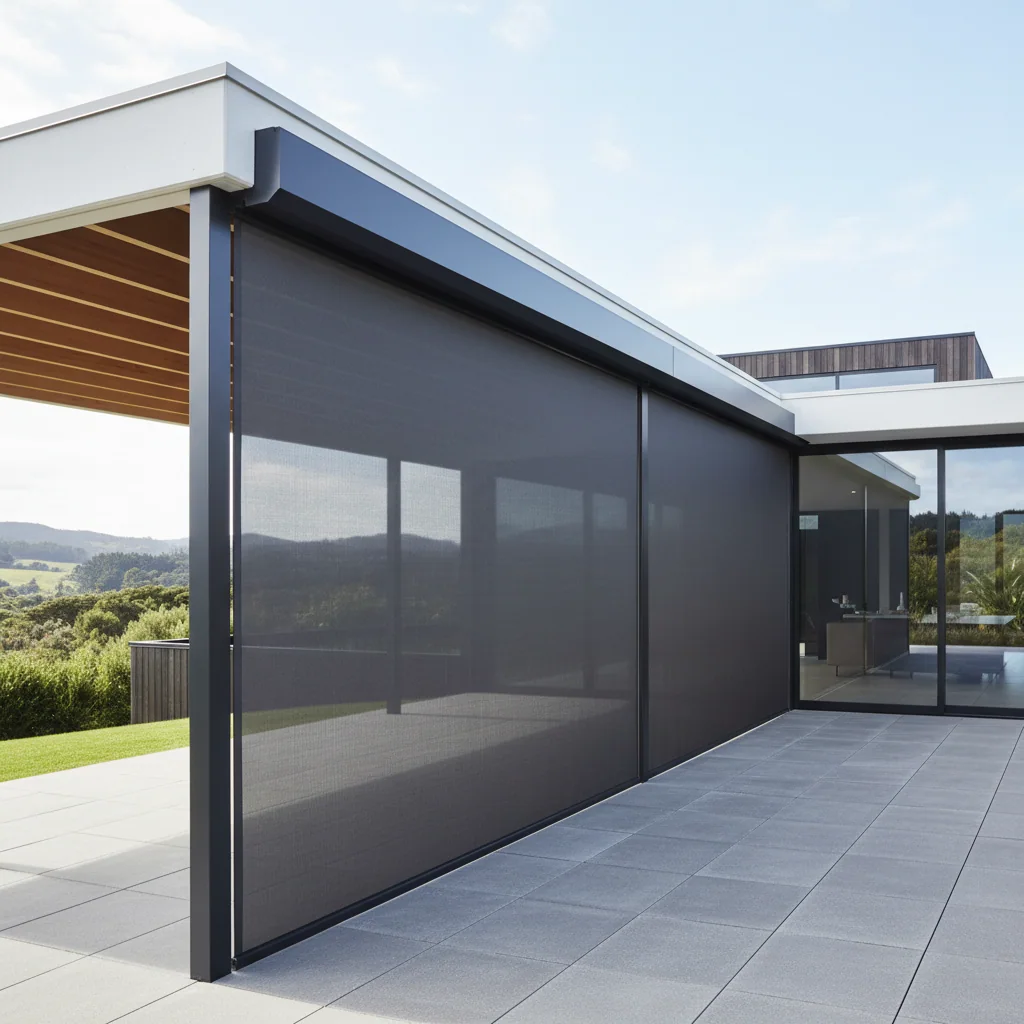
Adding blinds to a pergola works best when the tracks, cassette, fixing zones, drainage and controls are considered before the pergola is complete. Retrofitting can still work, but the available structure controls the result.
Only need basic information? Ask Apollo a quick question — no project drawings needed.
Direct answer
For a new pergola, design the blind interfaces at the same time as the roof. For an existing pergola, first measure the clear openings and confirm suitable fixing zones before choosing fabric or controls.
Project decision
Use these points to structure the first project conversation. Final suitability stays tied to the actual site, selected system and local project team.
Clear width and height, post faces, beam depth and cassette space determine what blind system can physically fit.
Track-guided systems need straight, consistent fixing surfaces and enough clearance for fabric movement, bottom bars and service access.
Blind cassettes and tracks should not block gutters, downpipes or service access to the pergola roof.
If sliding glass or doors may be added later, reserve enough structural and spatial separation so the systems do not compete for the same fixing zone.
Mesh can provide shade and airflow; clear PVC may better preserve views and reduce rain entry; blockout improves privacy and solar control. Availability, weather performance and fabric compatibility depend on the exact quoted blind, width, drop and guide system.
Do not treat a guided fabric blind as a sealed wall or storm shutter. Ask for the exact model's operating instructions, supported opening size, motor/sensor compatibility and fixing requirements.
Project brief
Frequently asked
Yes. Apollo reviews suitable New Zealand projects through the relevant product pathway. Exact configuration, availability, documentation and freight are confirmed for the actual project rather than assumed from a generic page.
Apollo supplies products only. The purchaser independently arranges and manages design, engineering, approvals, foundations, electrical work, installation and any contractors. Apollo has no onsite role.
Send the project location, intended use, dimensions or drawings, photographs, target timing and any known wind, coastal, drainage, access, power or local-compliance requirements relevant to the product.
No. Fabric and performance depend on the precise ZIP blind model, cassette, side guides and opening size. A fabric blind is not a weatherproof building wall, and any clear-PVC option must be confirmed for the selected system.
Next step
Send the site, dimensions, intended use, quantities and known local requirements. Apollo will review the relevant product pathway and keep local engineering, approvals and site-work responsibilities explicit.