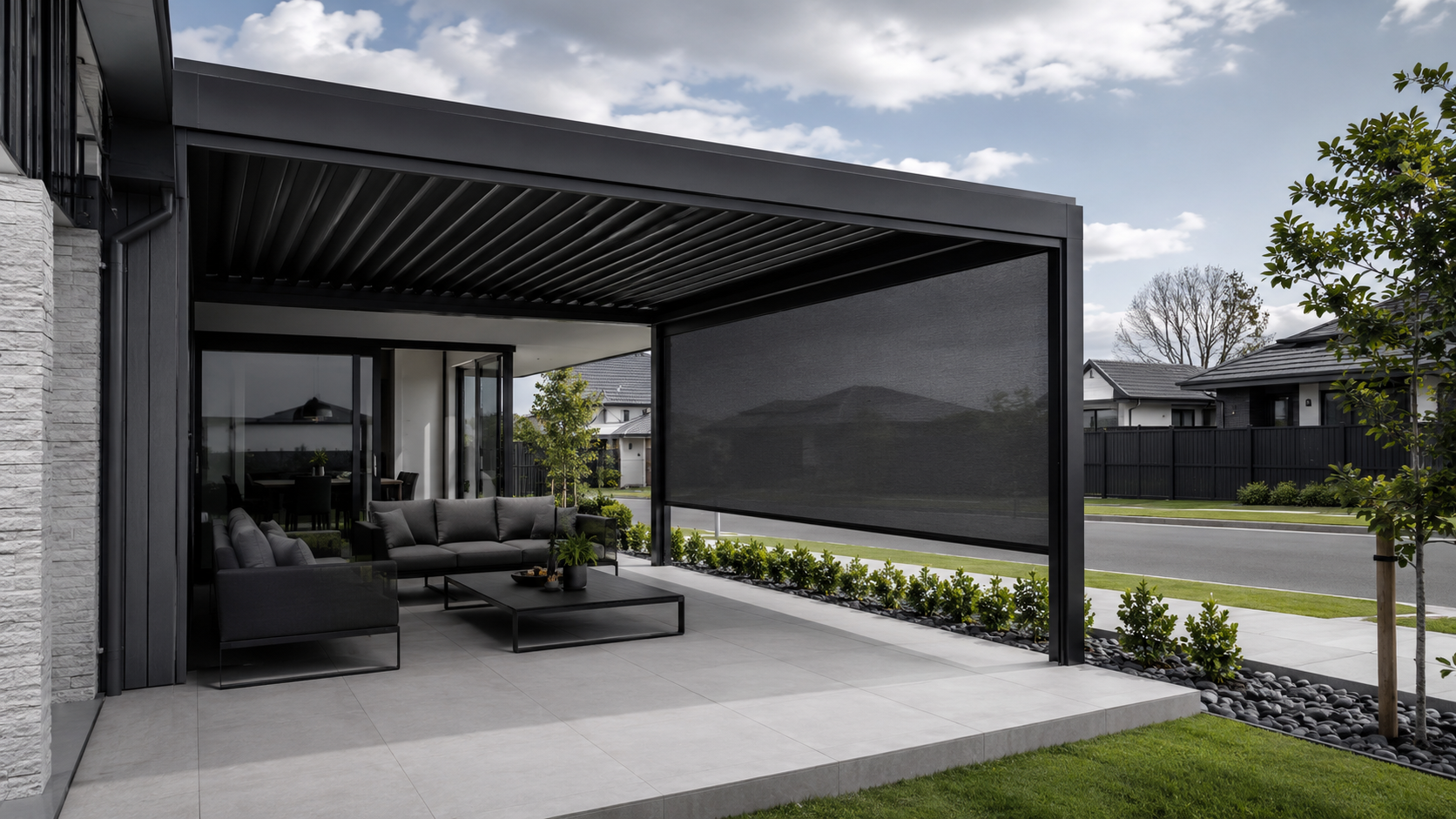
An outdoor blind that fits the opening is not automatically the right blind. Opening size, fixing structure, wind exposure, fabric, privacy, view, controls and operating behaviour all need to work together.
Planning guidance — final supplied configuration remains project-specific.
01
Measure the complete opening
Record clear width and drop, cassette position, guide fixing zones, obstructions, structure and access for installation. Very large openings should be treated as a product-and-structure interface rather than a fabric measurement.
02
Choose fabric around the outcome
Mesh openness changes shade, airflow, outward view and privacy. Clear PVC and blockout solve different problems. Start with the comfort outcome rather than selecting a fabric only by colour.
03
Match operation to real use
Manual, motorised and selected hybrid pathways suit different opening sizes and operating patterns. Power, controls and future service access should be resolved before finishes close the area in.
04
Treat severe weather honestly
Track-guided outdoor blinds are movable architectural screens, not storm shutters. Project-specific operating instructions matter, and users should know when the blind needs to be retracted before severe weather or debris risk.
05
Plan maintenance
Tracks, fabric, cassette and moving parts need cleaning and inspection. Coastal salt and airborne debris can increase maintenance frequency and should be considered during selection.