Site layout first
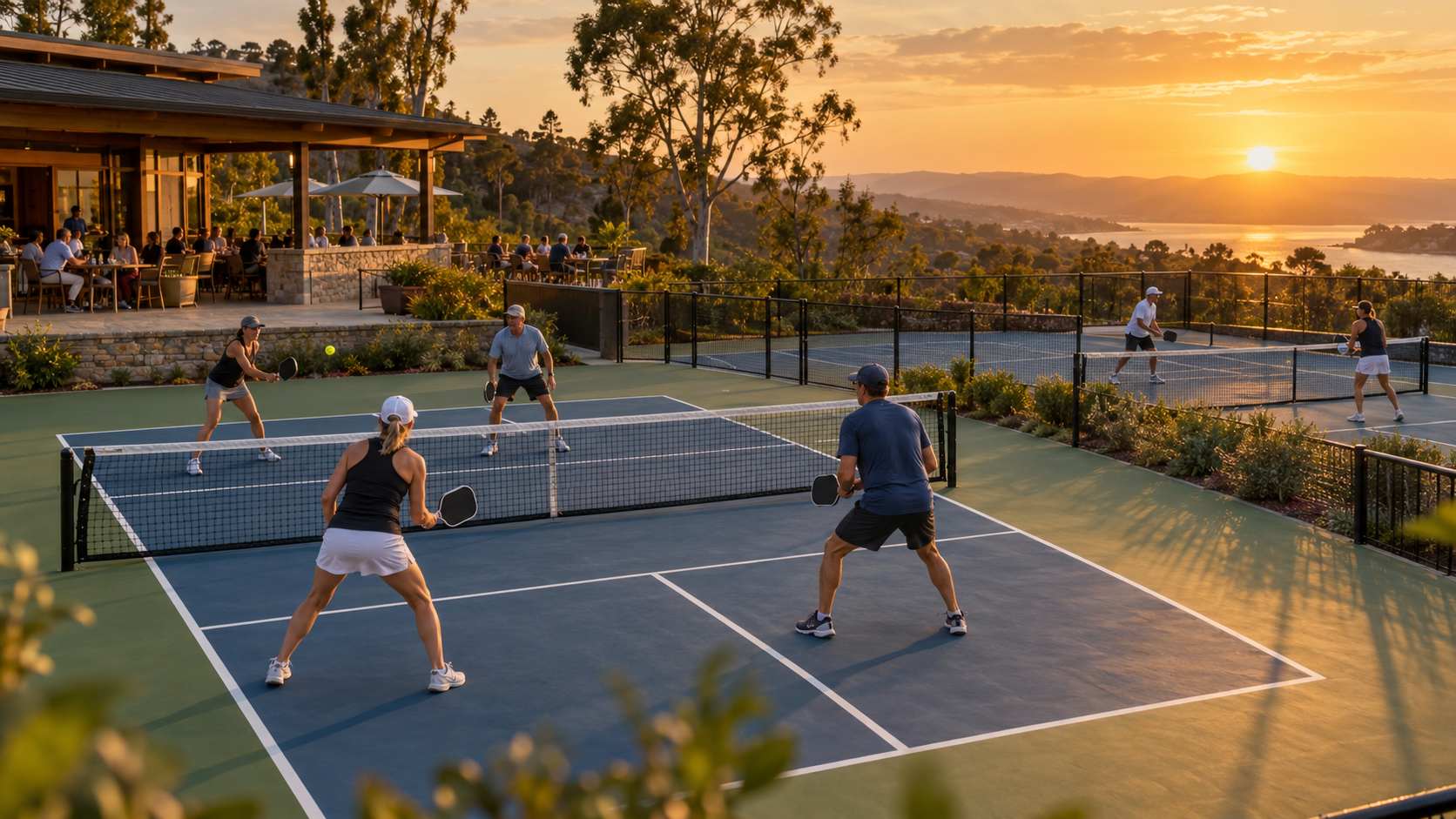
Increasing separation and orienting courts away from sensitive receivers can be more effective than relying only on a barrier.
 International
 Problem Solvers / Global
Noise needs to be considered at site-planning stage, not after courts are operating.
Direct answer
Start with distance, court orientation, number of courts, playing hours and the location of sensitive neighbours. Acoustic screens or barriers may help, but they need to be designed around line-of-sight, height, gaps, wind and the actual acoustic assessment.
Project decision
Use these points to structure the first project conversation. Final suitability stays tied to the actual site, selected system and local project team.
Increasing separation and orienting courts away from sensitive receivers can be more effective than relying only on a barrier.
Hours, booking patterns, tournament use and simultaneous court count influence noise exposure.
Screens, berms, buildings or purpose-designed barriers may reduce direct sound paths, but a qualified acoustic consultant should confirm the project solution.
Project brief
Frequently asked
Not necessarily. Open mesh fencing is not an acoustic barrier.
Planting can improve visual screening but should not be assumed to provide sufficient acoustic reduction.
A qualified acoustic professional should assess sensitive or consent-critical sites.
Next step
Send the site, dimensions, intended use, quantities and known local requirements. Apollo will review the relevant product pathway and keep local engineering, approvals and site-work responsibilities explicit.