Frequency of use
A blind that moves several times a day benefits more from motorisation than a seasonal screen that is rarely adjusted.
 New Zealand
 Outdoor Blinds NZ / New Zealand
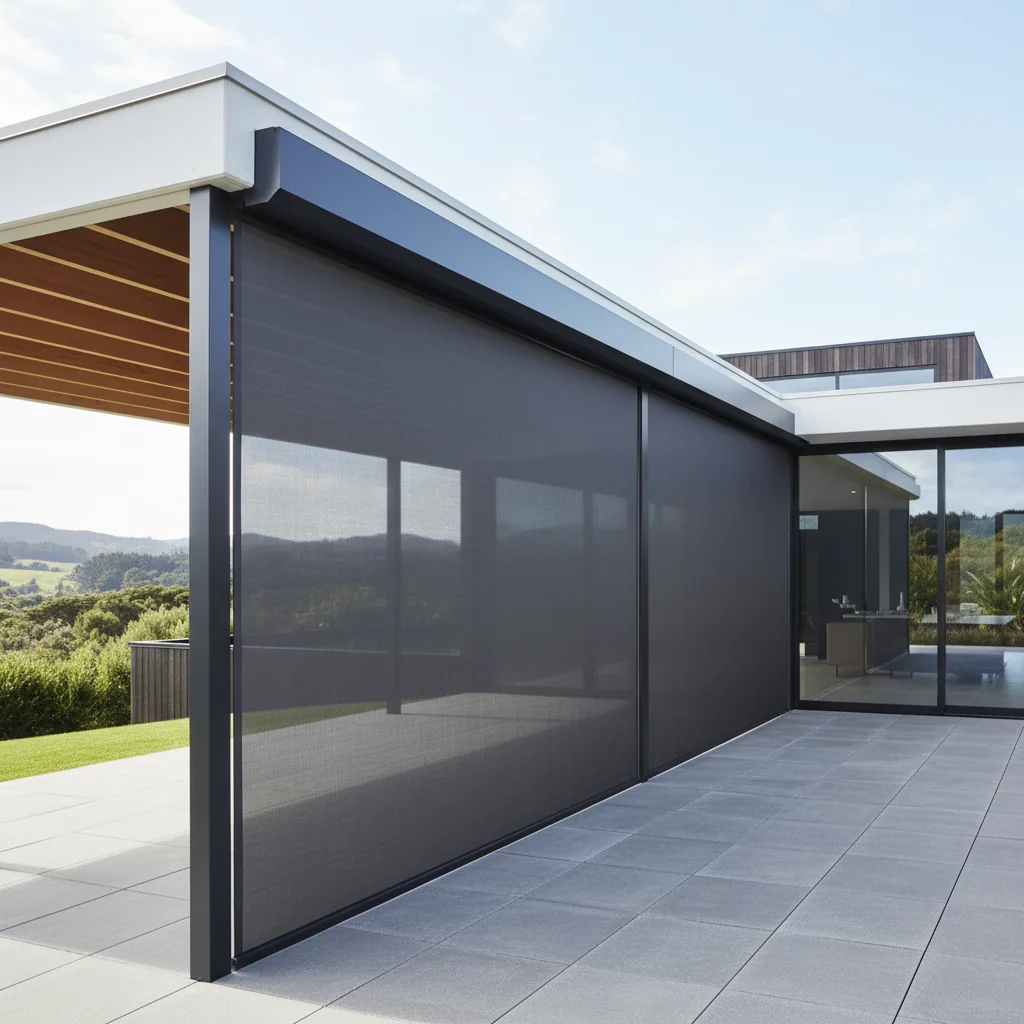
Manual operation can be simple and dependable for smaller or lightly used openings. Motorisation becomes more valuable as openings get larger, blinds are used frequently or multiple blinds need coordinated operation.
Direct answer
Choose manual operation when simplicity, low usage and smaller openings dominate. Choose motorised operation when convenience, larger openings, multiple blinds or integration with a broader outdoor-room control strategy matters.
Project decision
Use these points to structure the first project conversation. Final suitability stays tied to the actual site, selected system and local project team.
A blind that moves several times a day benefits more from motorisation than a seasonal screen that is rarely adjusted.
Large or awkwardly positioned blinds can be easier and safer to operate with a suitable motorised system.
Motorised blinds require local electrical planning, control placement and service access. Sensors and smart controls should be treated as selected options, not assumed defaults.
Hospitality and commercial venues may benefit from centralised or repeatable operation, but staff procedures and override access still need to be defined.
Project brief
Frequently asked
Yes. Apollo reviews suitable New Zealand projects through the relevant product pathway. Exact configuration, availability, documentation and freight are confirmed for the actual project rather than assumed from a generic page.
Apollo is primarily supply-only. Local design, engineering, approvals, foundations, electrical work and installation remain with the appointed New Zealand project team unless expressly included in a written project scope.
Send the project location, intended use, dimensions or drawings, photographs, target timing and any known wind, coastal, drainage, access, power or local-compliance requirements relevant to the product.
Next step
Send the site, dimensions, intended use, quantities and known local requirements. Apollo will review the relevant product pathway and keep local engineering, approvals and site-work responsibilities explicit.