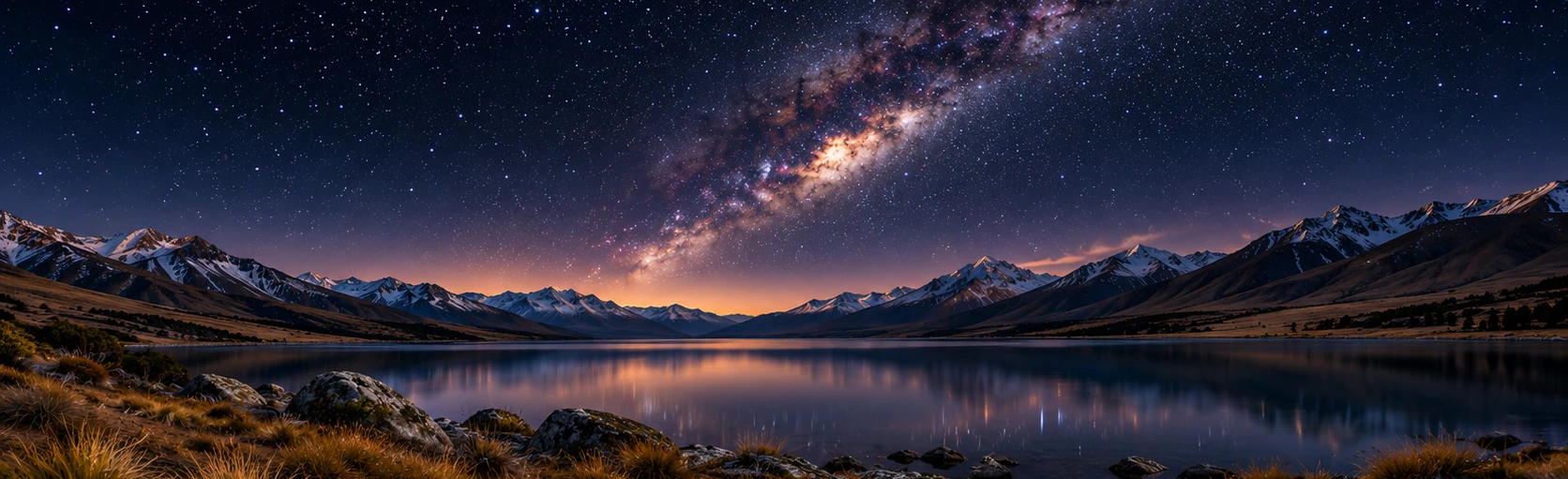
From the first look at the Milky Way to a night at a professional observatory, planning around the darkness, weather and location makes the experience more rewarding.
Begin with an officially recognised destination, decide what you hope to observe and confirm that the viewing site is accessible. A dark-sky certificate is about protecting an area from light pollution; it does not replace an access permit, guided-tour booking or local safety advice.
THE FIVE-STEP NIGHT-SKY PLAN
Choose the place, the night and the experience.
01
Find a genuinely dark destination
Use an official certification directory to find parks, reserves, sanctuaries and communities that protect natural darkness. Certification does not automatically mean visitor access, open facilities or a guided tour.
New-Moon periods generally make it easier to observe faint deep-sky detail, while bright moonlight can wash out subtle stars. The Moon's phase is only part of the story: rise and set times, local conditions and your observing time also matter.
The Milky Way, constellations and planets visible in the evening shift by latitude, time of year and time of night. Southern Hemisphere observing highlights are not the same as Northern Hemisphere highlights. Check a sky chart for your specific date and location.
Clouds, wind, road closures, temperature and local lighting can make more difference than a dark-sky designation. Confirm permitted after-dark locations and any transport, permit or event-booking requirements before travelling.
Use only the light you need, keep it low and warm, avoid sensitive habitats and never use powerful beams at people, animals or aircraft. Follow local conservation and cultural guidance and leave each location as you found it.
Choose a date to see an estimated Moon phase and how much of its disk is lit. The less moonlight, the easier it can be to see faint stars on a clear, dark night.
Estimated lunar phaseWaxing Gibbous92% of lunar disk illuminated
Viewing guidanceBright Moon period
You may still enjoy bright stars, planets and the Moon. For faint galaxies and the Milky Way, consider nights nearer new Moon.
Next new Moon9 Dec
Approximate date from the lunar cycle; check official ephemerides for precise times and your local observing conditions.
Fourteen-day Moon outlook
Lower percentages indicate less illuminated Moon, not a forecast of cloud or sky quality.
Planning estimate only. Based on an approximately 29.53-day lunar cycle anchored to a published new-Moon time. This tool does not calculate local Moon rise or set, exact phase timings, cloud cover, light pollution or guaranteed visibility.
Many of the best experiences require no specialised astronomical equipment. Dress for the conditions and use local viewing guidance first.
Warm layers, closed shoes and weather-ready clothing
A safe route, torch with a low red setting and offline directions
Water, charged phone and a plan for your return trip
Binoculars if useful; a telescope is optional
A local sky chart and permission to use the viewing location
YOUR NEXT DARK-SKY ADVENTURE
Find a place to experience it.
Explore curated destinations across New Zealand and internationally, with links to official designation records and independent observatory or tourism resources.
Essential site functions work without analytics. With your permission, Apollo measures which products and project pages are useful. Analytics stays off unless you allow it.