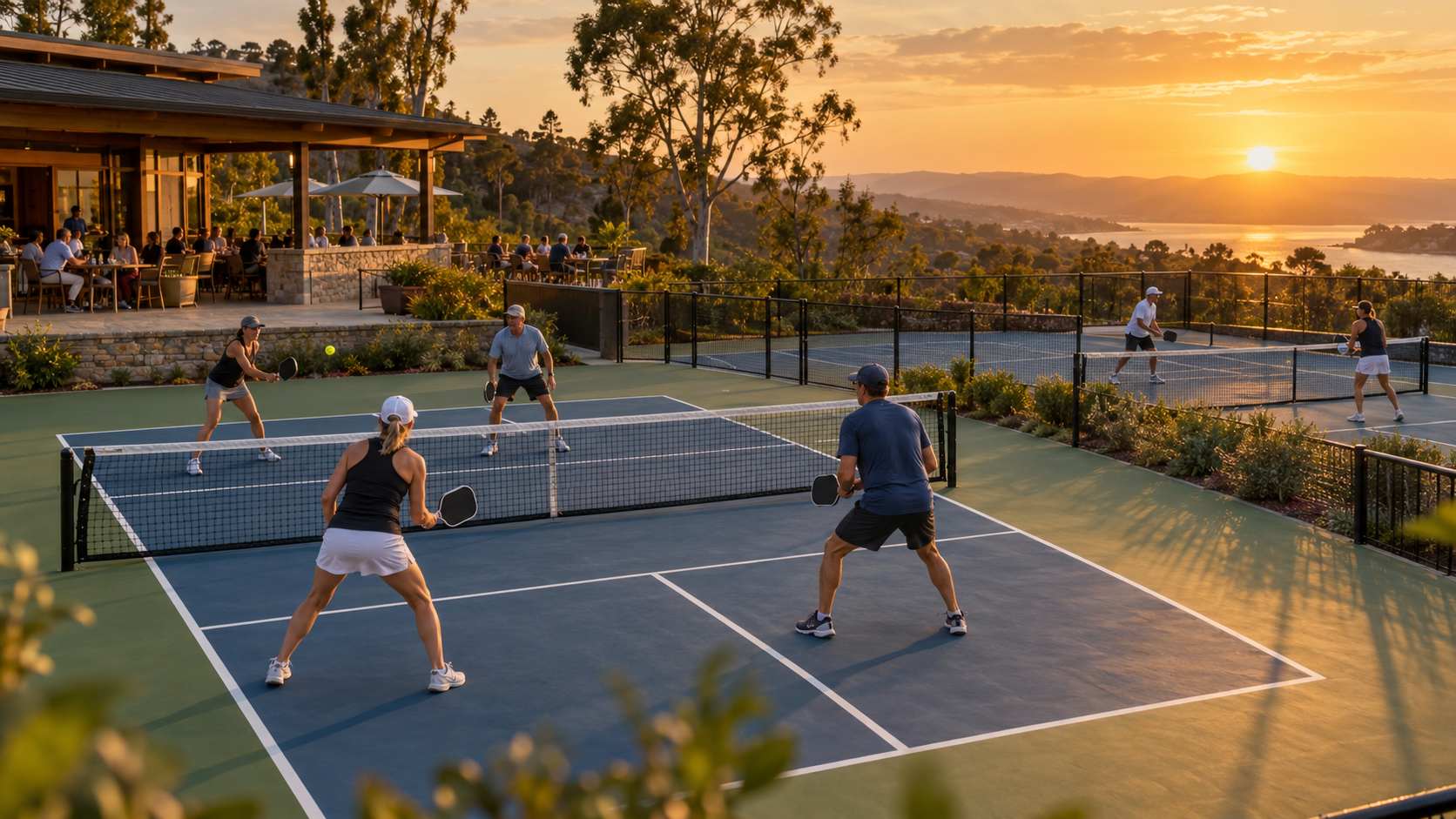
How Much Does a Pickleball Court Cost in New Zealand?
A pickleball court can be a relatively simple conversion of a sound existing hard court or part of a completely new multi-court facility. Those are different projects, so one universal New Zealand court price is rarely useful.
Planning guidance — final supplied configuration remains project-specific.
Reviewed September 2026 · Current live planning resource
01
The existing base is usually the biggest dividing line
A sound concrete or asphalt base can allow the project to focus on surface preparation, markings, nets and supporting equipment. A failed, uneven or poorly drained base can require substantial repair or replacement before the sports surface is considered.
For greenfield projects, earthworks, base construction, drainage and local civil work should be budgeted separately from the playing surface.
02
Surface family changes both supply and installation scope
Site-applied acrylic, cushion acrylic, roll flooring and modular tile systems use different material quantities, preparation methods, installation labour and maintenance pathways. Comparing only a square-metre figure can hide those differences.
The best value pathway follows the actual base, indoor or outdoor environment, required permanence, player programme and maintenance model.
03
A complete court is more than the coloured playing surface
Nets and posts, perimeter containment, access gates, lighting, dividers, storage and player infrastructure can all form part of the completed court. Acoustic treatment can also become important where outdoor courts sit near neighbours.
Commercial and club projects should separate the cost of the court itself from wider venue items such as reception, spectators, amenities and hospitality.
04
Conversions can be staged
Tennis clubs, schools and community facilities can sometimes test demand using existing hard courts, portable nets and carefully planned markings before committing to a dedicated rebuild.
A staged approach still needs the base, drainage, court geometry and user conflicts reviewed so temporary work does not create a poor long-term layout.
05
Covered courts change the project class
Fixed canopies, membrane halls, retractable cover and sports air domes introduce their own structure, height, drainage, lighting, foundations and local approval requirements. Treat the cover as a facility system rather than a small accessory to the court price.
06
What Apollo needs for a New Zealand pickleball cost review
Apollo can then separate surface supply, court equipment and wider facility systems from local site work.
Essential site functions work without analytics. With your permission, Apollo uses analytics to understand which products, guides and project pathways are useful. Analytics stays off until you allow it.