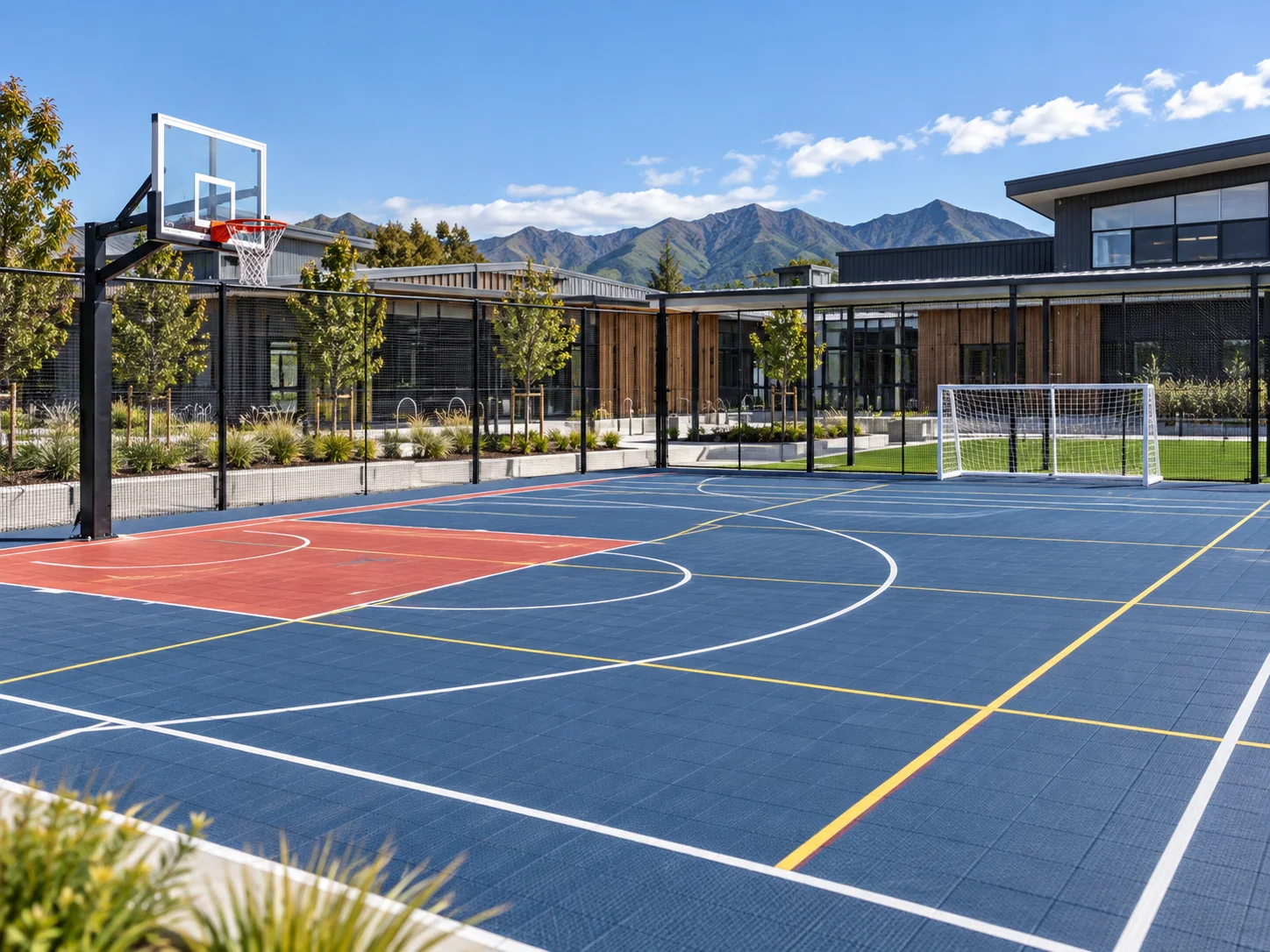
A school does not need to begin with a purpose-built pickleball complex. The useful first step is to understand the students, available space and existing court assets, then choose a practical pathway that can start small without blocking future growth.
Planning guidance — final supplied configuration remains project-specific.
Reviewed September 2026 · Current live planning resource
01
Start with students and timetable demand
Decide whether pickleball is being introduced for PE, lunchtime recreation, after-school activity, inter-school sport or a mixture. Record likely class sizes, age groups, lesson length, supervision and how often the activity needs to run.
02
Check whether an existing court can do the job
A suitable hard court may provide the fastest pathway if the usable dimensions, surface condition, run-off, drainage and circulation are practical. Tennis, multi-sport and other hard-court areas can be reviewed before any new base is proposed.
03
Plan lines, nets and storage together
Shared school courts should avoid confusing line layouts. Decide whether pickleball markings are permanent, secondary or used with a portable setup, and plan where nets, paddles, balls and portable equipment will be stored between classes.
04
Protect run-off, supervision and movement
Do not count only the painted playing rectangle. Leave practical space around the court for safe movement, teachers, waiting students and circulation between adjacent activities. The exact layout should be checked against the actual site and selected programme.
05
Choose the surface only after the base is understood
Existing asphalt, concrete and other bases should be checked for cracking, settlement, levels, contamination and drainage before a surface pathway is selected. Modular, roll-out and other court systems do not remove unresolved base problems.
06
Start with a small pathway if demand is uncertain
A school can begin with a modest shared-court or portable programme, monitor participation and timetable demand, then decide whether permanent markings, additional courts, lighting, shade or a larger multi-sport upgrade are justified.
07
Keep local responsibilities visible
Accessibility, civil work, electrical work, local safety review, installation and approvals remain project-specific. Apollo can support product and planning information for selected systems, but the school and its local project team should confirm destination requirements.
Essential site functions work without analytics. With your permission, Apollo uses analytics to understand which products, guides and project pathways are useful. Analytics stays off until you allow it.