Traditional sauna
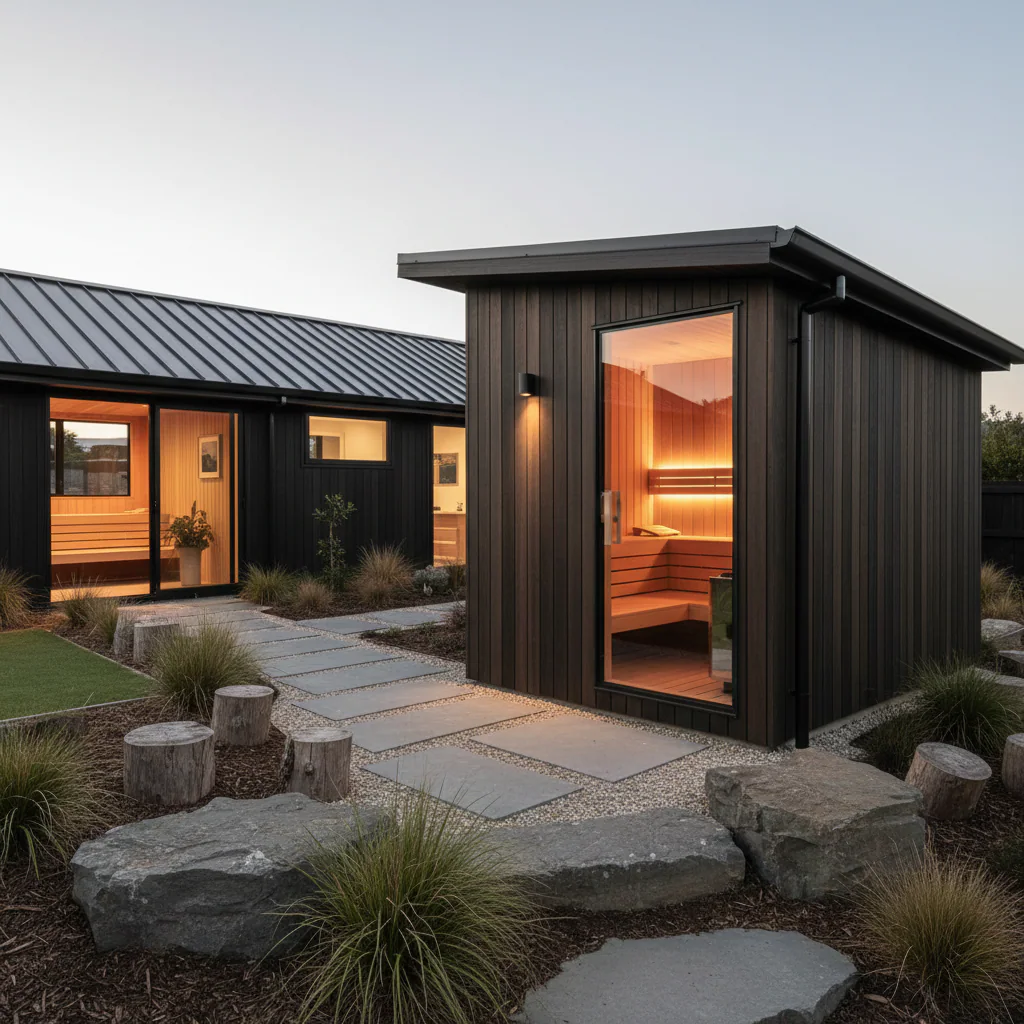
Wood-fired or electric sauna pathways use a purpose-built hot room, ventilation and heat-resistant interior materials.
 International
 Decision Centre / Global
All three create a heated wellness environment, but the heat source, humidity, enclosure, services and maintenance requirements differ materially.
Direct answer
Choose a traditional sauna for high-temperature dry heat and a timber sauna environment; steam when high humidity and a moisture-managed tiled or specialist enclosure are central; and infrared when direct radiant heating and a lower-air-temperature operating model suit the brief.
Project decision
Use these points to structure the first project conversation. Final suitability stays tied to the actual site, selected system and local project team.
Wood-fired or electric sauna pathways use a purpose-built hot room, ventilation and heat-resistant interior materials.
Steam rooms require a highly moisture-managed enclosure, steam generation, drainage and service access designed around condensation and cleaning.
Infrared systems heat users through radiant panels and typically operate differently from a conventional sauna, changing electrical, room and user-experience requirements.
Comparison matrix
Use this as an early project-screening matrix. Final suitability depends on the exact system, site, configuration and project requirements.
| Factor | Traditional sauna | Steam | Infrared |
|---|---|---|---|
| Heat environment | Hot / relatively dry | Warm / very humid | Radiant / lower air temperature |
| Room construction | Sauna-specific timber / heat design | Moisture-resistant sealed room | Panel / cabin system dependent |
| Water / drainage | Lower direct demand | High importance | Low direct demand |
| Ventilation | Important | Critical moisture control | System dependent |
| Primary service | Wood or electrical heat | Steam generator + water + drainage | Electrical |
Project brief
Frequently asked
No. The useful choice depends on the project outcome, site conditions, scale, local work, operating expectations, maintenance and required technical evidence.
No. Apollo uses a manual project-brief and quotation process so product family, quantity, destination, freight, configuration and project interfaces are reviewed before pricing.
Apollo is primarily supply-only. Local engineering, approvals, foundations, services, installation and other site work remain with the appointed local project team unless a written scope states otherwise.
Next step
Send the site, dimensions, intended use, quantities and known local requirements. Apollo will review the relevant product pathway and keep local engineering, approvals and site-work responsibilities explicit.