Open-sided cover
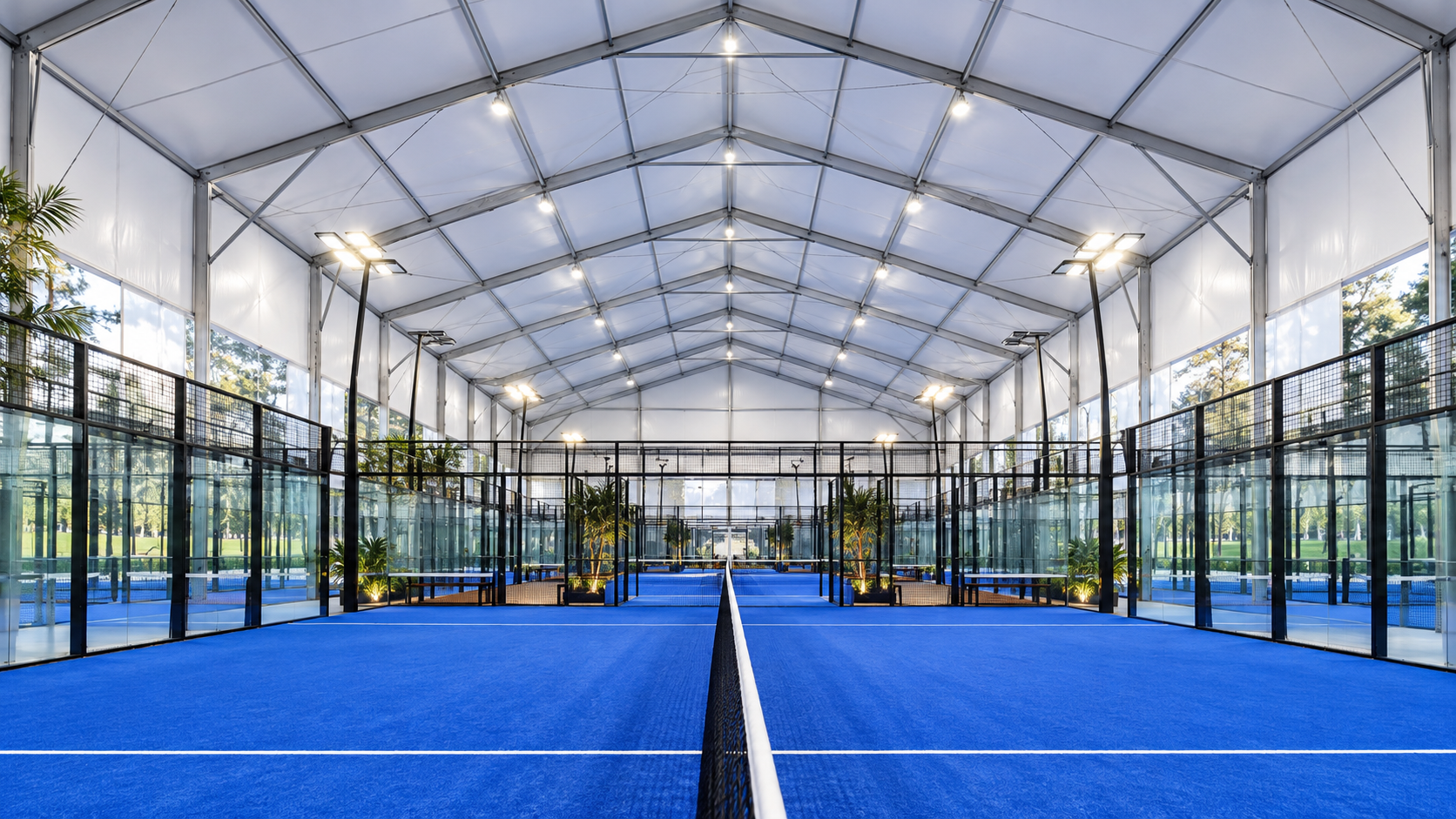
A roof structure can reduce rain and solar exposure while retaining natural ventilation and an outdoor operating model.
 International
 Decision Centre / Global
These are different building and operating models. The right starting point depends on enclosure, climate control, permanence, services, project programme and local approvals.
Direct answer
Use an open-sided covered court when overhead weather protection is the main goal; an air dome when a large enclosed volume and rapid enclosure pathway suit the project; and a sports hall when a more permanent conventional or clear-span enclosed building is required.
Project decision
Use these points to structure the first project conversation. Final suitability stays tied to the actual site, selected system and local project team.
A roof structure can reduce rain and solar exposure while retaining natural ventilation and an outdoor operating model.
A dome creates an enclosed volume using air pressure and membrane systems, introducing blower, airlock, emergency and operating requirements.
A framed enclosed hall provides a more conventional building envelope and can integrate changing, spectator, acoustic and service systems at higher project complexity.
Comparison matrix
Use this as an early project-screening matrix. Final suitability depends on the exact system, site, configuration and project requirements.
| Factor | Covered court | Air dome | Sports hall |
|---|---|---|---|
| Enclosure | Open / partial | Enclosed membrane | Enclosed building |
| Permanence | Project dependent | Semi-permanent / project dependent | Permanent pathway |
| Mechanical reliance | Low to moderate | High — air support | Building services dependent |
| Climate control | Limited | Possible / system dependent | Highest potential |
| Project complexity | Moderate | Specialist | High |
Project brief
Frequently asked
No. The useful choice depends on the project outcome, site conditions, scale, local work, operating expectations, maintenance and required technical evidence.
No. Apollo uses a manual project-brief and quotation process so product family, quantity, destination, freight, configuration and project interfaces are reviewed before pricing.
Apollo is primarily supply-only. Local engineering, approvals, foundations, services, installation and other site work remain with the appointed local project team unless a written scope states otherwise.
Next step
Send the site, dimensions, intended use, quantities and known local requirements. Apollo will review the relevant product pathway and keep local engineering, approvals and site-work responsibilities explicit.