Air dome
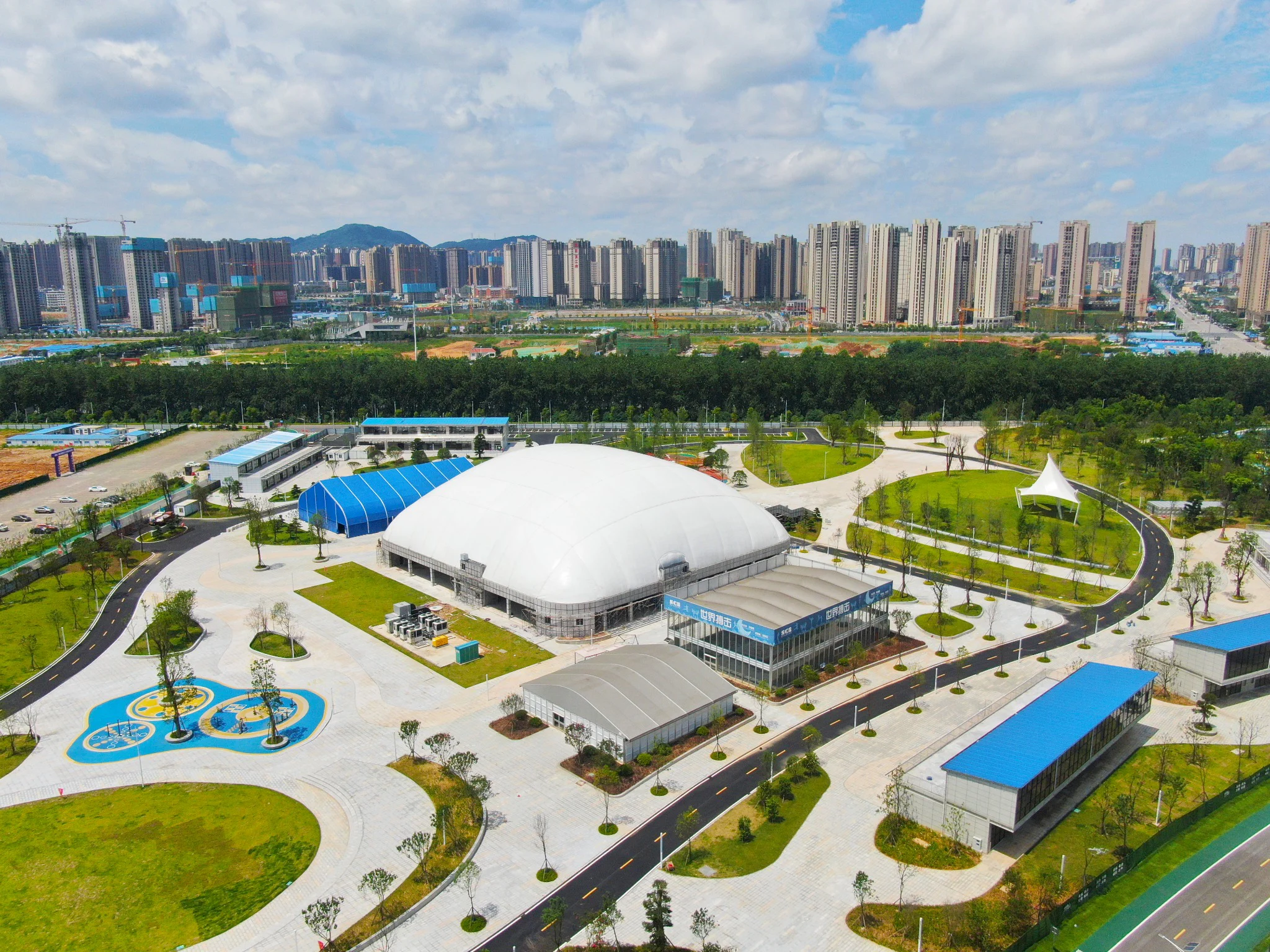
An air-supported enclosure depends on membrane, inflation or pressure systems, entrances, anchoring and operational continuity.
 International
Decision Centre / Global
Both can create large covered play space, but their structural and operating models are fundamentally different.
Only need basic information? Ask Apollo a quick question — no project drawings needed.
Direct answer
Air domes can be attractive for rapid large-volume enclosure and selected seasonal or simple building-envelope applications, while clear-span framed halls suit projects wanting a more conventional permanent structure, fixed openings and broader architectural integration.
Project decision
Use these points to structure the first project conversation. Final suitability stays tied to the actual site, selected system and local project team.
An air-supported enclosure depends on membrane, inflation or pressure systems, entrances, anchoring and operational continuity.
A framed structure provides a conventional load path and can integrate walls, doors, services and architecture more directly.
Programme, energy, membrane maintenance, emergency systems, local approvals and expected building life should be compared—not just initial shell cost.
Comparison matrix
Use this to define the project pathway before detailed engineering.
| Factor | Air dome | Clear-span hall |
|---|---|---|
| Primary structure | Air-supported membrane | Framed structure |
| Programme | Potentially rapid | Project-dependent |
| Operational dependency | Inflation / controls | Conventional building services |
| Architecture | More standardised form | Higher flexibility |
| Typical fit | Large simple enclosure | Permanent integrated facility |
Project brief
Frequently asked
No. Site conditions, scale, permanence, local works, operating expectations and documentation requirements change the right starting point.
No. Apollo uses a manual project-brief process so the selected system, quantities, destination, freight and project interfaces are checked before pricing.
Apollo supplies products only. The purchaser independently arranges and manages all engineering, approvals, foundations, services, installation, contractors and site works. Apollo does not organise onsite providers.
Next step
Send the site, dimensions, intended use, quantities and known local requirements. Apollo will review the relevant product pathway and keep local engineering, approvals and site-work responsibilities explicit.