
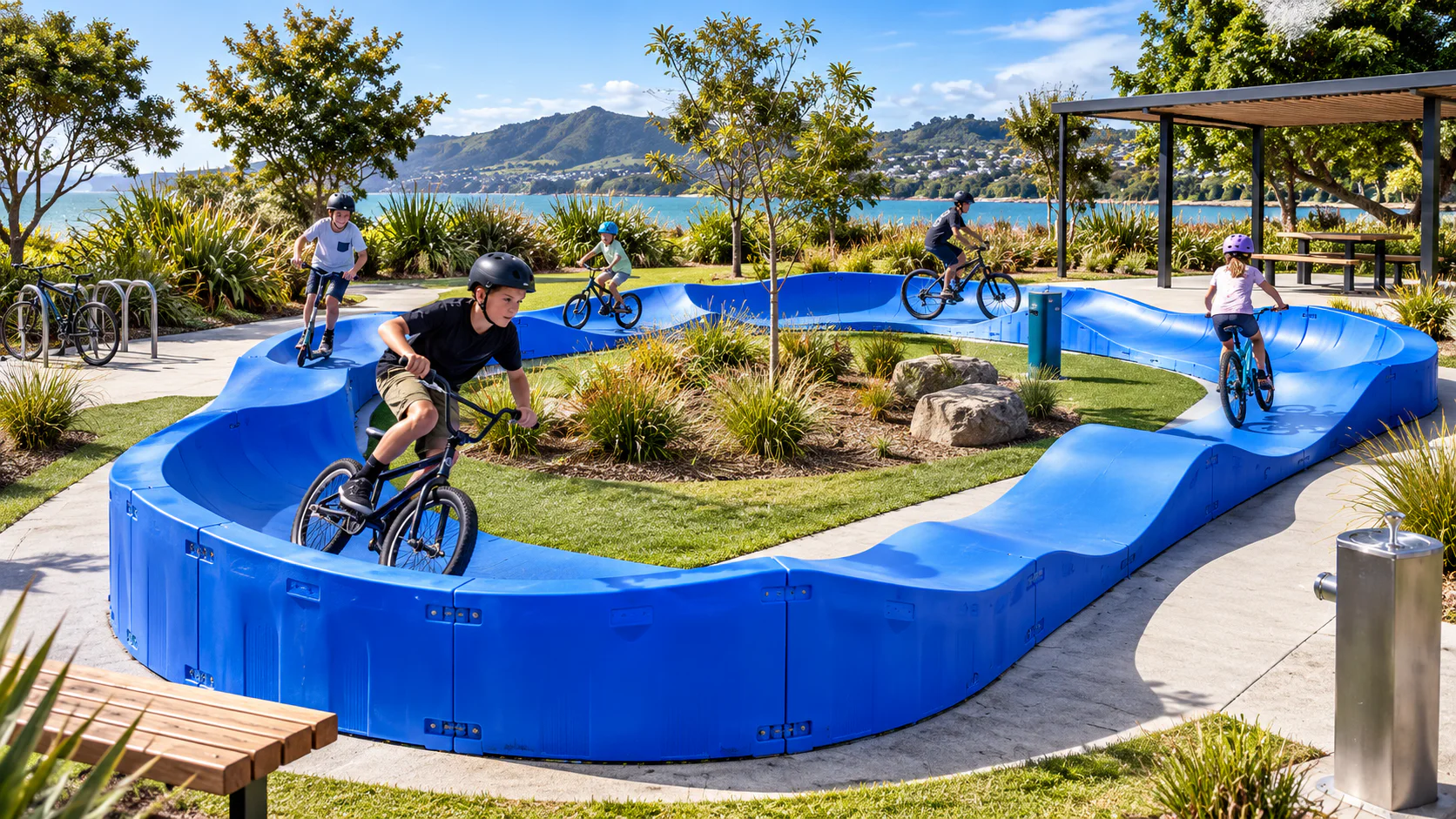
1. Start with the recreation outcome, not the track shape
The first question is not how many berms or rollers fit on the site. It is what the project is trying to achieve. A primary school may want an active-play facility that supports balance and confidence during breaks. A council may want a neighbourhood youth asset, a destination recreation space or a facility that fills a gap between playgrounds and larger skate or BMX infrastructure.
The intended users influence almost every later decision: footprint, progression, waiting areas, supervision, signage, opening model and whether the facility needs room to expand. A compact loop for younger riders is a different project from a community track intended to attract teenagers and experienced BMX users.
Pump tracks can support bikes, BMX, scooters, skateboards and balance bikes, but that broad participation needs an operating model. The project should decide whether all user groups share the track at the same time, whether one-way flow is mandatory and how less-confident riders enter without being pressured by faster users.
For councils and schools, it is useful to write one sentence that defines success before selecting a layout. For example: 'Create a visible, supervised wheeled-recreation facility for ages 7–14 that can be extended if participation grows.' That is a stronger design brief than simply requesting a medium pump track.
- Define the primary age and rider groups
- Identify expected peak-use periods
- Decide whether the facility is school-only, public or shared use
- Write the participation outcome before selecting the module layout