
Apollo NZ GlobalBuild Project Brief

Sports & Recreation · RIDEspan planning guide

Modular Pump Track Planning Guide

A modular pump track should be planned as a complete wheeled-recreation facility, not simply as a track footprint. Rider ages, skill range, site conditions, drainage, access, supervision, circulation and future growth all influence the right RIDEspan layout.

Planning guidance — final supplied configuration remains project-specific.
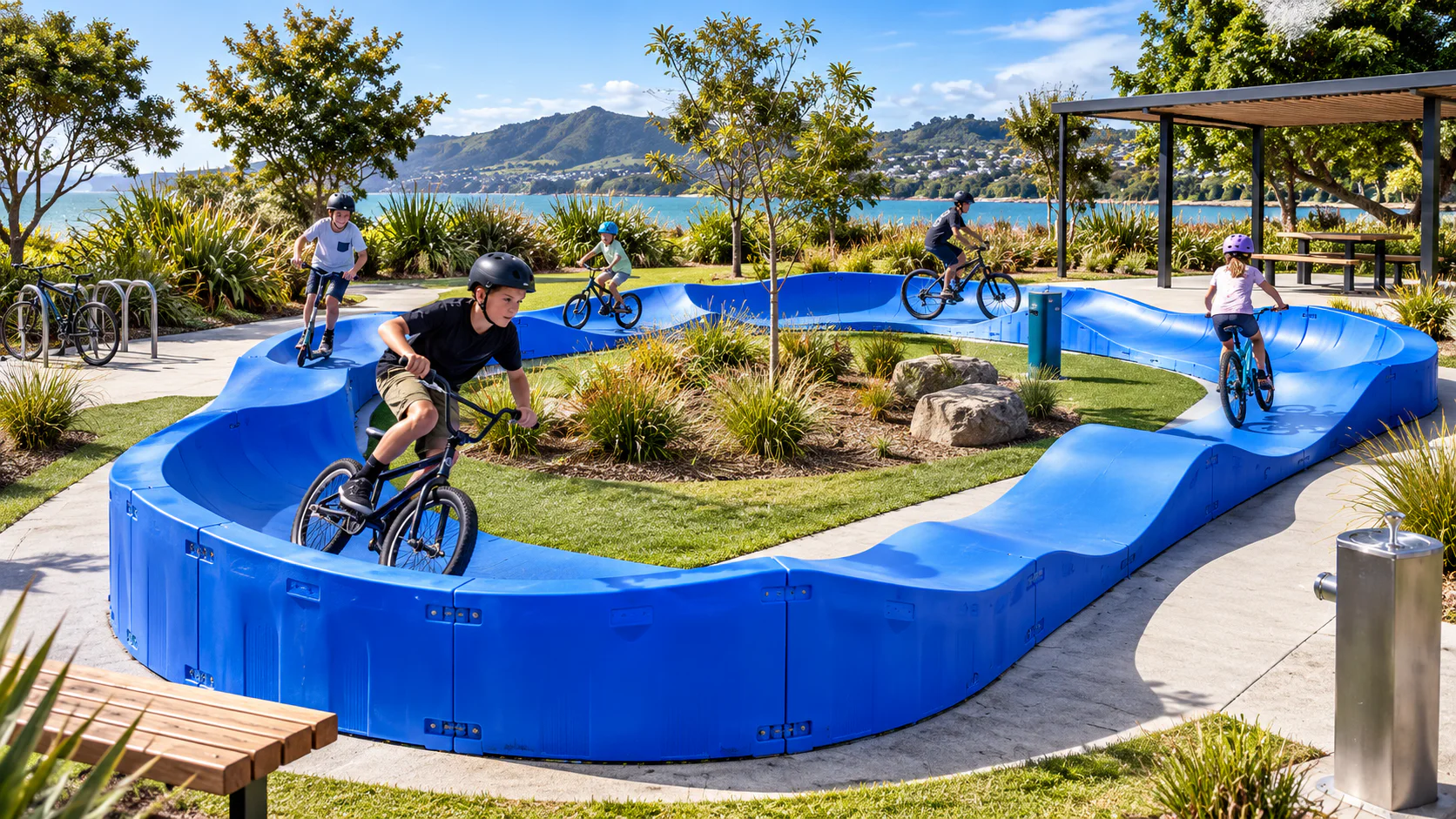
RIDEspan modular pump track in a landscaped community recreation setting
01

Start with the riders and operating model

Define who will use the facility before choosing a layout. School beginners, mixed-age public users, BMX riders, scooter users, skateboarders and balance-bike riders can place different demands on progression, supervision, queuing and circulation.

Record expected age groups, skill range, opening hours, supervision model and whether the facility is school-only, public, shared-use or event-based.

  • Rider ages and experience
  • Bikes, BMX, scooters, skateboards and balance bikes
  • Supervised or open-access use
  • Peak-use periods
  • Permanent, relocatable or temporary intent
02

Measure the usable site, not just the property boundary

The available site should be measured around real constraints: paths, buildings, trees, fences, services, slopes, drainage routes, vehicle access and neighbouring uses. A nominal track layout can fit inside a boundary while still leaving an unusable facility around it.

RIDEspan catalogue dimensions are useful for early feasibility, but they describe the track envelope. Clear zones, entry and exit movement, spectator or waiting space, accessible circulation and local requirements sit outside that envelope.

03

Treat base and drainage as local site infrastructure

The track system should sit on a stable, appropriately prepared site. Existing levels, water flow, soft ground, settlement risk and the surrounding surface should be reviewed before installation is frozen.

Drainage needs a positive route through and away from the recreation area. The modular track does not correct an unresolved civil or stormwater problem beneath or around it.

04

Design rider flow and supervision into the plan

Entry, riding direction and exit should be easy to understand. Waiting riders, pedestrians, parents, teachers and spectators should not need to stand in the active riding line.

For schools, sightlines should support the intended supervision model. For public parks, paths and gathering areas should allow people to watch or move through the site without creating unnecessary conflicts with riders.

05

Use modularity deliberately

RIDEspan can be reconfigured, relocated and expanded, subject to the selected system and local works. That flexibility is most useful when the first-stage site plan preserves access and logical space for future modules rather than filling every available metre on day one.

A staged project can begin with a compact circuit and retain a documented pathway toward a larger recreation offer as participation, space or budgets grow.

06

Plan the facility around the track

A complete movement zone can include bike parking, seating, shade, drinking water, repair facilities, signage, planting and accessible paths. These elements should be coordinated with rider flow and supervision rather than added into leftover spaces after the track is installed.

Council and community projects should also consider lifecycle ownership: who inspects the track, keeps drainage clear, manages the surrounding site and records repairs or replacement components.

07

Separate product supply from local project works

Apollo supplies the selected RIDEspan product system and current controlled product information. Site survey, civil preparation, drainage design, foundations or anchoring where required, installation, accessibility design, landscaping, fencing, local safety review and statutory approvals remain project-specific responsibilities unless separately arranged by the relevant project parties.

The final project brief should record the site, rider group, preferred layout or size range, existing surface, access, drainage, surrounding amenities, destination, programme and future expansion intent before the supplied configuration is frozen.

Move from knowledge to project

Apply this guidance to the actual site.

Use Pump Track Planner Build Project Brief