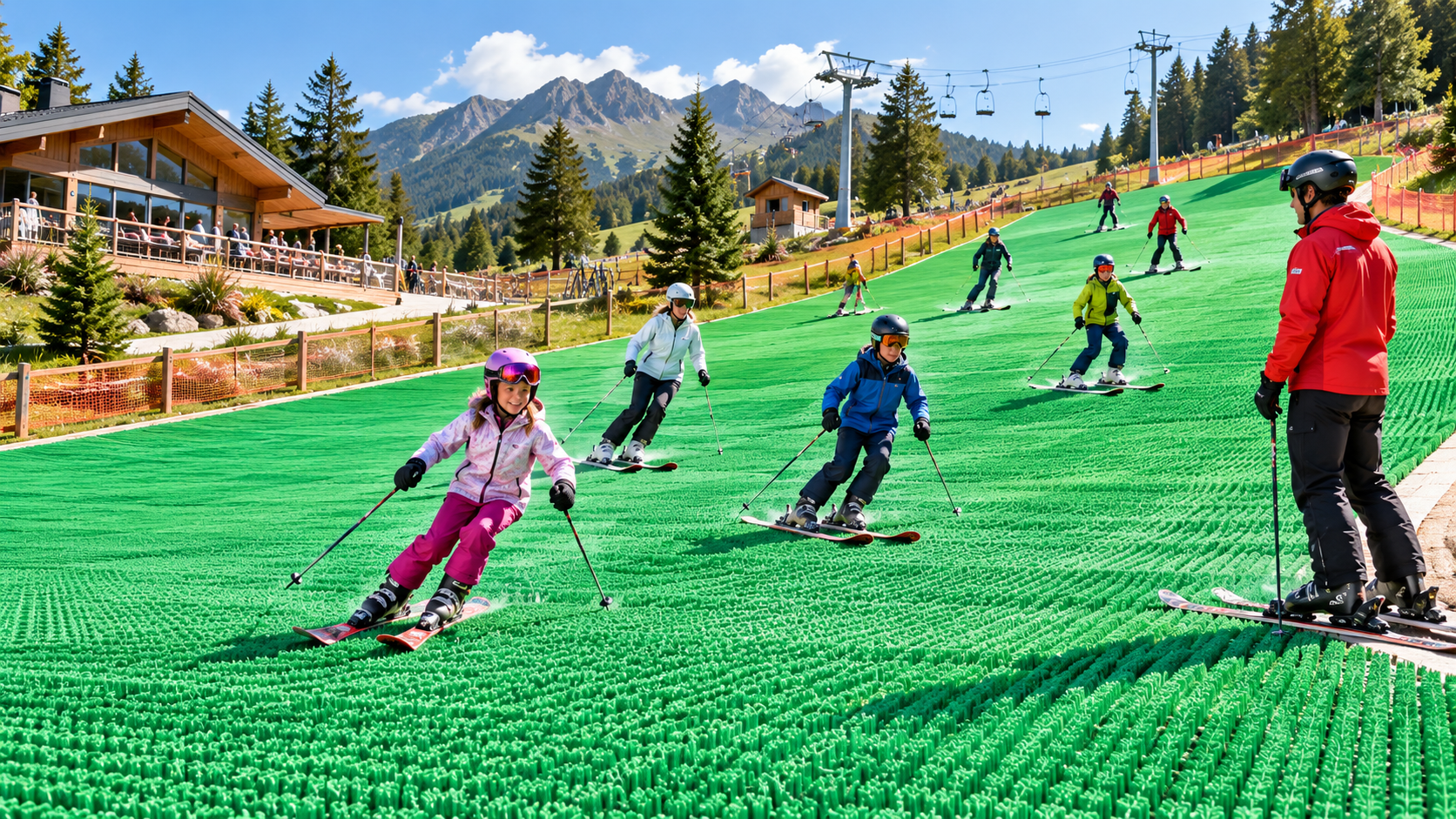
An all-season ski facility should be planned as an operating training environment, not just a synthetic surface laid onto a slope. User level, discipline, geometry, drainage, services, coaching, circulation, run-out and future expansion all influence the final system.
Planning guidance — final supplied configuration remains project-specific.
01
Start with the training programme
Define the disciplines, athlete levels, coaching format, expected operating hours and whether the project begins with learning, moguls, freestyle or a complete multi-zone facility.
The programme should control the terrain. A beginner learning slope, mogul line and freestyle landing system do not share the same geometry, run-out or supervision model.
02
Read the site before choosing terrain
Record the usable length and width, existing levels, gradient, access, drainage direction and surrounding land uses. The synthetic surface should follow a stable, site-specific base rather than being expected to correct unresolved civil or structural issues.
Measured footprint and levels
Base and retaining concept
Positive drainage route
Delivery and maintenance access
Viewing, coaching and public circulation
03
Choose the operating pathway
Current SLOPEspan source material supports dry, wet-assist and snow-over operation. Wet-assist use adds water distribution, drainage and operating requirements that should be resolved before final site works.
Where lifts, surface tows, pumps, lighting or other services are included, local electrical and service design should be coordinated with the final product package.
04
Plan rider flow, run-out and supervision
Each training zone should have a clear direction of travel, defined entry and exit points, appropriate run-out and separation from spectator or queue movement. Coaching and observation positions should provide visibility without placing staff in the active line.
05
Keep specialist terrain specialist
Mogul spacing, freestyle takeoff, approach speed, landing profile, half-pipe concepts and other advanced terrain are not universal catalogue dimensions. Final geometry should be developed around the discipline and athlete level by the appropriate specialist project team.
06
Stage the facility without blocking the future
A learning slope can become Stage 1 of a wider SLOPEspan destination. Early planning should preserve logical space for later mogul, freestyle or performance zones, plus viewing, amenities, equipment handling, shade, lighting and sports-technology pathways where required.
07
Separate product supply from local project work
Apollo supplies the selected SLOPEspan product system and current controlled product information. Site measurement, civil works, structural design, drainage, installation, electrical work, specialist slope or jump design, operating procedures and statutory approvals remain project-specific responsibilities.