UAE · SAUDI ARABIA · QATAR · BAHRAIN · OMAN · KUWAIT
GCC PROJECT BASIS
Climate is part of the structure.
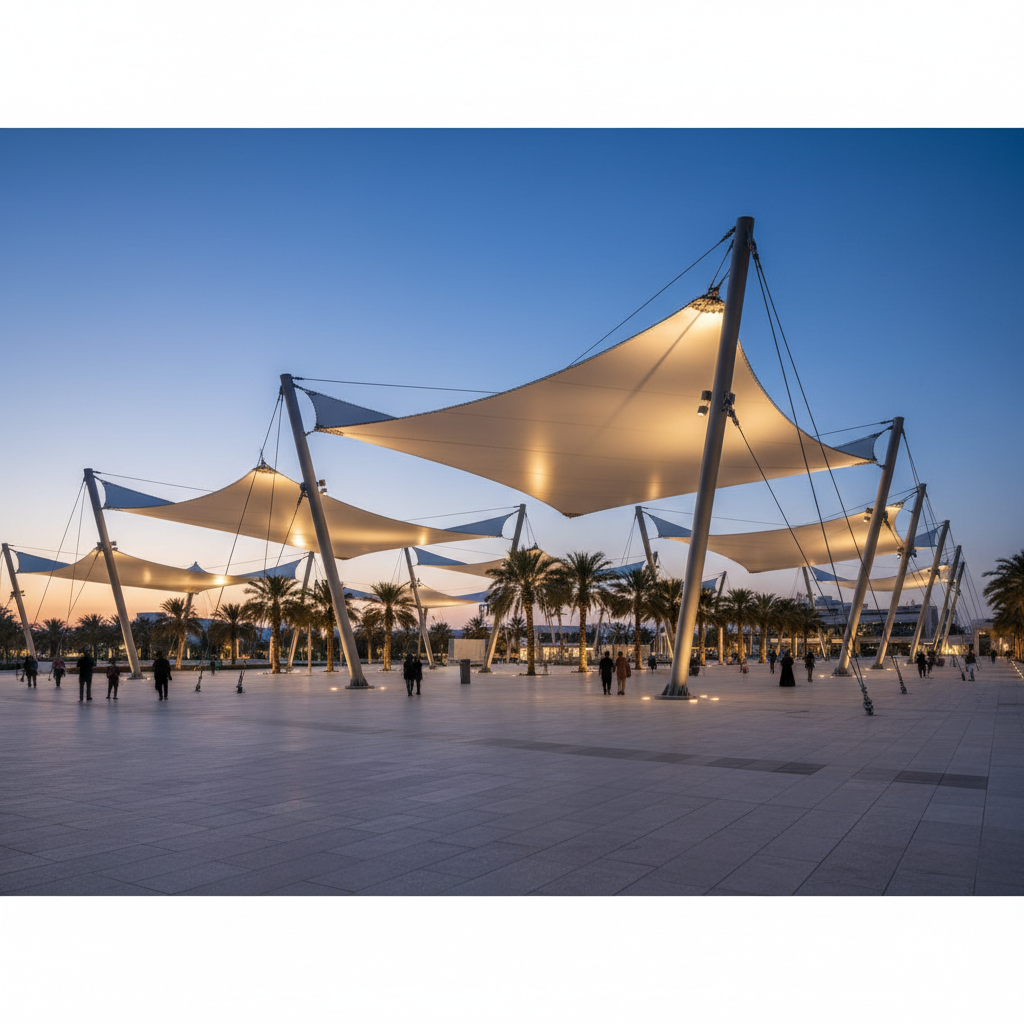
ZAHREQ Gulf projects are developed around the actual site, geometry and authority pathway. Wind, extreme solar exposure, high ambient temperatures, marine/coastal atmosphere, fire requirements and maintenance access are assessed as project inputs rather than afterthoughts.
Wind & geometry
Site-specific wind analysis around local code, terrain, height, surroundings and final membrane form.
Coastal corrosion
Hot-dip galvanising, duplex coating and 316 / 316L exposed hardware pathways for selected saline environments.
Membrane selection
PTFE, PVDF or ETFE selected around design intent, durability, fire, light transmission and project specification.
Local engineering
Supplier calculations can support coordination with a local registered engineer for final authority stamping where required.
Installation control
Supplier senior-engineer supervision can be scoped to support the appointed local installation contractor.
Project documentation
Calculation reports, shop drawings and project technical submittals coordinated according to agreed scope.
COASTAL GCC PATHWAY
Salt exposure changes the specification.
For selected UAE, Qatar and Saudi coastal conditions, the current supplier recommendation is hot-dip galvanising with a minimum 85 μm zinc thickness, with a duplex galvanised + powder-coated system available for heavy salt atmosphere.
Exposed cables, turnbuckles, bolts and selected fittings can be specified in 316 / 316L stainless steel. Final coating thickness, finish, salt-spray evidence and maintenance requirements remain project-specific.
GULF APPLICATIONS
Built for projects where shade becomes architecture.
Stadium & grandstand roofsAirport & terminal canopiesResort & hotel structuresPublic plazas & civic shadeCommercial parking structuresSports & aquatic facilitiesPedestrian & transport linksLandmark bespoke structures
COUNTRY PATHWAYS
Start with the local project context.
Apollo NZ Global supplies ZAHREQ as a specialist project system. Local authority approvals, local engineer certification, civil works, foundations and installation remain with appropriately qualified local parties unless specifically included in the written project scope.
START WITH THE DESIGN BASIS
Planning a GCC membrane project?
Send the project location, use, drawings, dimensions, required span, known wind/fire criteria and exposure. We can then review the appropriate membrane and structural pathway.