01Understanding the project
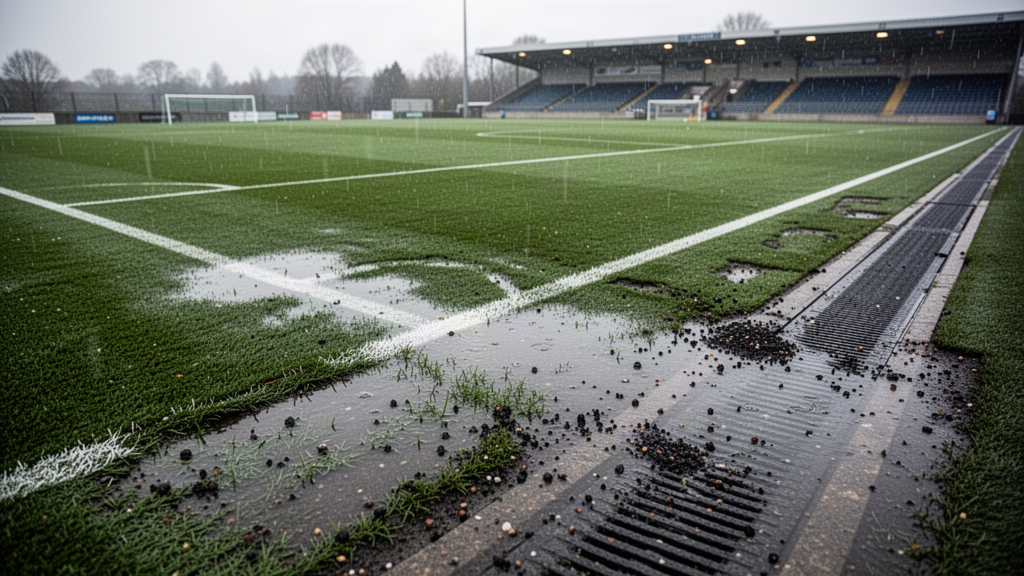
Poor sports turf drainage can result from a clogged surface, insufficient base permeability, blocked drains, inadequate falls or water entering from outside the pitch. Diagnosis should examine the entire water path before any resurfacing is ordered.
An artificial sports field that remains wet or ponded after rainfall can lose usable playing time and become harder to maintain. The immediate temptation may be to replace the carpet or add a trench drain. Yet water does not recognise procurement boundaries; it follows the available path through the surface and supporting construction.
A practical drainage review traces rainfall from the sky to the eventual discharge location. This guide outlines common failure patterns, investigations to consider and how facilities can prioritise maintenance, testing and capital works. It is not a site-specific engineering diagnosis.
Understand how a sports pitch drains
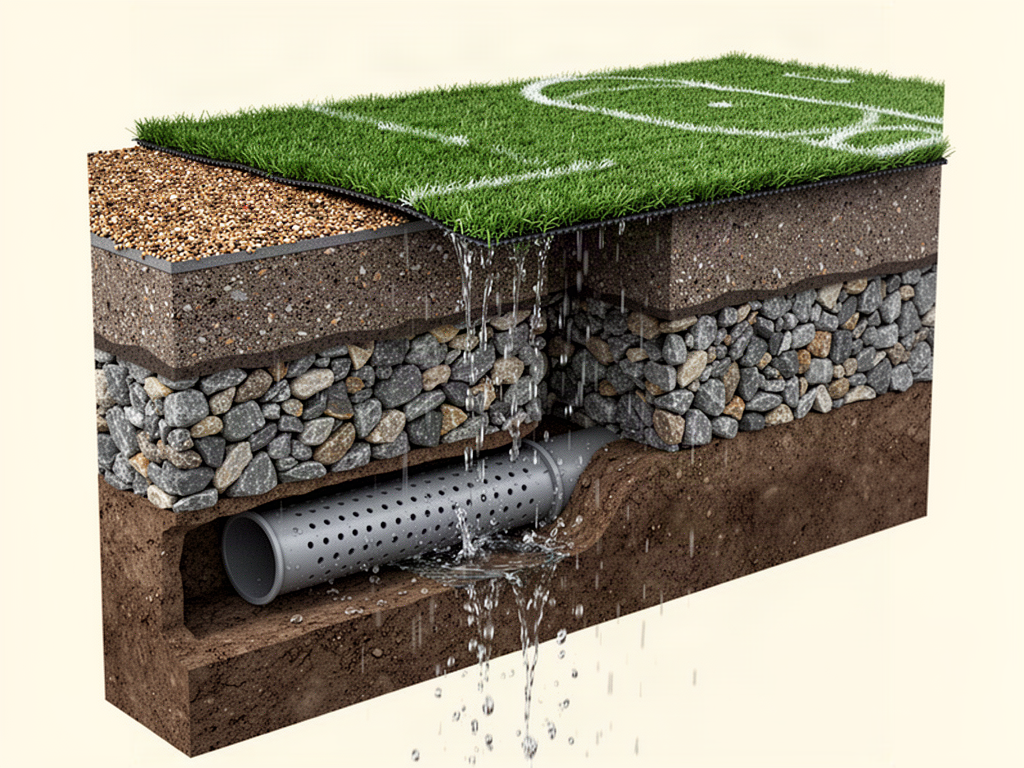
Many synthetic pitches are designed to admit water through the carpet and underlying permeable layers before the water is collected by subsoil drainage or reaches an approved outfall. Other systems and sites use different construction strategies. The essential requirement is a continuous path with sufficient capacity, from the playing surface to the point where water is permitted to leave the site.
A highly permeable turf carpet will not solve a blocked outlet. Equally, a well-sized drainage pipe cannot fix a clogged or damaged surface that prevents water from reaching it. Treat the pitch as a connected system, not as one material layer.
Recognise the main symptoms
Surface puddles may appear in isolated depressions, in long strips along construction joints or across broad sections of the pitch. Some areas drain slowly after light rain; others appear normal until a heavy storm overwhelms the system. Dampness that repeatedly appears near edges can indicate water entering from adjacent land or drainage discharge levels.
Record photographs and locations immediately after rain, then again over time. Note rainfall context and how much water remains. A log of repeat locations is more useful than a single dramatic photograph because it helps identify a persistent local defect versus a storm that exceeds design expectations.
Surface contamination and compaction
Fine dirt, organic matter, algae, leaves and other contamination can reduce surface permeability. Infilled turf may accumulate fines within the infill or carpet structure, particularly where maintenance practices are inadequate or surrounding landscape washes material onto the field. Heavy use and inappropriate cleaning can worsen the condition.
Facilities should follow the surface manufacturer's maintenance instructions, using approved tools and methods. Aggressive brushing, pressure washing or removal of infill without a plan may damage the carpet or affect sporting performance. When uncertain, test and inspect before attempting deep cleaning.
Base construction and level problems
Underlying aggregate must be suitable for the design and correctly placed. Inadequate compaction, settlement, poor grading, contamination during construction or insufficient permeability can cause water to remain within the base. Local depressions in the playing surface may be signs of movement beneath it.
Resurfacing over an unstable base can conceal the issue for a season and then recreate it. Before planning a new carpet, ask for the available construction drawings, survey levels, evidence of base testing and the site's repair history. The right remedy might be selective base correction rather than wholesale replacement.
Drainage pipes, outlets and off-site capacity
Subsoil drains can be blocked, damaged, poorly graded or connected to an outfall that is already surcharged during major storms. A pipe may be present on a drawing but not be functional in the current site condition. If the final discharge route is inadequate, water can remain beneath the pitch even when the carpet and aggregate are performing well.
Qualified drainage contractors may use inspection points, appropriate camera systems, flow testing and relevant survey tools. Ensure any investigation considers permitted discharge routes, surrounding stormwater infrastructure and local environmental requirements, rather than simply proposing a larger pipe without understanding the receiving network.
Run-off from nearby land is easy to miss
Water flowing from car parks, paths, banks, roofs or adjacent grassed land can introduce excess volume and sediment. The pitch may then operate as an unintended collection basin. This can create local contamination and persistent edge ponding even when the original pitch layers were designed correctly.
Inspect the whole site during rainfall. Identify landscape levels, hardstand falls, drainage grates and areas of erosion. Interception drains, surface grading or revised edge details may sometimes be more effective than changing the sports carpet. Such work needs a site-specific civil design.
Test before deciding what to replace
Drainage problems can be assessed through visual surveys, level checks, appropriately selected permeability or infiltration testing, base investigation and outfall checks. Different test methods answer different questions. An on-site surface permeability test does not by itself prove that the underground drainage network has adequate capacity.
Use relevant sport and facility standards alongside qualified local advice. ASTM provides published methods associated with synthetic turf permeability testing; the designer should select the correct method and interpret it within the whole pitch design. Document limitations so the results cannot be misrepresented as a complete field certification.
Maintenance, remediation and renewal pathways
Where the issue is surface contamination, an appropriate specialist cleaning programme may improve performance. Where the cause is settlement, drainage obstruction or inadequate outfall capacity, engineering and civil works may be required. A resurfacing contract should identify whether underlying defects are included or explicitly excluded.
Evaluate the cost of lost playing time, repeat call-outs and shorter surface life. A cheap carpet replacement that ignores subsoil drainage may be more expensive in the long run. For councils and clubs, a phased assessment can help separate immediate maintenance from structural works that need capital approval.
A drainage-focused procurement brief
Record the sport, pitch size, age, existing surface type, maintenance history, known construction layers, local climate, ponding map and drainage drawings. Include photographs from several rain events if available. Ask prospective suppliers or consultants to specify what they can confirm from the information and what requires site investigation.
Apollo's sports turf supply information can help organise product-side decisions, while the local turf specialist, civil engineer and contractor determine the remedial design and installation. The objective is to restore usable sporting performance without pretending every drainage problem has a catalogue solution.
- Map persistent ponding locations
- Inspect carpet, infill, base and outfall separately
- Review adjacent runoff and sediment sources
- Test before selecting a remedy
- Retain inspection evidence for future maintenance
A practical pitch inspection sequence
An efficient investigation starts outside the field boundary. Walk the site during a suitable rain event when it is safe, observing where water enters from car parks, buildings, slopes and adjacent landscape. Record surface low points and whether ponding aligns with known drains, repair joints or heavy-use areas. Then inspect accessible edge details, outlets, sediment deposits and maintenance records. This sequence helps separate an external runoff problem from a carpet problem before disruptive testing begins.
After the initial survey, the specialist can decide which tests are justified. Level surveys may identify settlement; surface permeability methods can help assess whether water can pass through the top layers; drainage inspections can reveal obstructions or backwater conditions. Not every test needs to be performed everywhere. A proportionate investigation seeks the information that will change the remediation decision, records limitations and avoids blaming a component just because it is visible.
Different weather patterns create different symptoms
A pitch that puddles under intense short-duration storms may be experiencing a different condition from one that remains wet for days after moderate rain. Saturated receiving infrastructure, tides, high groundwater and prolonged rainfall can limit drainage even when the surface is reasonably permeable. Conversely, isolated repeated puddles after light showers may point to surface levels or localised contamination. The event pattern is therefore part of the diagnosis.
Keep a straightforward log: date, rainfall estimate or source where available, affected zones, photos, drainage duration and any maintenance activity before or after. Compare similar storms rather than drawing conclusions from one unusual event. Do not describe every puddle as a failed product; investigate whether the design storm, maintenance condition and surrounding network explain what occurred. This creates a stronger case for genuine repair work.
When cleaning and maintenance may be enough
Where contamination is concentrated in the carpet or infill, a properly selected specialist maintenance procedure may improve water passage. The surface manufacturer should advise on permitted brushing, grooming, infill care and cleaning equipment. Aggressive methods can disturb fill depth, damage fibres or alter sport performance, so a cheap treatment can create more cost than it saves. A maintenance plan should also address debris from surrounding vegetation and access points.
Before authorising substantial cleaning, agree how success will be measured. Compare the same area using suitable pre- and post-work observations or tests, record any remaining structural symptoms and decide when escalation is necessary. If the underlying aggregate, drains or outfall are compromised, cleaning may temporarily change appearance without correcting the cause. Maintenance is an important pathway, but it is not an alternative to engineering where civil defects are documented.
A resurfacing project needs a clear defect register
Many facility renewals begin because the turf is worn and need resurfacing anyway. That can be an efficient opportunity to investigate the base, drainage and perimeter because they will be more accessible during planned works. However, a resurfacing contract that excludes everything under the carpet may lead to disputes when drainage defects are discovered after removal. The project team should identify known issues and establish who investigates and prices unforeseen conditions.
Create a drawing or photograph register for each defect with its location, observed symptom, proposed investigation and decision status. During tender, make clear which base corrections, outlet works or drainage repairs are included, provisional or excluded. Specify acceptance tests and maintenance handover appropriate to the actual system. This avoids confusing a completed cosmetic renewal with a verified solution to persistent water management issues.
What to ask the contractor or supplier
What layers are actually present beneath this turf? Where are the drains and permitted outlets? Is the observed pooling caused by surface permeability, levels or drainage capacity? What evidence will distinguish those possibilities? Which testing method is relevant to the chosen pitch? What repair work is included and which site conditions are assumptions? These questions are more useful than immediately asking for the most permeable available carpet.
Can one part of the field be repaired? Sometimes, depending on the cause and the continuity of the existing construction. Will a new turf surface prevent future flooding? Not if the underlying cause remains. Who maintains the new system? The operator must understand the chosen manufacturer's instructions. How can Apollo help? By supporting product information and a suitably scoped enquiry, while local sports-turf and drainage specialists establish the field-specific civil solution. That distinction keeps purchasing decisions technically responsible.
A sports field drainage investigation brief
Before contacting a supplier, assemble the field's available history: date of construction, surface type, major repairs, drainage drawings, maintenance logs, known ponding areas and examples of rainfall events that interrupted use. A simple field diagram marked with recurring wet spots is valuable. Include observations about nearby car parks, slopes, roofs and stormwater outlets. These details help a civil or turf specialist decide where to investigate first, rather than making assumptions from a distant photograph.
The investigation should state what will be measured and what decisions those measurements will inform. Suitable checks may include levels, surface permeability, base condition and outlet functionality, but each needs an appropriate method and competent interpretation. Ask the reviewer to distinguish identified defects from suspected causes. When remedial work is proposed, define whether the objective is reduced ponding, improved playing availability, correction of settlement or replacement of an expired carpet.
Finally, agree the verification and future maintenance plan. A project that cleans the infill or reconstructs a drainage line should record the before-and-after condition in a comparable way where feasible. Ensure the operator receives current surface-care instructions and responsibilities for ongoing debris control, inspection and repairs. Better information at the start often prevents a poor-value response to what is ultimately a multi-layer water management problem. The investigation record should remain with the facility owner so future contractors can understand previous diagnoses, work completed and unresolved risks. This avoids paying repeatedly for the same basic survey.