
Apollo NZ Global

Built Intelligence · Sports & Recreation · Pickleball

What Is a Portable Pickleball Mat, Really? The Reality Behind Roll-Out Courts

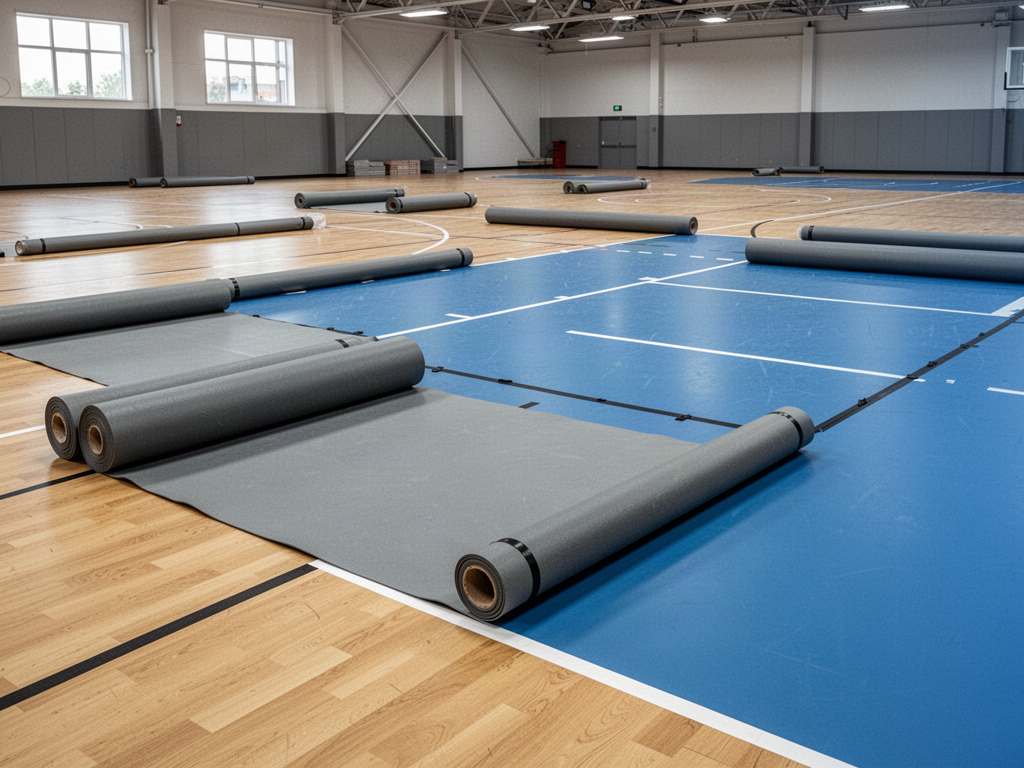
Portable pickleball flooring sounds simple: roll it out, set up a net, play, and pack it away. In practice, a complete court can involve several substantial rolls, hundreds of kilograms of material, seam planning and a serious storage and handling strategy.

Apollo NZ Global EditorialPublished 2026-10-22Project intelligence
Editorial guidance — final product, engineering, compliance and site requirements are confirmed for the actual project.
What Is a Portable Pickleball Mat, Really? The Reality Behind Roll-Out Courts
MARKED PLAYING COURT20 × 44 ft6.10 × 13.41 m · playing lines only
MINIMUM PLAYING SURFACE30 × 60 ft9.14 × 18.29 m · including run-off
REFERENCE FLOORING MASS≈585 kgOne 30 × 60 ft surface at 3.5 kg/m²

The 585 kg example uses ATHREN PR30 reference material mass only. It does not represent the weight of a confirmed roll package, shipment or a fully equipped court.

01

First, what exactly is a portable pickleball mat?

The phrase “portable pickleball mat” is often used for a roll-out sports playing surface supplied in sections and installed over a suitable existing floor. It is not necessarily one large sheet, and it is not interchangeable with every other type of portable court.

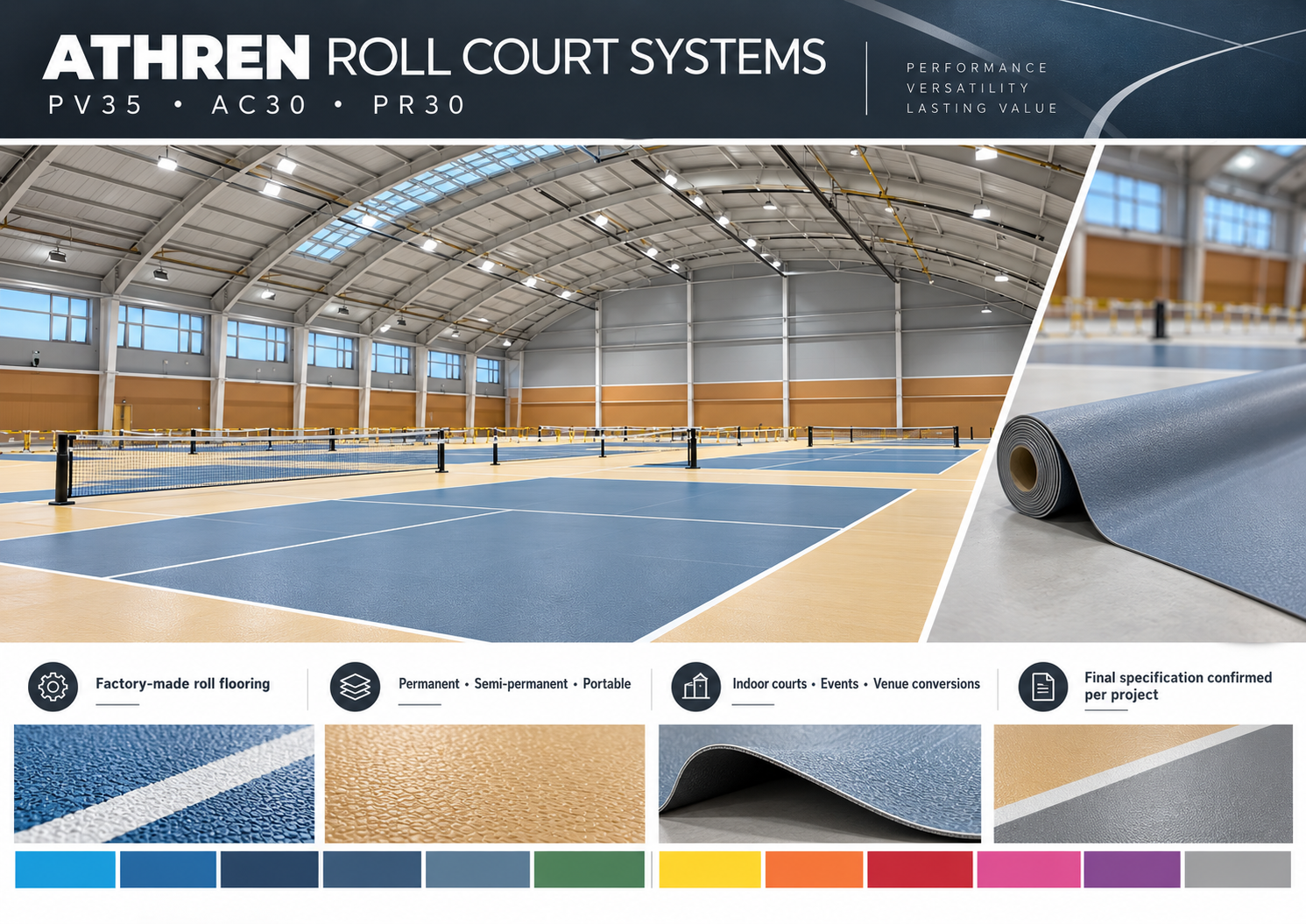
Roll-out products may use textured PVC, acrylic-coated PVC, reinforced support layers, and factory-applied or separately marked court lines. Actual construction and joining instructions vary by product.

A complete portable playing area is commonly made from multiple labelled rolls, positioned and joined according to a specific cutting and seam map. The manufacturer’s installation instructions, not the word “portable”, determine how the finished surface should be used.

  • Factory-made roll-out surfaces are different from site-applied permanent acrylic coatings.
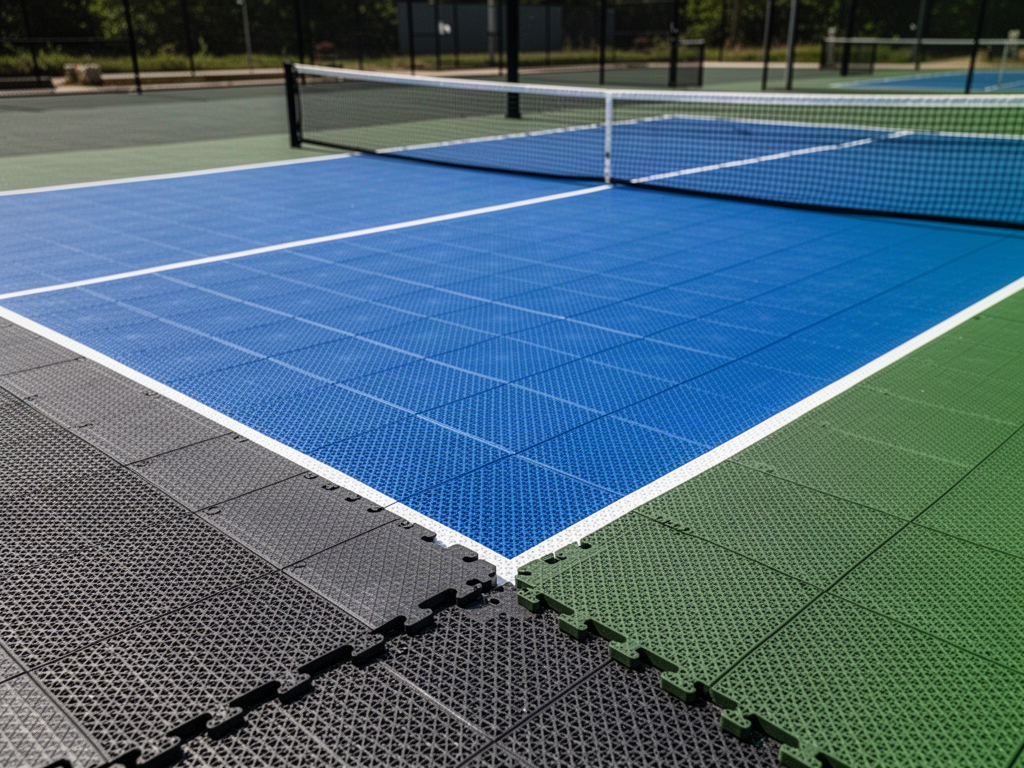
  • Interlocking modular tiles and panel systems are other portable formats, not the same material.
  • Confirm the exact product’s permitted installation and removal method before ordering.
02

The biggest misconception: how portable is portable?

A pickleball court is marked at 6.10 × 13.41 m (20 × 44 ft), but those are only the playing lines. Players also need space beyond the lines. USA Pickleball’s rulebook specifies a minimum overall playing-surface envelope of 9.14 × 18.29 m (30 × 60 ft), with more generous dimensions recommended for certain uses and new construction.

That minimum envelope is approximately 167 m². Apollo’s ATHREN PR30 reference specification lists a material mass of 3.5 kg/m². Covering 9.14 × 18.29 m at that reference mass works out at approximately 585 kg of flooring for one court.

For five courts at the same footprint and reference material mass, that is approximately 2.9 tonnes of flooring. Those figures illustrate net material mass only: they do not include roll cores, wrapping, joiners, line-marking extras, pallets, crates or shipping packaging.

The final roll count, dimensions and gross packed weights must be confirmed against a manufacturer’s cutting plan and packing schedule. “Portable” can mean removable and relocatable—not lightweight, quick to lift or easy to store.

  • Playing lines: 6.10 × 13.41 m (20 × 44 ft).
  • Minimum playing-surface envelope: 9.14 × 18.29 m (30 × 60 ft).
  • Illustrative ATHREN PR30 net floor-material mass for that envelope: about 585 kg per court.
  • Five matching reference envelopes: approximately 2.9 tonnes of flooring material, before packaging.
03

Can you genuinely roll it out and play immediately?

Sometimes a properly prepared venue and a correctly specified system make roll-out installation straightforward. That does not mean every floor can be unrolled and played on instantly.

The existing floor must be clean, dry, sufficiently flat and stable. Rolls need accurate positioning; seams and perimeter edges require a manufacturer-approved method; markings must align; and the completed surface must remain stable under starts, stops and lateral player movements.

Some materials may need time to relax or acclimatise after unrolling. Any advertised installation time must be tied to a defined court footprint, crew size, access route, venue condition and fixing method.

Do not assume frequent installation and removal is approved merely because the product is sold as portable. Confirm the permitted rolling cycle for the actual model.

  • Survey the base and floor finish.
  • Confirm the court roll map and direction of seams.
  • Plan handling crew, floor restraint, edge treatment and installation schedule.
04

The existing floor still matters

A portable sports surface does not automatically correct faults in the substrate beneath it. Uneven concrete joints, moisture, cracks, ridges, settlement or contamination may remain problems even when a new roll-out surface looks visually smooth.

A warehouse slab in particular needs assessing before it is considered court-ready. Temporary sports flooring must also be compatible with any existing timber, vinyl or specialist sports surface that the venue wants to protect.

Review flatness, moisture, surface cleanliness, allowable fixing methods and appropriate sports performance for the complete build-up. The playing outcome depends on the entire system, not the appearance of the top layer.

  • Flatness, ridges, cracks and movement joints.
  • Moisture, surface contaminants and floor protection.
  • Traction, ball response and stability for the exact assembled system.
05

What about the joins between rolls?

Where several rolls form a court, the joins are part of its performance. A temporary system may use removable tapes or other specialist joining methods; a longer-term surface may require a different treatment.

The seam plan affects appearance, stability, maintenance and future pack-down. Repeated removal can put different demands on seams and backing than a surface installed once and left in place.

Ask the manufacturer whether the joining method is approved for repeated use, how the surface is restrained against unwanted movement, and whether adhesives or tapes are compatible with the underlying floor.

Poorly executed or damaged seams can become operational and potentially safety issues; installers should follow the actual product instructions.

06

Roll-out flooring versus modular tiles: are they the same?

No. Both can create removable court surfaces, but their construction and use are different.

Roll-out flooring is delivered in large lengths and seeks to provide a comparatively continuous playing face; it requires handling of long rolls, seams and floor protection. Interlocking tiles arrive in smaller pieces or panels, require assembly and perimeter finishing, and have many repeatable joints.

Some open-grid modular tiles permit water to drain through the playing layer. Continuous roll-out material generally does not, so outdoor drainage and surface-water planning are different.

Neither format is universally better. Compare the specific manufacturer's performance evidence, substrate requirements, weather suitability, playing characteristics and the proposed removal frequency—not just photographs.

  • Roll-out: large rolls, planned seams, continuous playing face.
  • Modular tile: interlocking sections, repeated joints and assembly at the venue.
  • Drainage and exterior suitability depend on the exact system design.
07

The hidden challenge: storage and repeated handling

Where does the court go when it is not being used? For a venue that changes sports frequently, this may be the most important unanswered question.

Full-size flooring rolls need storage space, a safe movement route and any approved handling aids. Depending on the configuration, the venue may need storage cores, trolleys, lifting equipment and a dry protected area.

Long, heavy rolls can be awkward through doorways, corridors, stairs or storage rooms. The storage route should be checked before the venue commits to a particular roll width and length.

A court is only practically portable if the facility can realistically move it, protect it, store it and reinstall it at the required frequency.

  • Check roll length and individual roll mass against all doors and corridors.
  • Confirm cores, orientation, temperature and dry-storage instructions.
  • Plan personnel and suitable lifting aids for repeated moves.
08

Can portable pickleball mats be used outdoors?

Some court surfaces are developed for outdoor use; others are primarily indoor systems. Do not assume an indoor PVC sports floor is appropriate for permanent outdoor exposure.

Continuous roll-out flooring generally does not drain through its playing face. Water runoff, ponding, UV, temperature movement, wind exposure, fixings and perimeter restraints need to be addressed for any outdoor proposal.

Only the exact manufacturer's documentation can confirm permitted exposure and the suitable fixing method for the proposed location.

09

When does portable flooring actually make sense?

Portable surfaces can be valuable where temporary use or genuine flexibility is the project requirement: tournaments, occasional venue conversions, some multi-purpose sports halls, trial court programmes and short- or medium-term facility adaptations.

They may also make sense when a building owner does not permit a permanent sports coating on the existing floor.

Where a club runs dedicated courts every day with no intention of removing the surface, permanent or semi-permanent systems may offer a simpler day-to-day operating arrangement.

The question is not whether portable flooring is good or bad. It is whether portability provides enough practical value to justify the handling, seam and storage plan.

10

Questions every buyer should ask

Before comparing supplier proposals, request a complete flooring schedule and a realistic operating plan, not just a sample and a price for the surface.

  • Total court area including run-off—not just the marked playing rectangle.
  • Exact number, width, length and individual mass of the proposed rolls.
  • Confirmed packed weight versus reference net flooring mass.
  • Existing-floor flatness, moisture and substrate requirements.
  • Approved fixing, edge treatment and repeatable joining method.
  • Personnel, equipment and estimated changeover procedure.
  • Storage cores, storage area and safe movement route.
  • Indoor or outdoor exposure approval for the exact product.
  • Sport performance testing and test method for the specified build-up.
  • Included components, excluded works and available manufacturer documentation.
11

Final thoughts: portable is a capability, not a promise of convenience

Portable pickleball flooring is not a gimmick. Properly specified systems can create valuable flexibility for clubs, schools, event operators and multi-use facilities. But the total court remains a substantial area of specialist flooring, whether it arrives as rolls, modular tiles or panels.

Choose around the actual venue: base conditions, court footprint, playing needs, intended frequency of use, removal routine and storage access. For a dedicated permanent venue, compare permanent surfacing as well.

Apollo NZ Global provides wholesale and project supply of court surfaces and related equipment. The purchaser's local contractors undertake site preparation, installation and local works. Contact Apollo with court dimensions, existing-floor details, intended changeover frequency and destination to request a project-specific flooring quotation.

Move from intelligence to project

Apply the thinking to the actual brief.

Open ATHREN PR30 Portable Court Roll Flooring Send a project brief
Project