What is the Cricket Practice Academy?
A 12-module global cricket-practice pathway covering training programme, lanes, run-up, surfaces, containment, support structure, dividers, lighting, technology, maintenance and future expansion.
 SPORT + KNOWLEDGE
SPORT + ACADEMY
Cricket Practice Academy
A 12-module global cricket-practice pathway covering training programme, lanes, run-up, surfaces, containment, support structure, dividers, lighting, technology, maintenance and future expansion.
How to use the Academy
Each module gives you a planning outcome and a short set of questions to resolve. The linked guide provides the deeper technical context. You can follow the complete sequence or jump directly to the decision you are working on.
SPORT + ACADEMY is a practical education and planning resource. It is not a formal qualification, accreditation or professional-design substitute.
Direct answers
These short answers define the scope of the Academy and make the planning intent clear before you move into the modules.
A 12-module global cricket-practice pathway covering training programme, lanes, run-up, surfaces, containment, support structure, dividers, lighting, technology, maintenance and future expansion.
This self-guided planning pathway is intended for Schools · Clubs · Academies · Universities · Resorts · Training centres · International projects. It is designed to support early project understanding before detailed product specification or local professional design.
The pathway contains 12 modules covering define the cricket training programme, choose indoor, outdoor or mixed training, set lane count, length and training flow, select the practice surface, plan side, rear and roof containment, engineer the frame for the destination and the final project brief.
No. SPORT + ACADEMY is a practical education and planning resource. It does not provide formal accreditation and does not replace project-specific professional, engineering, safety or statutory advice.
PLANNING BOARD 16
Real-world reference
These current project and manufacturer references show the types of systems discussed in the Academy. Final layouts, dimensions, engineering and supplied configurations remain project-specific.
 01
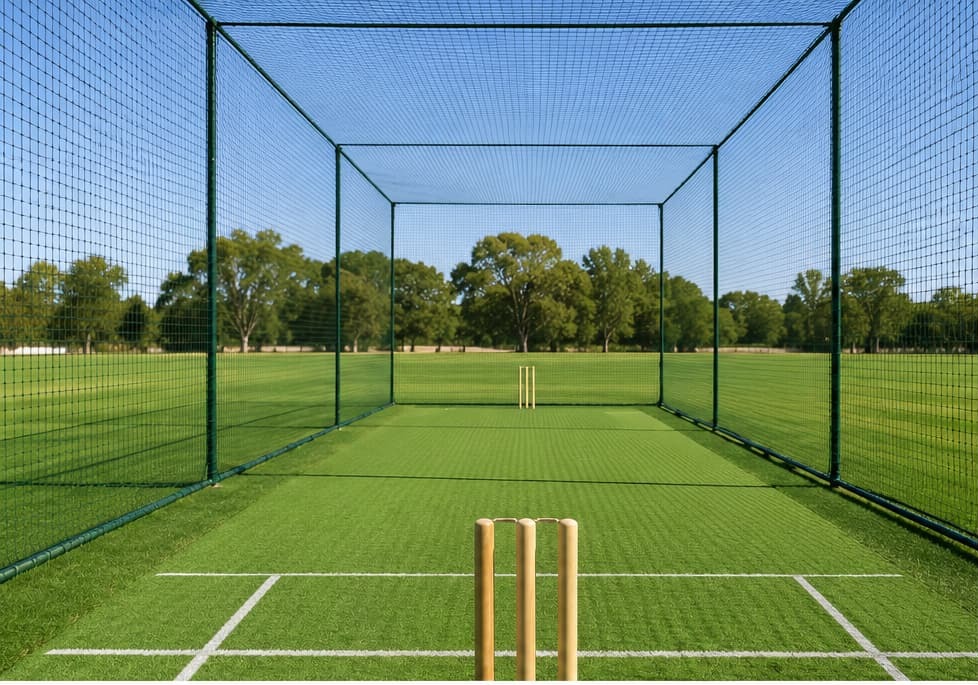
01A usable practice lane needs more than net dimensions; access, run-up, support structure and surrounding safety space all matter.
 02
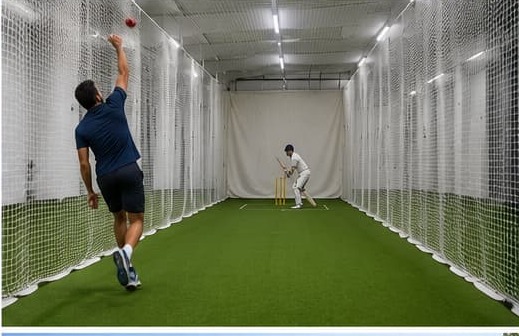
02Lighting, roof netting, structure, ventilation and access should be coordinated before the lane system is installed.
 03
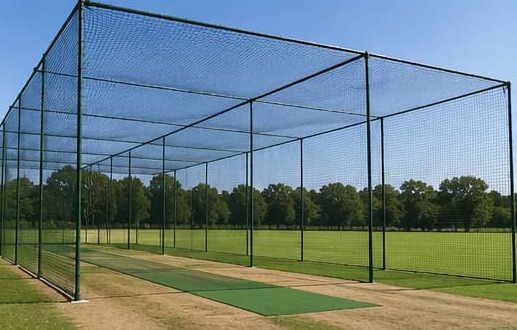
03Multi-lane facilities need safe movement, divider control, equipment storage and a clear future-expansion strategy.
Learning pathway
Resolve the early project questions before detailed product specification. That reduces rework and makes later supplier, consultant and project-team conversations more useful.
Start with batting, bowling, wicketkeeping, coaching, age groups, pace and simultaneous users before choosing cage dimensions.
Who trains here?
Do bowlers need full run-ups?
How many lanes operate at once?
Match the enclosure, surface, lighting and weather strategy to how the facility is expected to operate year-round.
Indoor, outdoor or covered?
Seasonal or year-round use?
What weather and wind exposure applies?
Plan run-up, batting end, safe access, waiting and coaching positions before the support structure is designed.
Single or multi-lane?
What run-up length is needed?
How do players enter without crossing active lanes?
Choose synthetic or other practice surfaces around desired pace, bounce, base, drainage and maintenance.
What training response is required?
What base exists?
How will outdoor drainage work?
Coordinate mesh, net height, dividers and rear protection around ball trajectory and adjacent users.
What ball speeds are expected?
What lies beside and behind the lanes?
Is roof containment required?
Treat posts, supports, anchors, foundations and wind exposure as a project-specific structural system.
Freestanding or building-supported?
What local wind criteria apply?
Who provides foundations and structural design?
Decide whether lanes operate independently, open into a larger training space or need retractable divider systems.
Do coaches need lanes combined?
How are dividers operated?
Where do retracted nets store?
Coordinate indoor or outdoor lighting around ball tracking, roof netting, frame shadows and training hours.
Daytime only or evening use?
Do luminaires conflict with roof nets?
What maintenance access is needed?
Allow positions for coaches, bowling machines, cameras, power and data without reducing player safety.
Are bowling machines used?
Is video analysis required?
Where are power and data points?
Provide for balls, mats, machines, replacement nets, cleaning and safe maintenance access.
What equipment stores on site?
Can damaged net panels be accessed easily?
Who inspects frames and netting?
Allow a school, club or academy to add lanes, indoor cover, lighting or technology without rebuilding the entire facility.
Could more lanes be required?
Is future indoor conversion possible?
Are services positioned for expansion?
Bring users, lane geometry, surface, containment, structure, lighting, technology and local responsibilities into one package.
Are lane count and run-up needs confirmed?
Are site exposure and base documented?
What structural, civil and installation work remains local?
SPORT + TOOLS
Use the planning tools when you are ready to translate the Academy modules into dimensions, comparisons and a structured project brief.
Move into Apollo's current practice-net, batting-cage, surface, lighting, cover and training-infrastructure supply pathway.
Open tool 02Work through lane, run-up, surface, containment and expansion decisions.
Open tool 03Review Apollo's current single and multi-lane supply pathways.
Open tool 04Turn the training-facility decisions into one review package.
Open toolSPORT + KNOWLEDGE
Continue learning
Use Build a Multi-Sport School to coordinate cricket practice with shared courts, indoor halls and the wider campus infrastructure.
Build a Multi-Sport School