Define the training programme first
Record age groups, bowling pace, batting, wicketkeeping, coaching, simultaneous users and whether bowlers need full run-ups. These decisions drive lane length and overall footprint.
 Start Project Brief
Sports & Recreation · Global cricket practice guide
Cricket practice facilities vary more than court sports. ICC examples range from netted practice strips through large indoor and outdoor academies, so the correct brief starts with how players train rather than assuming one universal cage size.
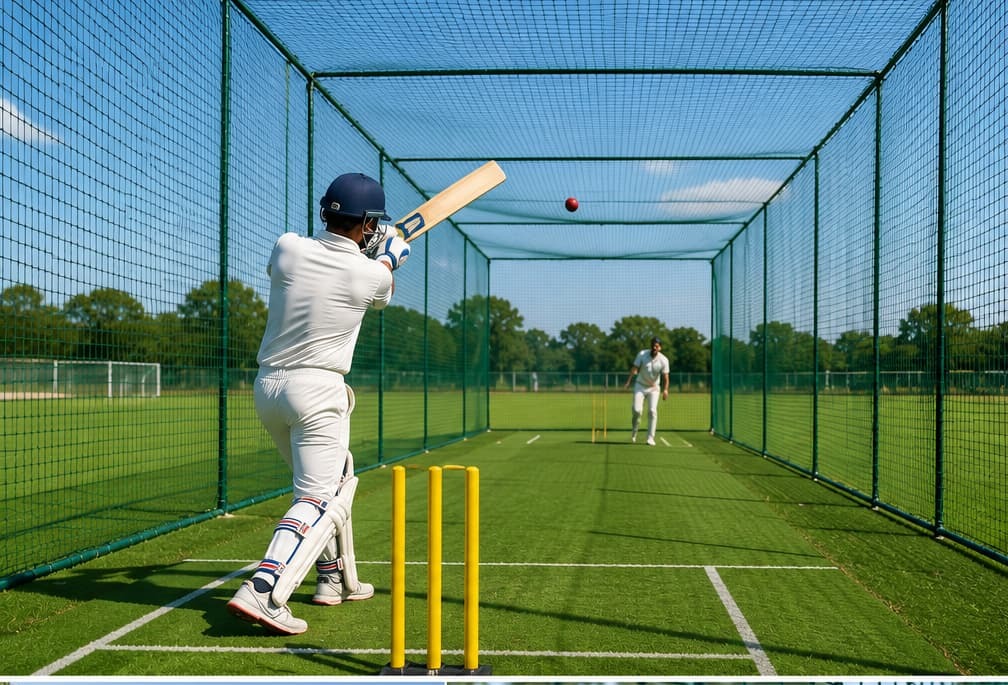
Record age groups, bowling pace, batting, wicketkeeping, coaching, simultaneous users and whether bowlers need full run-ups. These decisions drive lane length and overall footprint.
Lane widths, divider nets, rear containment, roof containment, entry points and coach positions should allow multiple sessions without unsafe crossing movement.
Indoor and outdoor practice strips may use different surface pathways to simulate pace or bounce characteristics. Base, drainage, wear and local maintenance capability still control the final build-up.
Net grade, mesh, support structure, foundations, wind exposure, roof containment and replacement access need project-specific confirmation rather than one universal cricket-cage specification.
Schools and clubs can start with one or two lanes while protecting space, services and access for additional lanes, indoor conversion, lighting, analysis technology or fitness support later.
Reference this resource
Link to the live page rather than a saved copy so readers reach the current Apollo planning resource and its latest product and planning links.
apollonzglobal.com/knowledge-centre/sports-courts/cricket-practice-facility-planning-guideMove from knowledge to project