01Start with the intended level of hockey
Define whether the field is for community use, schools, clubs, regional competition, high-performance hockey or Hockey5s. The level of play influences the surface pathway, field equipment, lighting and documentation required.
If an FIH requirement applies, it must be matched to the exact underlying product/system and the finished field rather than transferred to an Apollo brand name.
Choose the surface and water strategy together
Dry, water-based, dressed and shared-use hockey pathways solve different project briefs. A non-irrigated dry system should be treated as its own tested construction, not as a generic water-based turf used without irrigation.
Where irrigation is required, water supply, storage, delivery, drainage and operating responsibility belong in the project brief from the beginning.
Resolve the base, shockpad and drainage before turf
The finished turf cannot correct unstable levels, poor falls or inadequate drainage. The selected system must be coordinated with the civil platform and any shockpad or elastic layer required by the construction.
Access for installation, maintenance and future repairs should also be protected in the site layout.
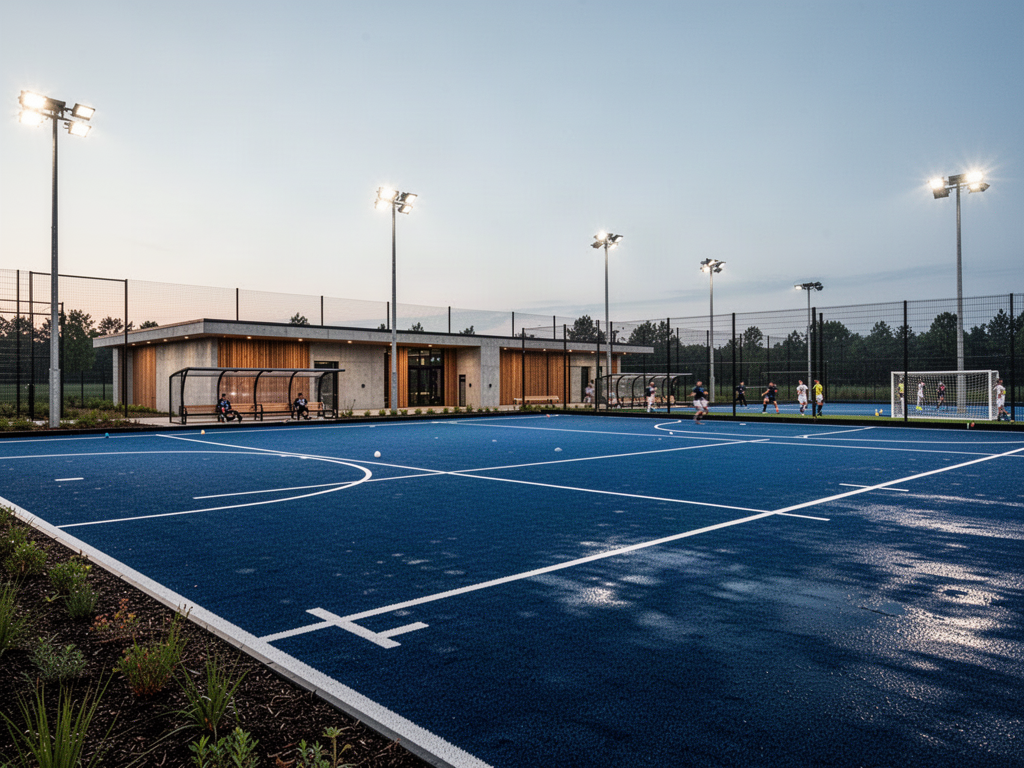
Plan goals, containment, lighting and player areas as one field
Goals, fencing, high ball-stop zones, gates, player shelters, technical areas and lighting poles all occupy space beyond the playing lines and can conflict if designed separately.
Spectators, accessible viewing, service access and future expansion should be included before the perimeter is frozen.
Build the maintenance and testing pathway into procurement
Cleaning, brushing, irrigation where applicable, inspection, repairs and specialist field testing should have identified responsibilities before handover.
Apollo is supply-only. Civil works, local installation, electrical work, testing and statutory approvals remain project-specific unless separately included.