01Rank the sports before selecting the surface
List the sports by frequency and importance: primary, secondary and occasional. The primary activity should drive the most demanding ball, traction, impact and performance requirements.
If one sport has formal certification requirements, confirm whether a shared-use construction can legitimately satisfy them before promising a multisport outcome.
Build a clear line-marking hierarchy
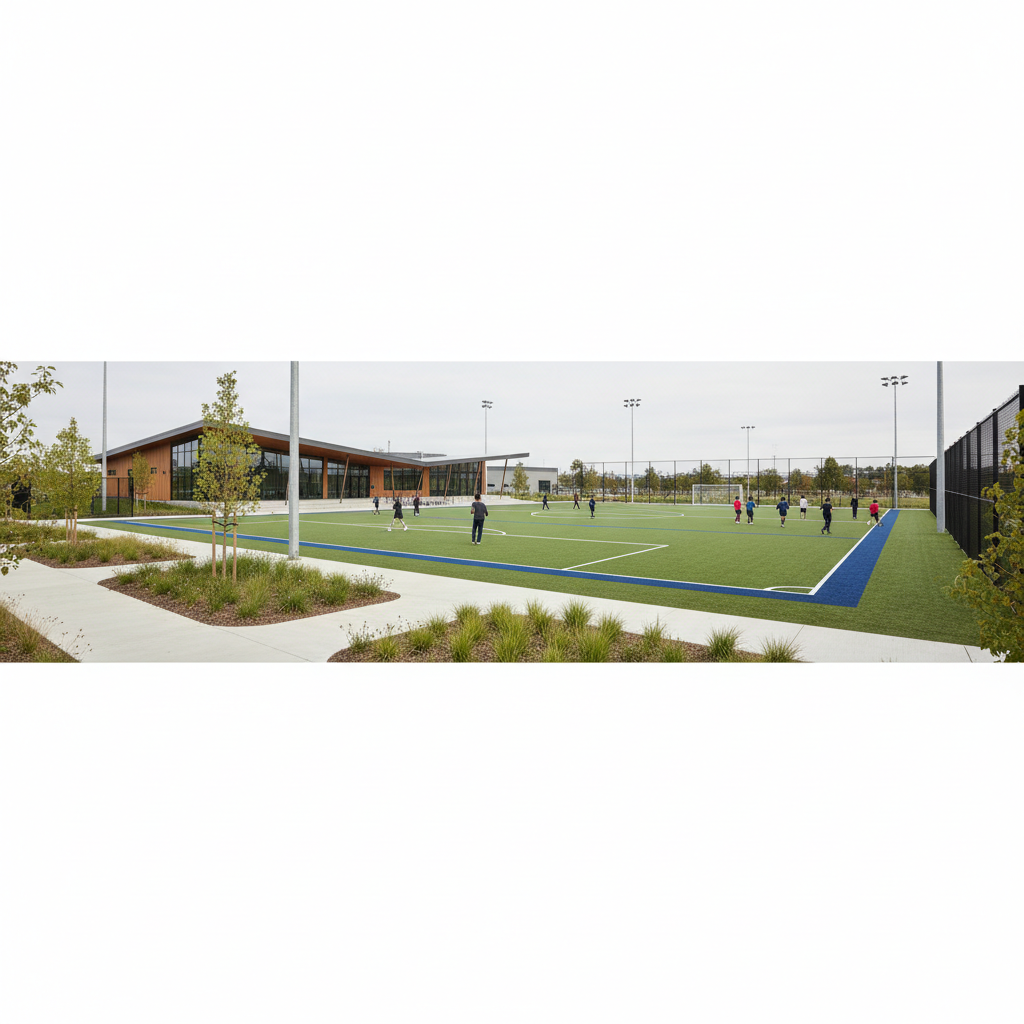
Use colour and prominence so the primary field remains easy to read. Secondary markings should support shared use without making the playing surface visually confusing.
Occasional activities may be better served by temporary or removable equipment rather than permanent markings and fixtures.
Choose equipment around changeover and storage
Fixed goals and posts can improve convenience for a primary sport, while removable or portable systems preserve flexibility. The trade-off is storage, handling and changeover time.
Schools in particular should plan equipment storage and supervision alongside the field rather than treating them as separate operational issues.
Coordinate lighting, fencing and community access
Shared-use sites often operate across school, club and public hours. Lighting, gates, fencing, spectator areas and access control should match that operating model.
Neighbouring properties, after-hours use and supervision responsibilities should be considered before the site layout is frozen.
Plan maintenance and future programme change
A multisport system should have a clear cleaning, brushing, infill-management where applicable, inspection and repair pathway. Identify who owns that work and where maintenance equipment will be stored.
Documenting the exact field system and line hierarchy also makes future programme changes easier to manage.