Apollo NZ GlobalRequest Project Pricing

Sports & Courts · Gym flooring comparison

Rubber Gym Tiles vs Rolls

Rubber tiles and rubber rolls can both work well in commercial gyms, but they solve the floor differently. The useful comparison is not which format is universally better; it is where replaceability, impact build-up, seam control and broad continuous coverage matter in the actual facility.

Planning guidance — final supplied configuration remains project-specific.
Reviewed September 2026 · Current live planning resource
Commercial rubber gym flooring roll used for tiles versus rolls comparison
01

Tiles favour modular repair and heavier local zones

Tiles can be useful around strength equipment, racks and free-weight areas because local sections can be replaced and heavier-duty pathways can be concentrated where the loads occur.

Joint layout and edge restraint still matter, particularly where equipment moves across the floor or transitions into another surface.

02

Rolls favour broad continuous coverage

Roll-format rubber can reduce the number of joints across larger cardio, circulation and general-training areas. The finished result depends on accurate seam planning, substrate preparation and the selected fixing method.

03

Impact requirements can override the format preference

A visually consistent floor should not force lighter material into a heavy drop zone. Olympic lifting, dumbbell areas and concentrated strength zones may need thicker impact pathways or separate platform build-ups even when rolls are used elsewhere.

04

Plan transitions before quantities are ordered

Tiles, rolls, sled turf and platforms can finish at different heights. Build-up, underlay, backing and edge profiles should be coordinated so circulation and equipment movement are not interrupted by abrupt steps.

05

Choose by facility operation and maintenance

Consider cleaning, expected wear, access for local repairs, spare material, future equipment changes and how easily the facility can isolate a section for maintenance. The final specification should follow the exact product construction and project conditions.

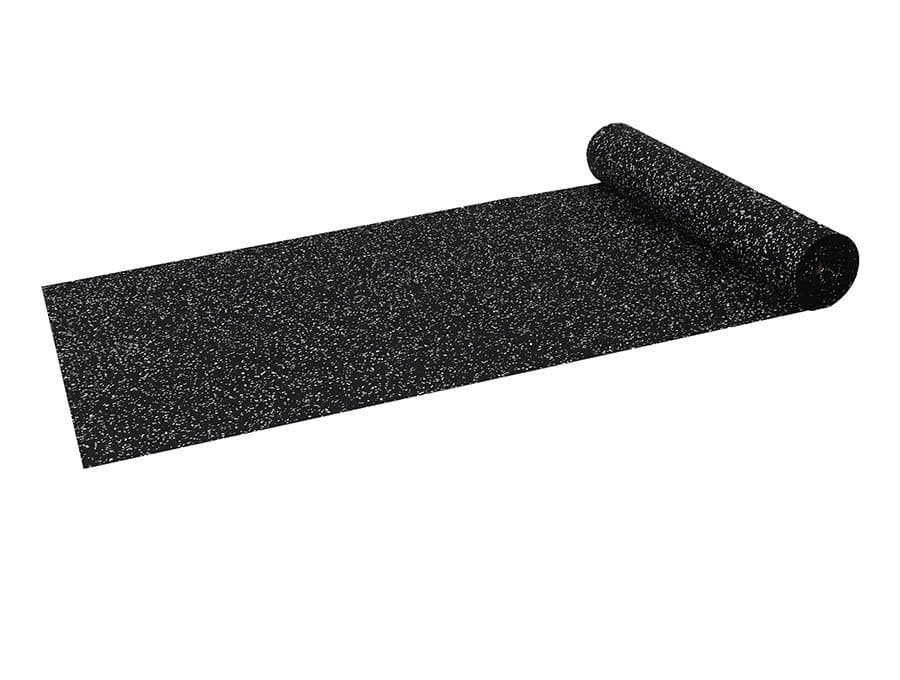
Comparison reference

Rubber gym tiles vs rubber rolls — planning matrix

This matrix compares the practical role of each format within a commercial gym. It does not prescribe thickness, density or impact performance, which remain product- and project-specific.

Planning criterionRubber tilesRubber rolls
Best planning fitStrength, rack, dumbbell and local impact zones where modular replacement can be useful.Broader cardio, circulation and general-training areas where continuous coverage and fewer joints are valued.
Local replacementIndividual sections can support a more localised replacement strategy.Repairs usually involve the selected roll width, seam layout and compatible material strategy.
Joint patternMore module joints across the finished floor.Fewer long seams across larger areas when layout is planned efficiently.
Impact zoningCan concentrate heavier-duty pathways in selected zones, subject to the exact tile construction.A broad roll floor may still need separate heavier impact zones or lifting platforms.
TransitionsTile thickness and any underlay must coordinate with adjacent rolls, turf and platforms.Roll thickness, backing and fixing build-up must coordinate with tiles, turf and platforms.
Specification focusTile construction, zone loads, edge restraint, spare stock and replacement access.Roll construction, seam plan, substrate preparation, fixing method and repair stock.

Final impact, acoustic and load requirements should be verified against the selected product and facility. Apollo does not infer a universal thickness from the room type alone.

Move from knowledge to project

Apply this guidance to the actual site.

Build Sports Project Brief Upload Drawings / Project FilesRequest Project Pricing
Project