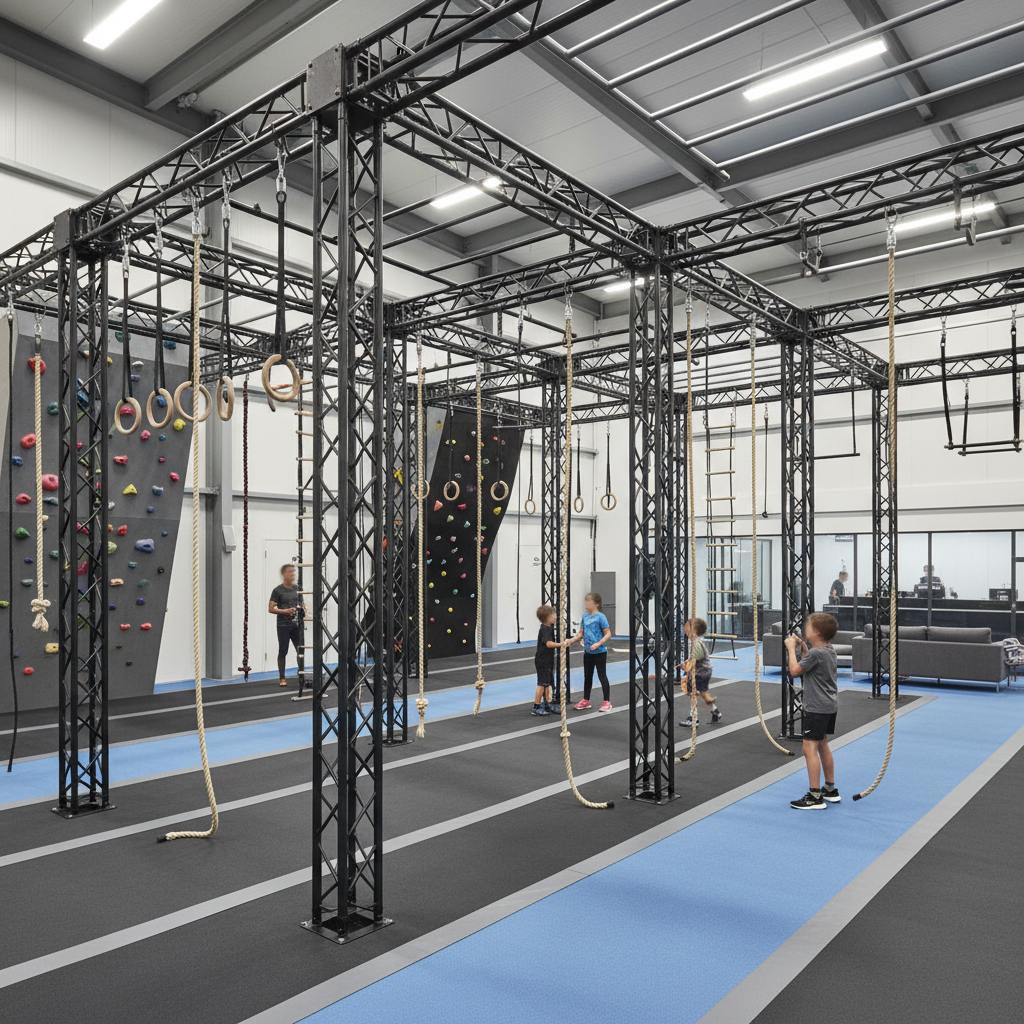
A useful Ninja facility is not a random collection of obstacles. It is a progression system inside a structural and operating framework. Users, ability levels, supervision, fall exposure, impact zones, circulation, inspection and replacement parts should all be considered before the obstacle list is frozen.
Planning guidance — final supplied configuration remains project-specific.
Reviewed September 2026 · Current live planning resource
01
Start with users and progression
Define the age groups, ability mix, expected throughput and whether the facility is for school use, public recreation, commercial sessions, coaching or advanced training.
Build obstacle families as a progression from introductory movement into more demanding traverse, hang, climb, balance and wall challenges instead of forcing every user through one sequence.
02
Verify the structure and interfaces
Frame members, connections, anchor points, suspended obstacles and building interfaces need verified technical information from the selected manufacturer and project engineer.
Indoor rigs also need coordination with slab, ceiling, egress and surrounding building systems; outdoor rigs add wind, corrosion, drainage and ground-interface considerations.
03
Treat fall exposure and impact management obstacle by obstacle
There is no useful generic impact-surface answer for an entire Ninja course. Fall height, trajectory, obstacle geometry, edge conditions and user behaviour vary across the facility.
The final impact solution and fall zones should therefore be confirmed against the exact obstacle system and destination requirements rather than inferred from appearance.
04
Plan supervision, queueing and spectators
Staff, teachers or coaches need usable sightlines and safe access to active zones. Queueing should not force waiting users into fall areas or obstacle reset paths.
Commercial and school venues should also separate spectators, parents, bags and waiting groups from active athlete circulation.
05
Build inspection and replacement into procurement
Grips, ropes, nets, bearings, fixings, mats and structural connections can wear at very different rates. The supplier package should identify inspection points and replacement components.
A modular facility is strongest when worn or outdated challenges can be replaced without discarding the whole structural frame.
Essential site functions work without analytics. With your permission, Apollo uses analytics to understand which products, guides and project pathways are useful. Analytics stays off until you allow it.