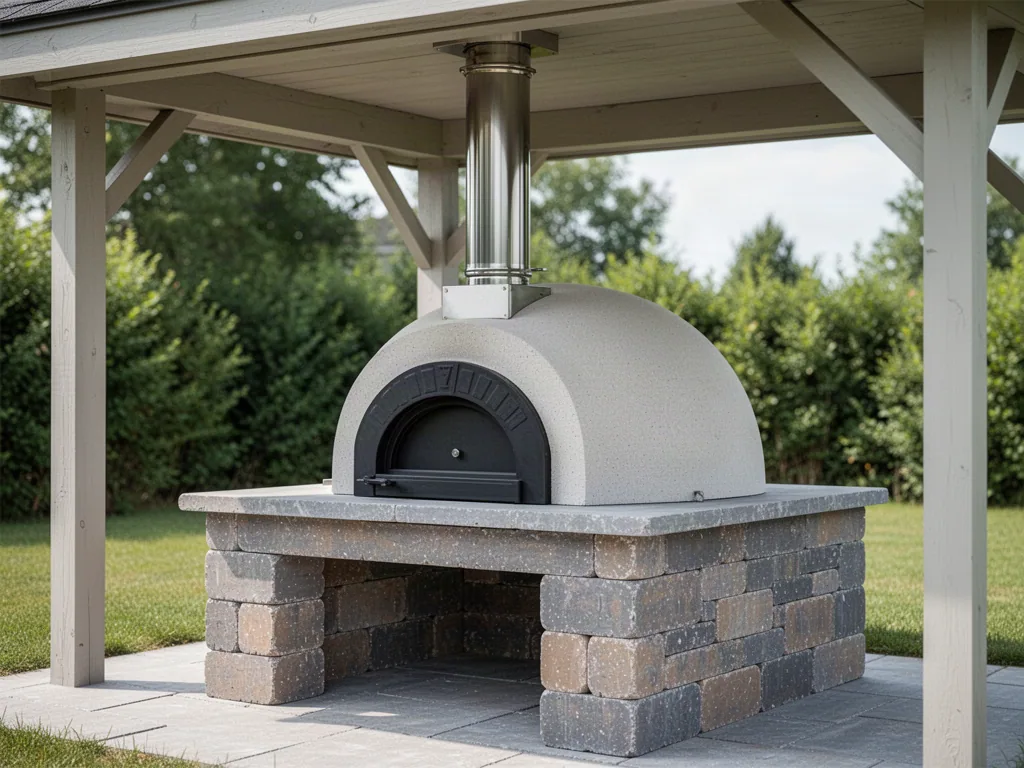
Installation planning begins after the oven model is known. The support, lifting route, hot-zone clearances, working space, flue, ventilation and local requirements all need to fit the site before benches, roofs, screens or landscaping are fixed.
Planning guidance — final supplied configuration remains project-specific.
01
Confirm the exact oven before construction is frozen
Use the final model dimensions, weight, flue arrangement and current installation information when setting out the support and surrounding space. A generic pizza-oven photograph is not a construction detail.
Use the dedicated Pizza Oven Size Guide when comparing Apollo's 65 cm, 70 cm and 85 cm cooking-floor pathways before the final model is selected.
02
Provide stable non-combustible support
The supporting structure and finished surface should suit the oven mass, heat and selected installation. Local structural review remains project-specific where the oven sits on a deck, elevated slab or custom base.
The support should also allow practical future inspection and should not obstruct drainage or surrounding service access.
03
Plan the delivery and lifting route before the courtyard is finished
Current Apollo ovens are substantial products, so access should be reviewed before walls, roofs, gates, benches or landscaping close the route. Mechanical lifting, carrying distance, turning space and the final landing position all need to be considered for the selected model.
A dimensionally suitable oven can still be the wrong choice if it cannot be safely delivered to the intended position.
04
Protect clearances, flue and ventilation
Use the current oven instructions and local requirements for distances to combustible walls, roofs, screens, furniture and stored materials. Covered or partially enclosed installations need the flue, smoke path and ventilation reviewed with the shelter.
Do not assume that an outdoor location removes fire, smoke or ventilation requirements, especially beneath pergolas, pavilions or verandas.
05
Keep the working zone practical
Allow landing space at the oven mouth, fuel handling, tool access, ash removal and a clear route for the cook that does not conflict with guests or seating.
Hospitality projects should also consider peak service movement, cleaning and where hot trays or finished food are transferred after leaving the oven.
06
Plan curing and first use
Refractory ovens commonly require staged drying or curing before full-temperature cooking. Follow the current supplied instructions rather than accelerating the process with a large first fire.
Final fire, smoke, installation and operating requirements remain destination- and model-specific.
Essential site functions work without analytics. With your permission, Apollo uses analytics to understand which products, guides and project pathways are useful. Analytics stays off until you allow it.