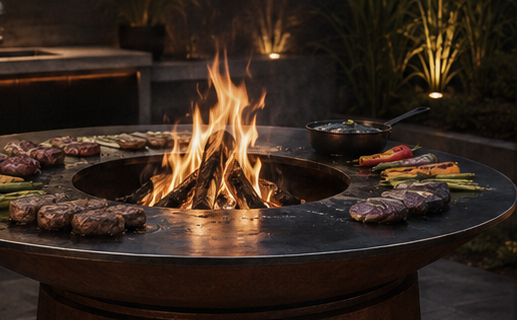
A live-fire plancha combines an open central fire with a broad steel cooking surface. The cook manages temperature by tending the fire and moving food through hotter and cooler parts of the plate rather than adjusting separate burners.
Planning guidance — final supplied configuration remains project-specific.
01
The central fire creates a heat gradient
The plate is generally hottest nearer the fire and more moderate farther out, allowing searing, finishing and holding to happen at the same time. Exact cooking behaviour still depends on fire management, plate design and the selected model.
02
The format changes the guest experience
Because flame and cooking remain visible, a live-fire plancha can become both a cooking station and a social focal point. Residential entertaining and hospitality projects therefore need circulation around the complete working perimeter.
03
Plan fuel, tools and preparation with the grill
Dry cooking wood, heat-safe tool landing, food preparation and service space should be designed into the setting instead of treating the grill as a decorative object placed after the landscape is complete.
04
Treat it as an open-fire appliance
Nearby materials, overhead conditions, wind, smoke and local fire restrictions need project-specific review. Do not apply pizza-oven, gas-BBQ or enclosed-appliance installation assumptions to an open live-fire station.