1. Start at the structure
Inspect the roof, gutters, vents, eaves, decks, attachments and other places where embers can land or enter. Home hardening begins with the building itself.
 Start Project Brief
Fire, Fuel & Live Cooking · Wildfire handbook
Use this handbook to walk from the building outward. The goal is not to certify complete wildfire protection; it is to identify the connected ignition pathways that deserve maintenance, redesign, verified products or local professional review.
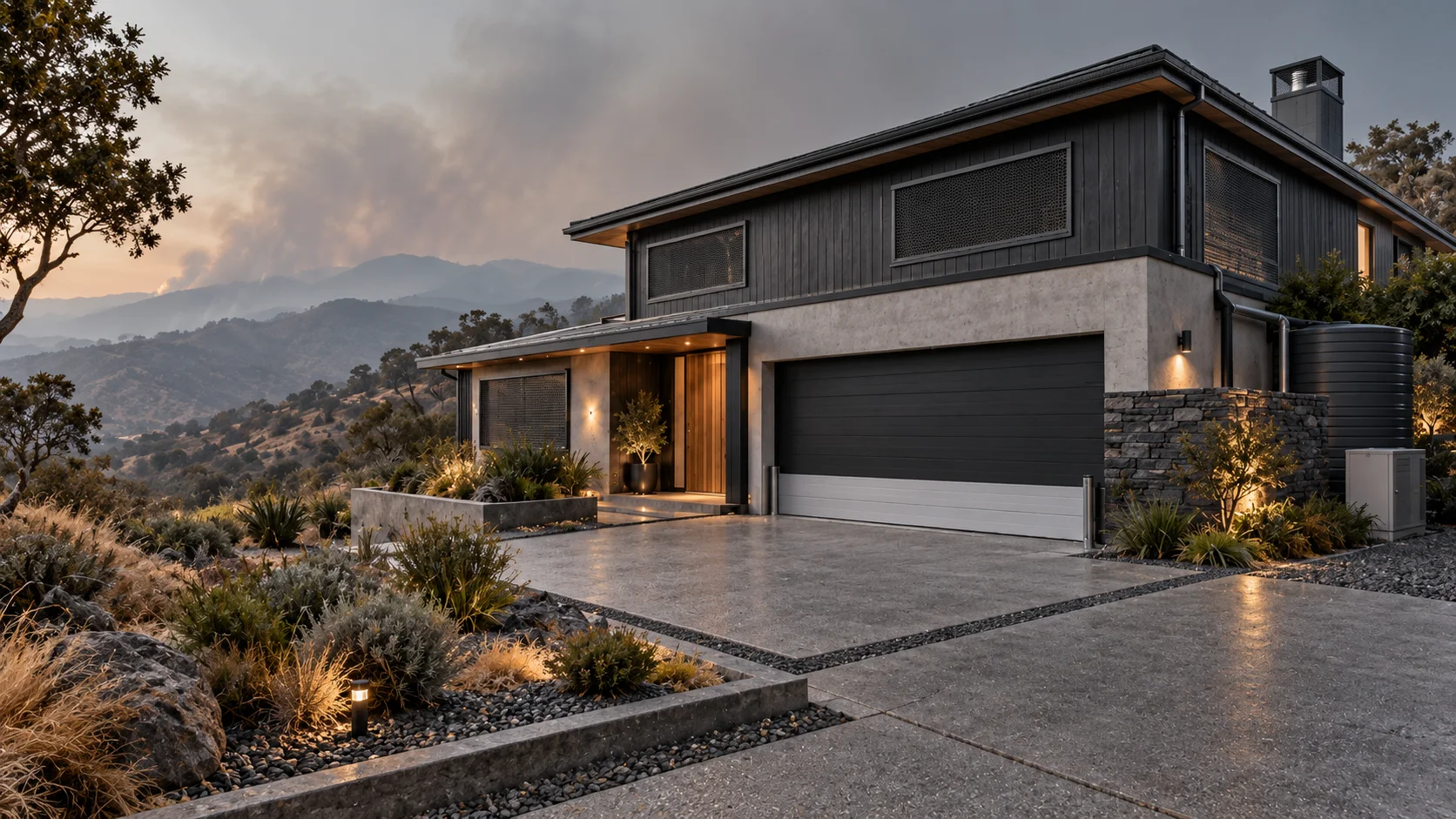
Inspect the roof, gutters, vents, eaves, decks, attachments and other places where embers can land or enter. Home hardening begins with the building itself.
Review the first few feet around the home for combustible mulch, debris, vegetation, storage and connected fence or deck elements. Treat this as a high-priority maintenance area.
Reduce dead material, fuel ladders and dense continuous vegetation while preserving a landscape appropriate to the site. Use local wildfire guidance for exact spacing and vegetation rules.
Decks, fences, pergolas, outdoor kitchens, firewood, rubbish and furniture can create fuel continuity. Include them in the property plan rather than treating them as separate lifestyle features.
Wildfire resilience changes as vegetation grows, debris accumulates and property use changes. Repeat the walkaround seasonally and before periods of hot, dry or windy weather.
Reference sources
Use these sources alongside the exact product instructions and the rules that apply at the project location.
Reference this resource
Link to the live page rather than a saved copy so readers reach the current Apollo planning resource and its latest product and planning links.
apollonzglobal.com/knowledge-centre/fire-fuel-live-cooking/wildfire-aware-home-handbookMove from knowledge to project