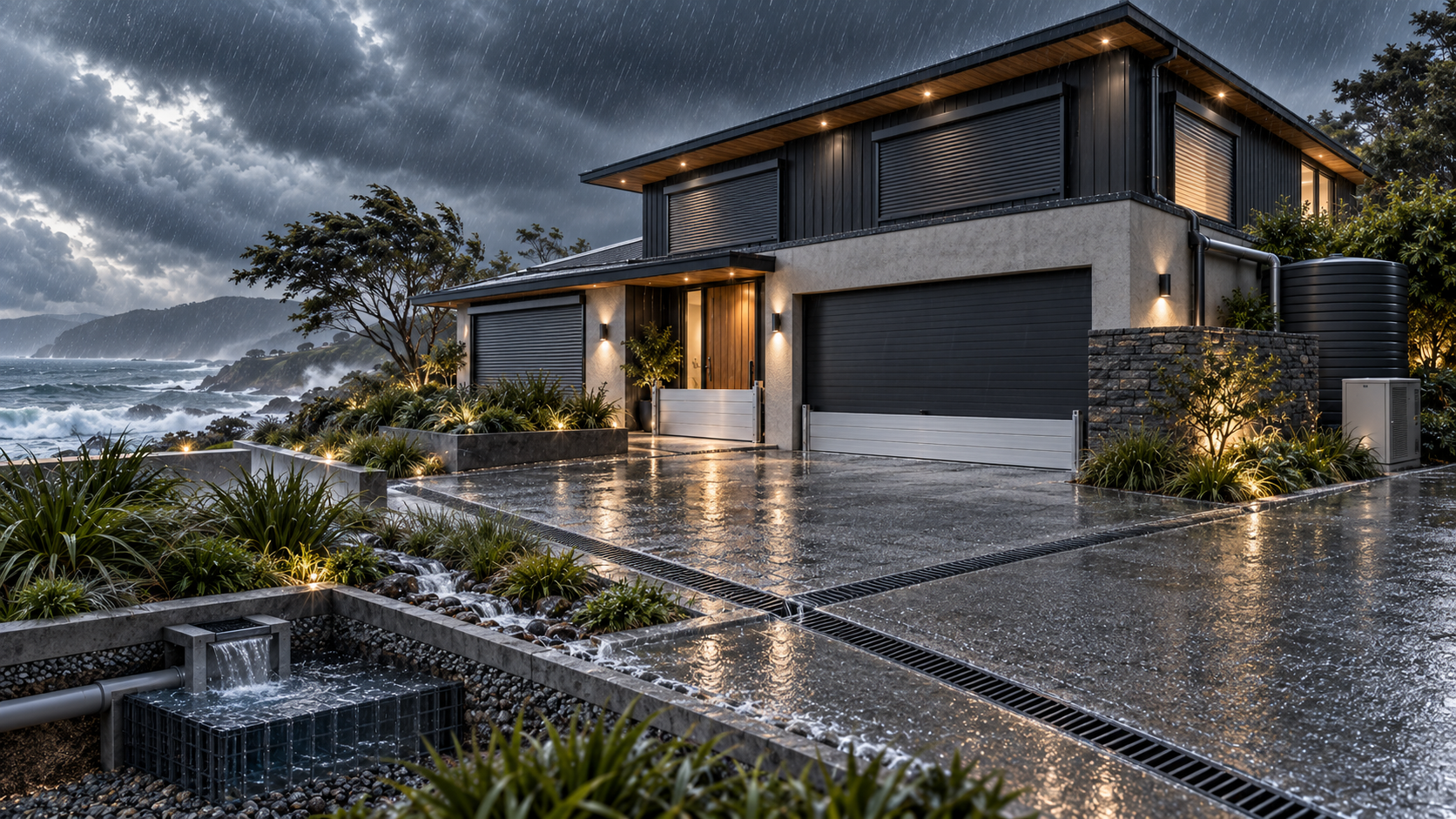
The same product should not be specified the same way everywhere. Start with location and exposure, then review the building or site, the product family, the evidence needed, local responsibilities and the logistics required to deliver the project.
Planning guidance — final supplied configuration remains project-specific.
01
Start with the destination and exposure
Record country or island, coastal relationship, prevailing weather, heat and UV, rainfall, wind exposure, severe-storm risk, site access and the way the product will be maintained. A country label alone is not enough to describe the site.
02
Use one project sequence
LOCATION → EXPOSURE → BUILDING OR SITE → PRODUCT FAMILY → TECHNICAL EVIDENCE → LOCAL REVIEW → LOGISTICS → PROJECT SUPPLY. This sequence keeps climate selection connected to the real project rather than becoming a generic product claim.
03
Match evidence to the risk
Decorative or everyday architectural products need different evidence from structural, impact-rated or severe-weather protection systems. Where exact model, size or configuration evidence is incomplete, Apollo should hold the claim and move the project into technical review.
04
Keep local responsibility visible
Apollo supplies selected systems and available product documentation. Structural design, local code review, foundations, installation, electrical or plumbing work, approvals and site-specific engineering remain with the appointed local project team unless expressly included elsewhere.