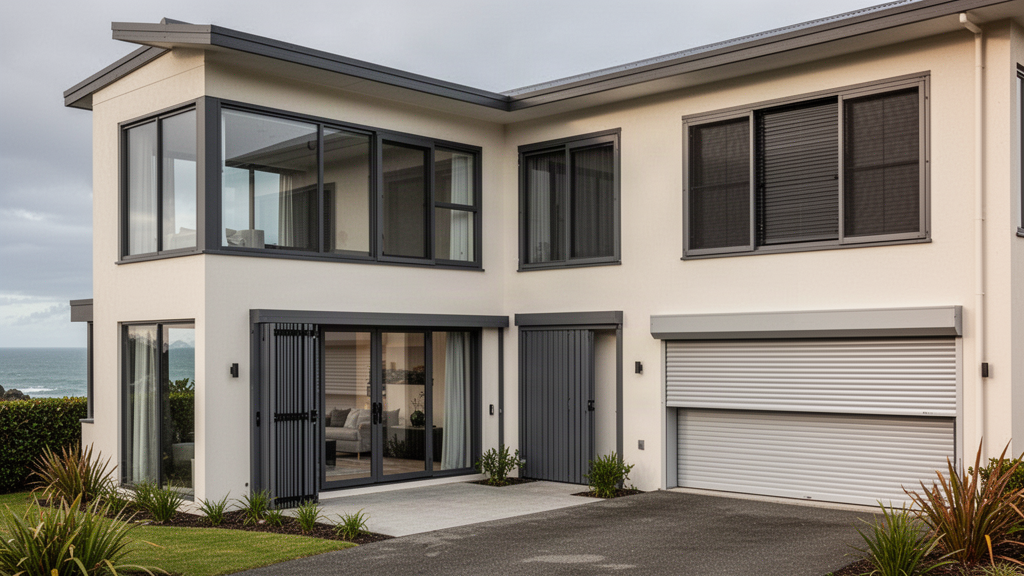
High-wind suitability cannot be reduced to one website speed. The same product can face very different pressure conditions depending on location, terrain, building geometry, height, opening state, dimensions, enclosure and supporting structure.
Planning guidance — final supplied configuration remains project-specific.
01
Wind is a site and building condition
Terrain, topography, height, corners, roof edges, exposed façades and large openings can all change pressure. A product selected for one sheltered application should not be assumed suitable for another because the nominal wind speed sounds similar.
02
Open and enclosed conditions differ
Adding blinds, glass, panels or other enclosure can alter pressure pathways. Future enclosure should be declared early so the final configuration is reviewed rather than only the initial open structure.
03
Fixings and substrate are part of performance
Tracks, anchors, brackets, frames and the supporting building or foundation all contribute to the load path. Product data does not replace review of the actual substrate and local structural interface.
04
Use technical hold instead of inference
Where exact model, dimensions, design-pressure evidence or fixing information is not available, Apollo should not infer a final rating from a different size or product family. Move the project into technical review.