Trace the water path
ROOF OR SURFACE → COLLECTION → CHANNEL OR GUTTER → DISCHARGE → SITE DRAINAGE → SAFE OVERFLOW. A product can collect rainfall successfully while the wider site still sends water back toward the building.
 Build Project Brief
Climate & Global Projects · Rain guide
Heavy-rain performance is a water-path problem. The project should understand where water lands, where it is collected, how it leaves the product, what happens at the site and where overflow goes when the primary path is exceeded.
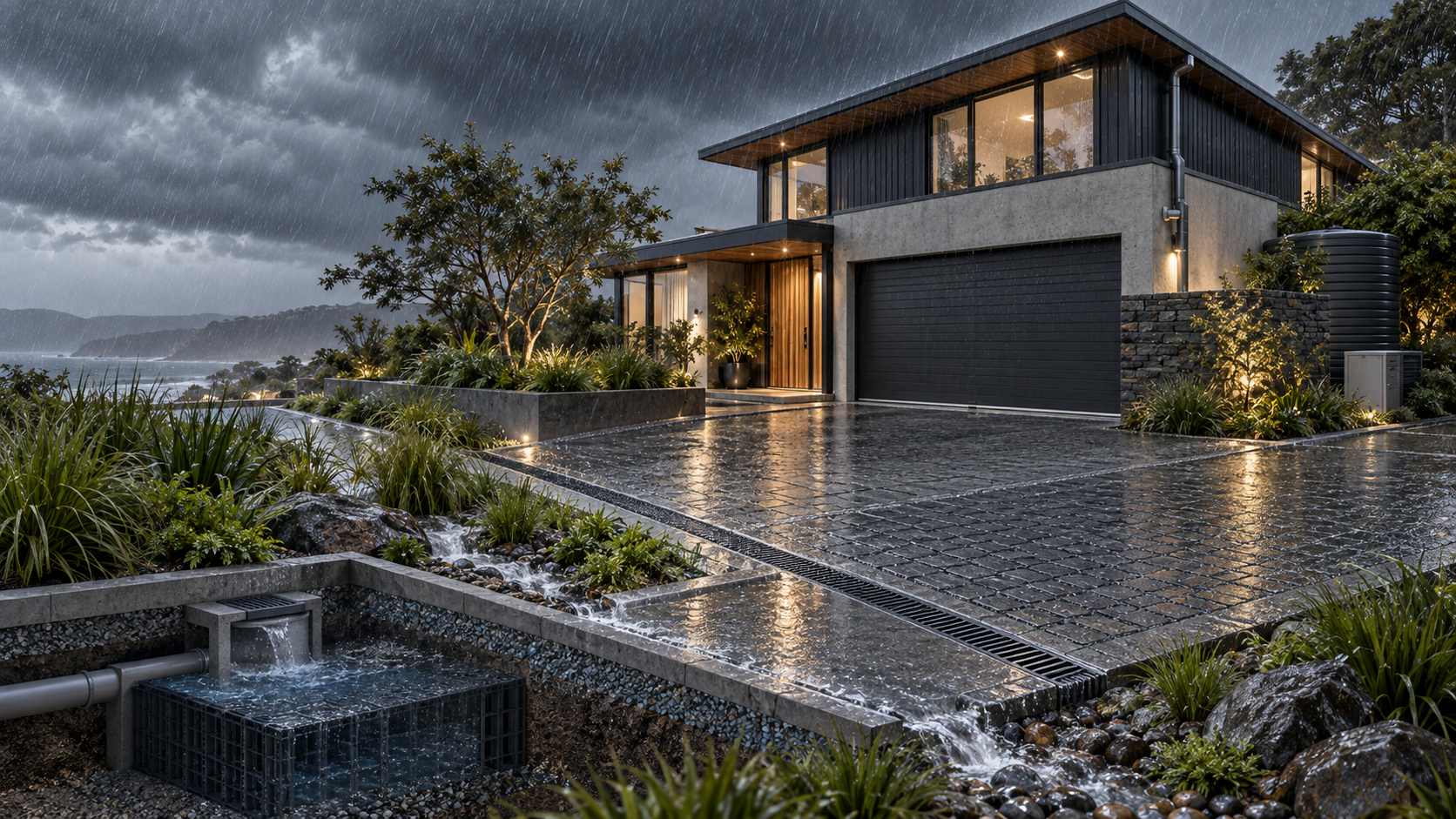
ROOF OR SURFACE → COLLECTION → CHANNEL OR GUTTER → DISCHARGE → SITE DRAINAGE → SAFE OVERFLOW. A product can collect rainfall successfully while the wider site still sends water back toward the building.
Side openings, thresholds, corners and exposed façades can admit rain even when overhead cover is performing correctly. Outdoor roof and blind systems should not be presented as sealed indoor building envelopes unless the complete enclosure is designed and verified for that purpose.
Gutters, channels, pits, tanks and site drains all have finite capacity. The project should know where water goes if the primary route surcharges or is blocked.
Apollo can provide product drainage information where available. Downstream stormwater connection, site falls, civil design and local compliance remain project-specific responsibilities.
Move from knowledge to project