Separate heat, solar and UV
Ambient temperature, direct solar gain and long-term UV exposure are related but different project conditions. Exterior shade, colour, material choice and ventilation can change how exposed products and rooms behave.
 Build Project Brief
Climate & Global Projects · Heat & UV guide
Tropical and high-UV projects combine heat, solar exposure, humidity, intense rainfall and often coastal conditions. Product selection should consider how the complete assembly operates and ages in that environment rather than treating heat as one isolated number.
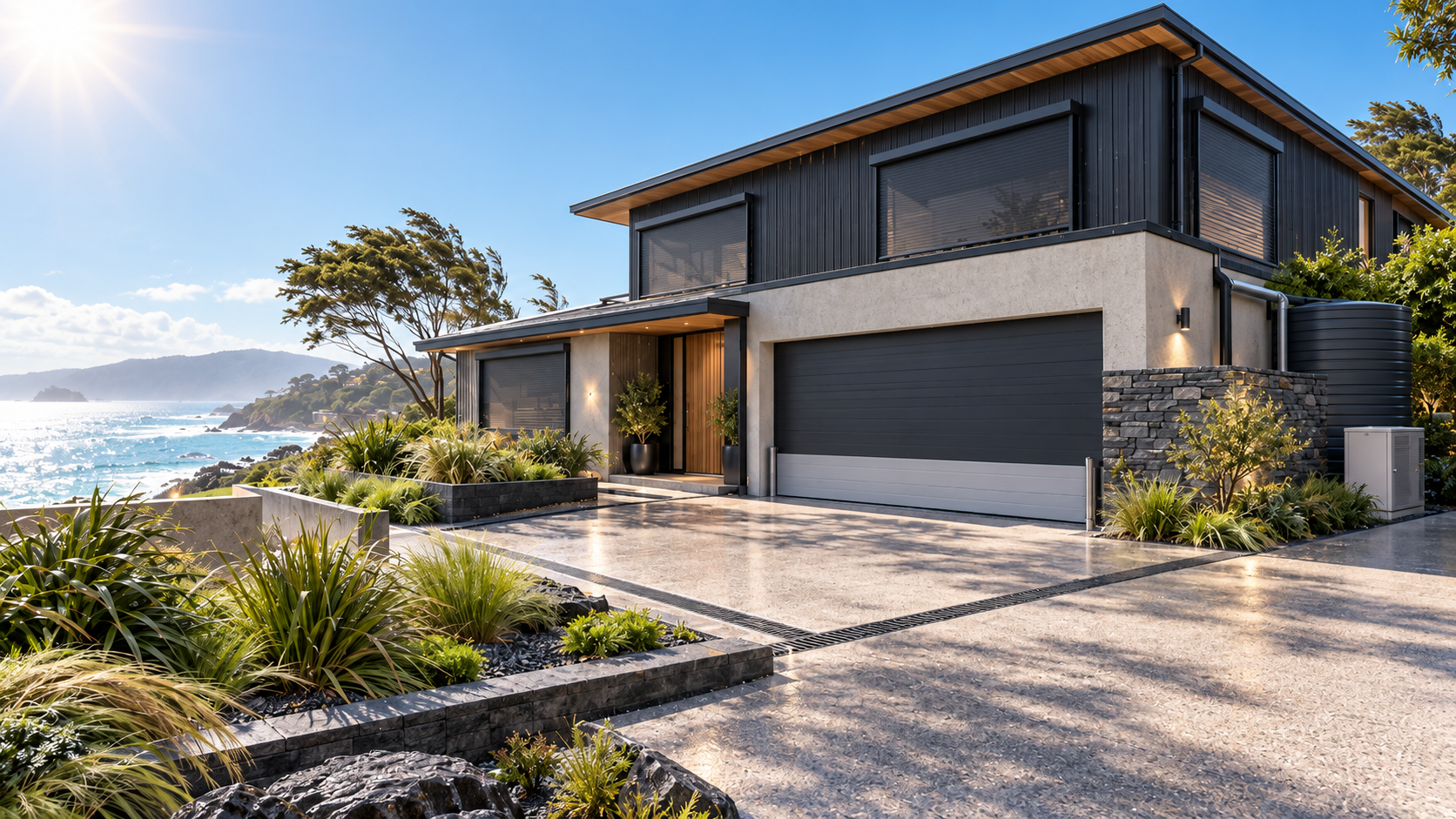
Ambient temperature, direct solar gain and long-term UV exposure are related but different project conditions. Exterior shade, colour, material choice and ventilation can change how exposed products and rooms behave.
Dark finishes can become substantially hotter in direct sun than the surrounding air. That does not automatically make them unsuitable, but touch surfaces, moving components, electronics and enclosed cavities should be reviewed for the actual application.
Motors, controls, refrigeration, audio equipment and other electrical products need the clearances and ventilation specified for the exact model. Architectural screening should not trap heat around serviceable equipment.
Hot climates can also receive intense wind-driven rainfall. Roof drainage, opening protection, thresholds and downstream site drainage should be coordinated rather than treating heat and rain as separate projects.
Move from knowledge to project