Describe the actual exposure
Record direct sea spray, prevailing wind, shelter from surrounding buildings or terrain, elevation, rainfall washing and how easy exposed surfaces are to reach for cleaning and inspection.
 Build Project Brief
Climate & Global Projects · Coastal guide
Coastal durability comes from the whole assembly and its maintenance plan, not one headline material. Sea spray, prevailing wind, shelter, elevation and service access can matter as much as simple distance from the coast.
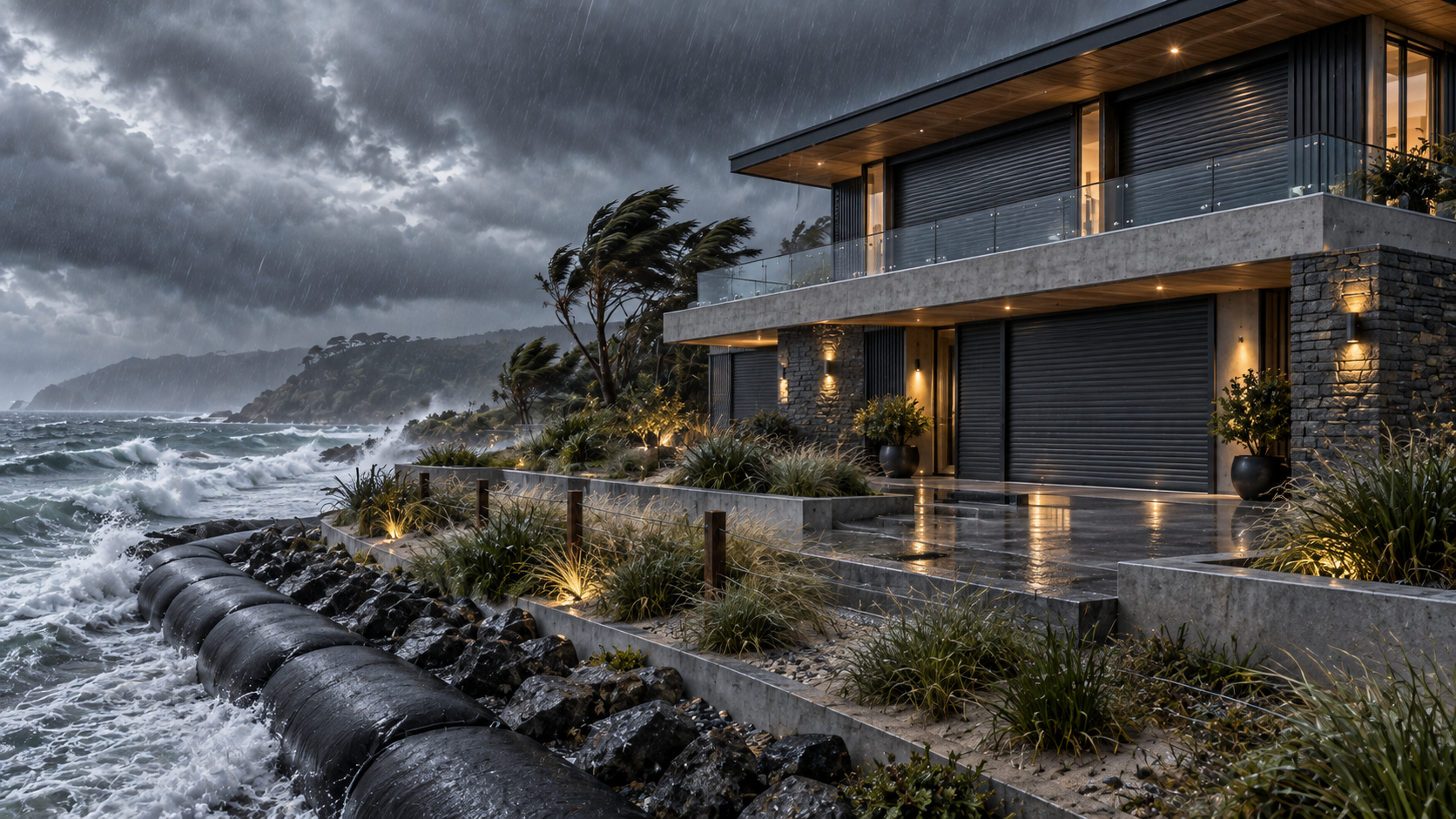
Record direct sea spray, prevailing wind, shelter from surrounding buildings or terrain, elevation, rainfall washing and how easy exposed surfaces are to reach for cleaning and inspection.
Aluminium, coatings, fasteners, stainless components, dissimilar-metal interfaces, motors, tracks, hinges, seals and electrical components can all influence durability. Do not describe a complete product as corrosion-proof from one material grade alone.
316 stainless pathways may be preferred over 304 in higher-chloride exposure, but grade selection does not remove the need to consider the surrounding aluminium, coatings, fasteners, drainage, crevices and maintenance.
Fresh-water cleaning, debris removal, drainage clearing and inspection should be practical after installation. Exact maintenance frequency should follow the selected system, exposure and current product instructions rather than one universal coastal interval.
Move from knowledge to project