01Understanding the project
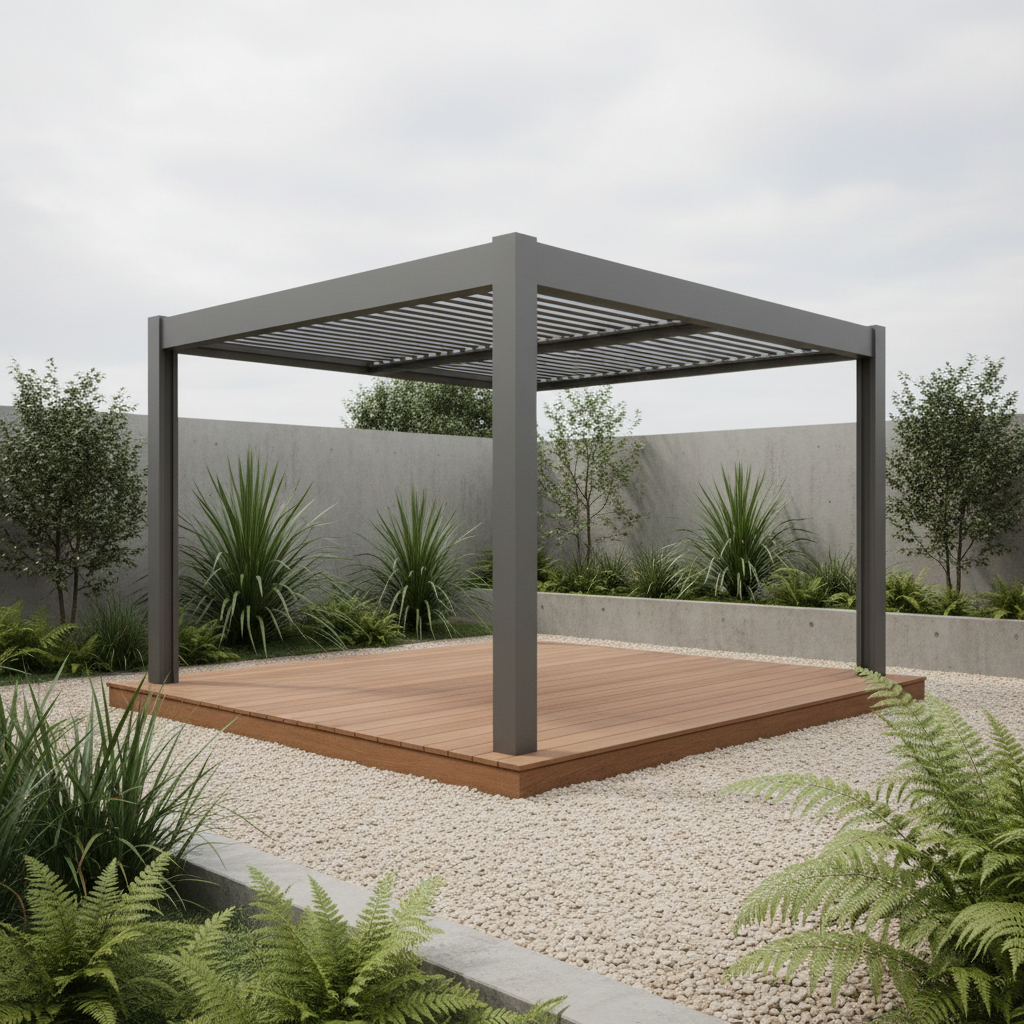
A kitset louvre pergola is a pre-engineered or manufacturer-specified package of posts, beams, adjustable roof blades and fixings assembled on site. Resellers should confirm actual model dimensions, mounting conditions, local engineering, delivery scope, accessories and support before offering it to customers.
Demand for adjustable outdoor shelter creates opportunities for building merchants, contractors, outdoor-living retailers and regional product specialists. A successful reseller programme, however, depends less on a large catalogue and more on being able to quote repeatable configurations accurately, explain the differences between models and deliver the right technical information to customers.
This guide focuses on how a trade business evaluates kitset louvre pergolas as a resale category. It covers product selection, quotation information, accessories, local installation relationships and the commercial boundaries of a supply-only programme.
Understand what makes a pergola a kitset
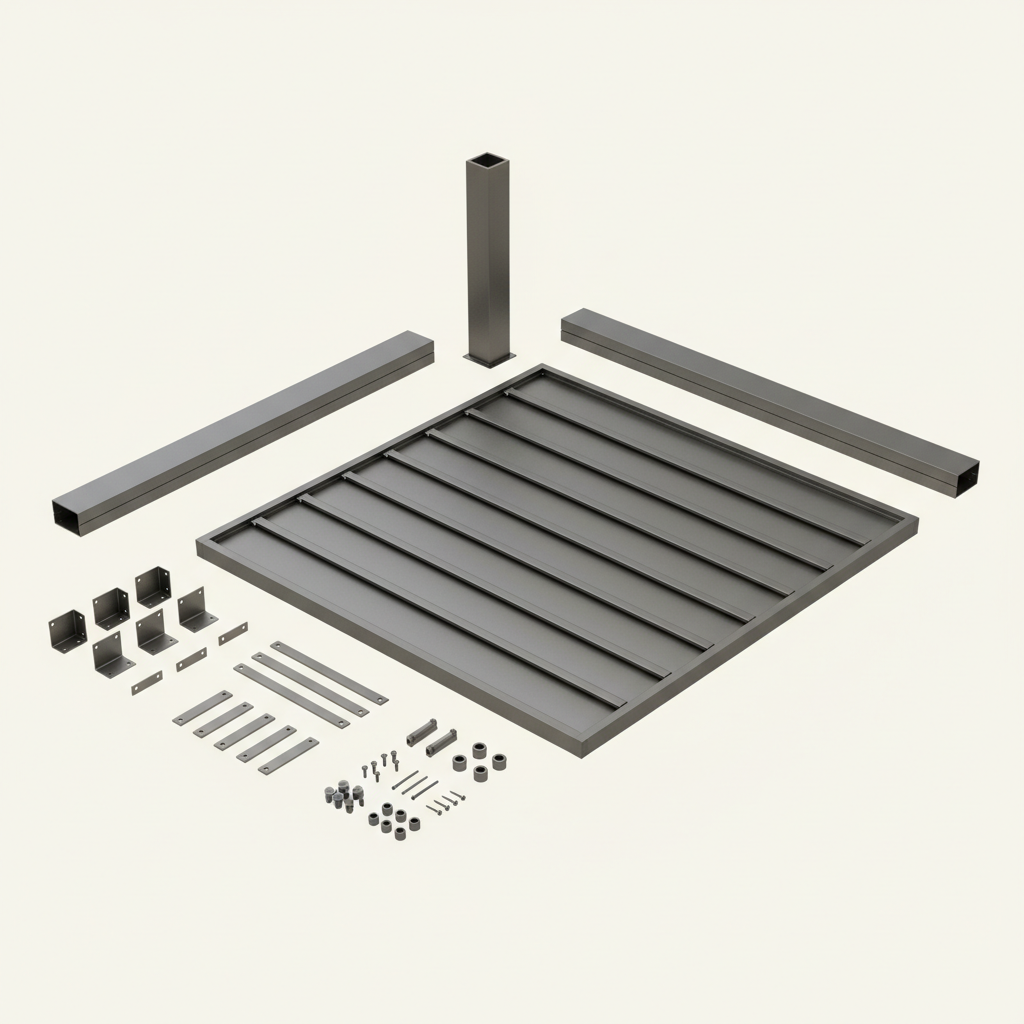
Kitset pergolas are supplied in identifiable components such as posts, beams, roof blades, joining brackets, mechanical drive parts and fixings. A buyer should be able to understand what is in the package before ordering. Standardised models often make ordering, stock management and delivery easier; made-to-measure options can expand the opportunity but require more careful configuration review.
Not all kitsets share the same blade size, column section, drainage strategy, drive type or height. Avoid assuming a technical figure from one collection applies across a supplier's entire range. Build a product comparison sheet around actual model codes and manufacturer documents.
Choose a focused range before trying to sell everything
Starting with a small number of practical layouts usually helps a reseller learn faster. A compact freestanding dining cover, a larger outdoor room format and a correctly specified wall-attached option may answer many enquiries without complicating every quotation. Model selection should reflect local demand, freight routes, climate and the availability of competent installers.
Separate manual, motorised, solar-capable, insulated fixed-roof and architectural made-to-measure products as different buying decisions. They may look similar in marketing photography but serve different requirements. Train staff to identify the right product category before offering colour or accessory options.
Dimension the site before the price
Customers often provide an overall patio width and expect an immediate quotation. The useful measurement set is larger: clear width, projection, usable mounting height, adjacent doors or soffits, wall composition, levels, water discharge area, proposed footing positions and access for delivery. For wall-mounted work, the suitability of the receiving structure must be checked locally.
Offer a simple site-information template. It should identify whether the proposed dimensions are rough enquiry figures or verified installation dimensions, whether any part of the site is sloped and whether the customer intends to add screens or glazing. A disciplined intake process is one of a distributor's most valuable assets.
Explain rotating blades, weather protection and drainage
Adjustable louvres control sunshine and airflow by changing blade angle. When correctly closed, many systems channel rain towards an integrated gutter or dedicated drainage detail, but they should not be marketed as sealed extensions of the home. Exposure, blade orientation, joints and wind-driven rain all influence real conditions beneath the roof.
Customers also need to know how to operate the system in high winds, whether to leave blades in a designated safe position and how to clear debris from drainage routes. The applicable rules come from the exact product documentation, not from a generic pergola article.
Accessories can create value — and interface risk
Track blinds, sliding glass, fixed side panels, lighting and smart controls can make a basic roof more useful. They can also introduce weight, wind loads, electrical connections and maintenance access requirements. A screen mounted to a post places different demands on the structure than a simple open pergola. A reseller should distinguish manufacturer-approved combinations from custom aftermarket additions.
A sensible package menu shows compatible accessories per model, their limitations and who supplies local wiring or glazing work. Avoid bundling an attractive option unless the product documentation confirms fit and the site conditions permit it. Future accessories should be considered before foundations are built.
Freight and delivery should be part of product knowledge
Long beams, roof panels and posts require packaging, handling and a clear delivery route. The customer should know whether freight arrives at a depot or direct to site, what unloading equipment is needed, how damage should be documented and who stores the components safely before assembly.
International resellers should plan for import classification, taxes, customs documentation, local electrical compliance and spare parts support. Transit times and availability must be confirmed per shipment. A stock item in one market should not be presented as locally stocked everywhere.
Define the reseller and installer relationship
In a buy-direct and resell model, the independent reseller purchases the selected product package and manages its own retail customer relationship, quotation, margin and local service arrangements. This differs from a commission-agent model in which the supplier performs much of the selling and the agent receives a referral fee. Neither structure should be assumed without a specific commercial agreement.
Apollo's wholesale approach is principally supply-only, with local installation handled separately. That makes qualified installer partnerships useful, but the reseller should remain accountable for its own customer promises and never imply that Apollo carries out site installation unless an exception is explicitly agreed.
Make documentation a competitive advantage
Well-organised specification packs help resellers win professional confidence. Ask for model photographs, dimensions, materials, available finishes, wind and rain evidence where applicable, maintenance information, relevant test reports, accessory compatibility and a clear statement of warranty coverage. Distinguish a manufacturer certificate from proof of performance for a specific installed configuration.
For New Zealand work, ensure product and supporting documentation is assessed against the current building regulatory pathway and local design requirements. Import availability does not automatically mean every proposed application is exempt from consent or engineering review.
A simple repeatable quotation workflow
Begin with the site and intended use; choose a model; confirm dimensions and mounting; select only compatible options; determine delivery responsibilities; and identify what the local engineer or installer must verify. The customer-facing offer should show those assumptions before an order is accepted.
Support each sale with a concise handover pack containing the approved model, selected options, drawing revision, finish, maintenance instructions and the parties responsible for site works. This gives a new reseller a practical operating system instead of asking the original manufacturer to run every sale.
- Customer site and dimensions received
- Selected model, size, controls and colour confirmed
- Applicable accessories and limits checked
- Delivery and unloading responsibilities agreed
- Local engineering, installation and approval responsibilities identified
How a merchant turns a kitset into a repeatable category
A merchant's first objective should be a clear and manageable offer. Build an initial line card listing exactly which kitset models can be ordered, which have stable standard dimensions, and which features require made-to-measure confirmation. Photograph or display actual approved samples where available, with the manufacturer's permission. A staff member answering the phone should be able to identify whether a customer needs a simple freestanding structure or an engineered architectural solution without making promises based on visual similarity alone.
Define the sales stages: enquiry, site-data collection, preliminary configuration, supplier confirmation, customer quotation, purchase order, delivery, and handover to a qualified local installer. A short checklist at each stage makes it easier to train new staff. It also reduces the expensive habit of submitting incomplete enquiries to the original supplier and expecting them to resolve every customer's site problem. Good wholesale partners develop local competence rather than outsourcing every conversation.
Standard stock or special order? Choose deliberately
Stocking three popular sizes may shorten customer lead time, but it also ties up cash and storage space. Special-order products reduce inventory risk but may have longer freight and configuration processes. A hybrid approach can make sense: maintain samples and selected high-turnover stock, then order specialised colours, unusually sized roofs and accessories against confirmed customers. The balance depends on real demand rather than hypothetical product popularity.
Create a simple inventory review using annual enquiries, quotation conversion, delivery costs, model-specific returns and the expense of spare parts. For regional resellers, a shared delivery route to a depot can work differently from single-household deliveries. State exactly who is responsible for freight damage claims and at what point the goods are considered received. Product packaging should be inspected and recorded on arrival, especially for long profiles and glass accessories.
How to avoid the most common quoting mistakes
Quoting from overall patio dimensions is a frequent mistake because posts, perimeter beams, foundation points and usable headroom all affect the true arrangement. Another is pricing accessories before verifying their compatibility. A third is assuming that a wall-attached format transfers its loads safely into whatever wall happens to be present. These problems may remain invisible until the installer arrives. A properly designed intake form exposes them before the reseller accepts an order.
Quotations should distinguish nominal kit dimensions from verified clear dimensions, display the selected finish, identify wind and drainage assumptions and show included and excluded components. The installer should receive drawings tied to the same model revision as the sales order. If an unexpected site condition changes the configuration, pause the process and revise the quote rather than asking the installer to improvise an unapproved fix.
Use a trained installation network without promising installation
A reseller does not need to become a builder, but it should understand where local workmanship begins and product responsibility ends. Identify independent contractors with the right experience and check that they can work with the specific system, required engineering and current local compliance regime. Set expectations around product inspection, damaged components, manufacturer instructions, approved substitutions and commissioning of any electrical options.
When buyers are referred to independent installers, communicate clearly that the service is separately contracted unless otherwise agreed. Establish an escalation route for technical questions, but avoid giving site instructions that exceed the supplier's documented requirements. A strong partner programme keeps the retail customer informed without pretending that the wholesale supplier takes responsibility for local foundations, structural design or electrical work.
Marketing that generates actual trade opportunities
Buyers search for practical answers: what is included in a kit, which pergola size fits their deck, how screens affect the structure and when local consent or engineering is necessary. Useful articles, specification sheets and demonstration videos can answer those questions and direct qualified prospects to a local reseller. Each page should have one principal search purpose. Publishing many slightly altered location pages that repeat the same generic content is unlikely to build genuine trust.
For a distributor in a selected territory, include locally relevant site conditions, service areas and actual capabilities. Use original approved photography or properly licensed media; do not invent customer installations or testimonials. Where the supplier provides product knowledge, adapt it into a genuinely useful local guide with correct attribution and a link to an appropriate enquiry form. The result is better leads and fewer avoidable conversations about incompatible systems.
A practical one-page reseller enquiry template
Keep the first reseller enquiry simple and structured. Record customer name and region, project use, intended roof dimensions, mounting type, site photos, elevation changes, existing wall material and desired controls. Include a field for local wind or coastal exposure and whether screens, glazing or heaters are planned. The person collecting the brief should flag information that has not been verified rather than guess. A supplier can usually respond more efficiently when it knows which figures are preliminary and which come from a competent site measure.
The next block should specify the candidate product model, finish, accessory requests, intended delivery location and any local approvals still to be determined. Before converting an estimate into an order, confirm the manufacturer's latest bill of materials, dimensions and operating requirements. Explain which party is organising local footings, fixings and electrical work. Give customers an agreed document revision, not an informal collection of screenshots. This process makes a small reseller appear professional and protects its relationship with the wholesale supplier.
Finally, keep an order-release record: confirmed size, model number, colour, motor or manual configuration, package inclusions, compatible accessories, freight and unloading arrangements, and the final customer approval. It is also worth recording what was deliberately excluded, including installation and site-specific engineering unless separately contracted. The strongest long-term advantage for a reseller is not a perfect marketing photograph; it is an accurate order that arrives with the right components and a customer who understands the scope.