
Apollo NZ Global

Built Intelligence · Architecture & Specification · Architecture & specification

Dark Sky Tourism: How Resorts and Communities Can Create Astronomy Experiences

A compelling astronomy destination is built by protecting the night sky first, then organising the visitor experience around it.

Apollo NZ Global EditorialPublished 2026-11-18Project intelligence
Final product selection, technical documentation and local approval requirements are assessed for each project.
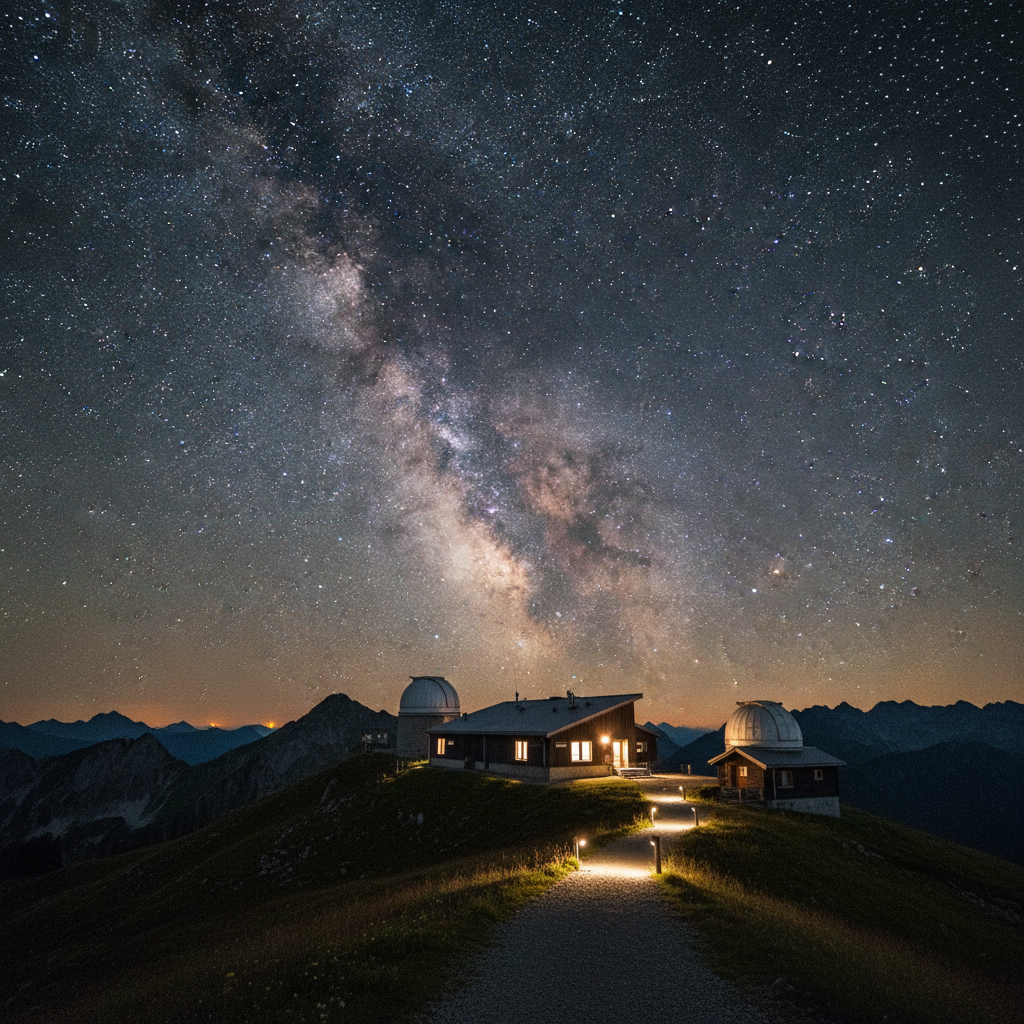
Dark-sky observatory retreat beneath a star-filled mountain sky
01

Understanding the project

Dark sky tourism, or astrotourism, centres on experiencing naturally dark night skies through stargazing, astronomy education, guided experiences and suitable accommodation. Successful projects protect darkness through responsible lighting, manage visitors safely and design an authentic astronomy programme rather than relying on visual marketing alone.

People can travel a long way to see something that cities increasingly obscure: the night sky. A well-planned dark-sky destination may offer guided stargazing, telescope programmes, educational events, astrophotography, quiet accommodation and accessible cultural interpretation. Yet the experience depends on a resource that excessive development can damage: darkness itself.

ASTRAVYR's role within Apollo NZ Global makes astronomy facilities, observatory equipment and responsible destination planning a natural editorial topic. The objective is to help operators and communities understand the practical foundations of astrotourism, not to imply that installing a telescope automatically makes a property a certified dark-sky resort.
02

Why darkness is the core asset

Artificial light can reduce the visibility of faint stars and night-sky detail, impair adaptation to darkness and affect nocturnal ecosystems. A visitor may enjoy a beautifully designed telescope deck, but if nearby lighting shines into the observing area, the actual astronomy experience can be disappointing. The site environment therefore deserves as much planning attention as the accommodation and equipment.

Assess nearby settlements, road lighting, landscape screening, cloud patterns, seasonal weather and horizon obstruction. An excellent view of one constellation during a promotional photograph is not evidence of reliably good observing conditions throughout a year. Visitor expectations should be aligned with the site's actual seasonal opportunities.

03

Design experiences for different visitors

A family looking at the Moon for the first time, a dedicated amateur astronomer and a photographer seeking a dark horizon have different requirements. Programmes can include naked-eye constellation interpretation, beginner telescope sessions, night walks, photography workshops and accessible indoor education when the sky is cloudy.

Not every visitor will arrive with knowledge of astronomy. A skilled guide and a carefully structured session can create more value than an expensive telescope offered without explanation. Organise programmes so guests can participate safely and understand what is visible on the night they attend.

04

Preserve night vision through lighting design

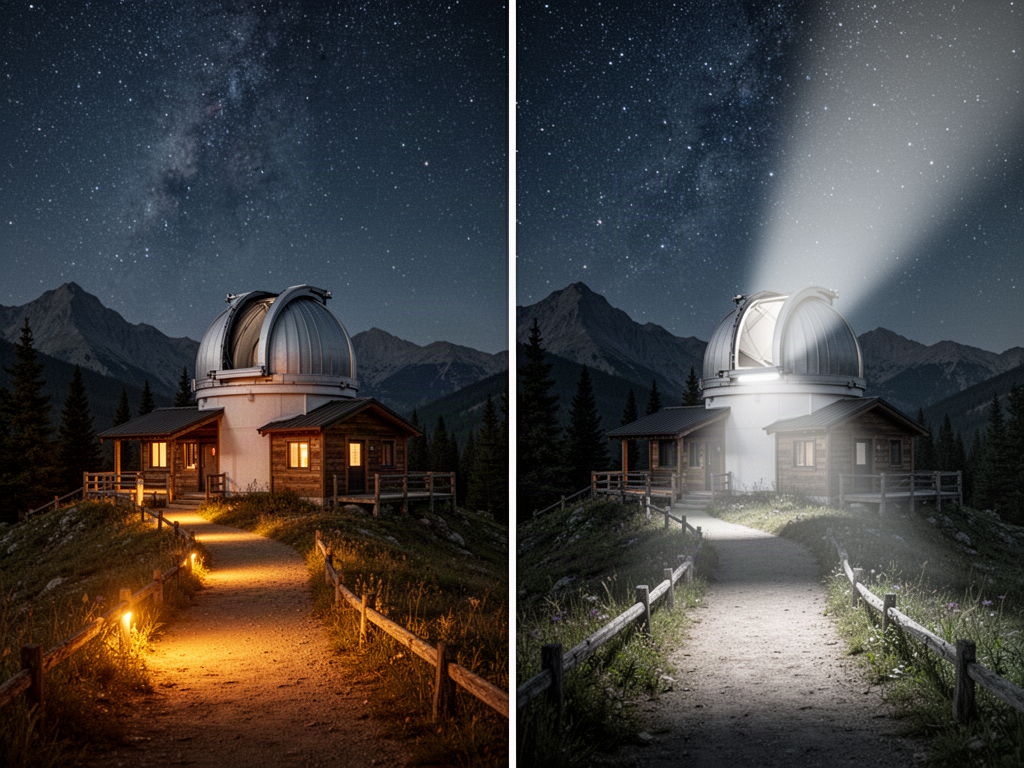
Responsible outdoor lighting starts with purpose, position, level and timing. Shielded fittings, warm light where suitable, controlled schedules, low-level task illumination and careful mounting can reduce unnecessary upward or sideways spill. Paths and emergency routes still need safe visibility under applicable codes; the aim is appropriate lighting, not unsafe darkness.

DarkSky International publishes the Five Principles for Responsible Outdoor Lighting and guidance for approved lodging and resorts. Those resources should inform early design. Project teams need to consider neighbours, wildlife, accessibility and local requirements, and should employ qualified lighting expertise for larger hospitality facilities.

Outdoor lighting at a stargazing retreat with shielded and unshielded fixtures
05

Choose the site before choosing the telescope

Telescope performance depends on the atmosphere, mounting stability, sky obstruction, local turbulence and safe access. A high-magnification instrument placed above a heat-emitting rooftop or exposed to persistent vibration may underperform. Design a suitable viewing location and safe pathway before specifying equipment.

Consider weather protection, stable foundations, power and data, storage, security and whether the facility needs a permanent dome, roll-off shelter or supervised portable instruments. The preferred configuration changes with the visitor numbers, staff capability, climate and the type of observations offered.

06

An observatory is an operating facility

An observatory or public telescope programme needs responsible operation. Define who opens and closes the facility, how weather is assessed, who handles equipment, how visitors move safely in low light, what age groups are supported and how emergency access is maintained. Moisture, dust and wind exposure can affect optical and electronic equipment.

Maintenance, calibration and staffing deserve a real operating budget. For community venues, training volunteers may be central to success. For commercial resorts, a reliable nightly guest experience requires clear staffing, contingency and booking processes.

07

Certification and destination recognition are different

DarkSky International maintains a recognised programme for certified International Dark Sky Places, including eligible parks, communities and protected areas. Separately, its DarkSky Approved Lodging & Resort programme recognises qualifying accommodation operators meeting specific requirements. A property near a certified park is not automatically approved, and a resort cannot claim certification before receiving it.

The official programme expanded resort certification in 2026. Operators should consult the current application guidance directly rather than treating third-party travel lists as approval registers. For general destination discovery, the International Dark Sky Places directory provides a clear external reference.

08

Build tourism without harming the destination

More visitors can bring economic opportunities but also extra traffic, waste, vehicle headlights, noise and habitat disturbance. Select capacity limits and circulation routes with the landscape and community in mind. Dark-sky programmes should support local cultural knowledge and conservation goals rather than merely photograph the nightscape for marketing.

An effective destination may connect local guides, accommodation providers, schools, conservation groups and science educators. The most durable programme is one that protects the resource people came to see, even when the tourism business grows.

09

Commercial planning and programme design

Develop a staged business case: a low-cost guided session or small telescope deck may test demand before building a permanent observatory. Track bookings, weather cancellations, repeat visits, guest feedback and operating cost per session. These indicators are more actionable than assuming high visitor numbers from a popular night-sky social post.

Budget for lighting upgrades, access, training, security, equipment replacement and wet-weather interpretation as well as the headline telescope. Coordinate the design with the accommodation brand and local conservation requirements. Where a site is already valuable for its dark skies, unnecessary construction should not become the measure of project success.

10

A practical astronomy destination brief

Describe the location, geographic and climatic conditions, approximate night-sky quality, operator type, visitor capacity, observing goals, existing lighting, transport access, power, staff resources and desired educational outcomes. Identify whether the property seeks formal certification or simply wants to provide responsible stargazing experiences.

ASTRAVYR can contribute product selection and observatory-system sourcing for eligible projects, while local astronomy, lighting, engineering, conservation and tourism experts shape the actual destination. The result should be an experience people remember for the sky, not a claim of certification the property does not hold.

  • Assess the night sky and site conditions
  • Plan shielded lighting and safe access
  • Choose experiences before equipment sizes
  • Differentiate certification from general astrotourism
  • Budget for staff, upkeep and cloudy-night programming
11

What guests actually see across the seasons

A night-sky destination has a seasonal calendar even when the accommodation operates year-round. Moon phase, cloud cover, local weather, the visible planets and the portion of the Milky Way above the horizon all affect the experience. Publicity should not imply that the same sky scene is available every evening. Operators can instead create a programme that explains what guests are likely to see in different months, offering Moon observation, planetary viewing or constellation interpretation when deep-sky contrast is limited.

Build a pre-visit information page with realistic expectations about weather, darkness, accessibility, clothing and the nature of the session. Provide a fair cancellation or alternative-activity policy. A cloudy evening does not necessarily mean the astronomy business has no experience to offer: an indoor presentation, exhibition, science demonstration or cultural interpretation programme can be valuable when described accurately rather than marketed as a substitute for viewing a sky that cannot be seen.

12

A staged resort example without exaggerated promises

Imagine a small inland eco lodge with relatively dark surroundings and an existing clear outdoor area. Its first step may be a professional assessment of outdoor lighting, not a new observatory. The operator can improve shielding, control unnecessary illumination, train a guide and trial a scheduled astronomy evening with portable telescopes. If visitors respond well and operating conditions justify growth, the next stage could include a dedicated observing platform, small shelter or stronger educational programme.

A permanent dome might follow only when the site has a clear need, adequate staff capability, weather resilience and a sustainable budget. This staged approach protects the night environment from unnecessary development and gives the operator evidence of guest interest before significant capital spending. The staged planning process can be adapted by operators with different budgets, climates and visitor programmes.

13

Lighting, wildlife and safety require coordinated design

Reducing light spill does not mean removing every luminaire from a hospitality property. Guests still need safe paths, steps, entrances and emergency access. Design should identify tasks that require illumination, minimise light escaping beyond those tasks and control operating times where appropriate. Warm, fully shielded lighting may reduce unwanted impact, but fixture specifications, site use and local requirements determine the actual design. Bright visitor-phone lights and vehicle headlights can also interfere with observing zones.

Work with qualified lighting professionals and, where appropriate, local conservation experts. A destination's ecology may include sensitive nocturnal species, and visitor behaviour should respect those habitats. Post clear guidance about light use near telescopes, protect dark adaptation during sessions and ensure emergency lighting remains compliant. The strongest result balances guest safety, environmental stewardship and an enjoyable viewing experience rather than choosing one goal at the expense of the others.

15

How to measure a responsible astronomy programme

Success measures can include participation, guest satisfaction, repeat bookings, cancellations due to weather, learning outcomes, energy use and progress in reducing unwanted lighting. Operators might track the proportion of outdoor fixtures reviewed for shielding and scheduling, or whether local residents and conservation organisations report improvements. Revenue is relevant, but it is not the only outcome when a tourism concept depends on protecting a fragile natural resource.

Should a small lodge pursue certification immediately? It may be better to implement responsible practices first and assess eligibility using the official criteria. Does proximity to a certified park confer approval? No. Can a location with some urban glow still offer astronomy? Potentially, with honest interpretation of what is visible. Will a telescope attract tourists by itself? Usually an organised experience, staff and visitor service matter as well. What can ASTRAVYR contribute? Appropriate observatory and viewing-system procurement, not promises of environmental certification.

16

A simple dark-sky visitor project brief

Begin with the intended visitors, site setting and observing goals. Is the programme educational, hospitality-focused, designed for serious amateur astronomy or linked to a community conservation objective? Record seasonal weather, accessible horizons, existing outdoor lighting, nearby sources of glare, road approach and the expected number of guests per session. Identify whether participants need accessible paths, sheltered waiting spaces, toilets or alternative indoor content. These operational details determine what infrastructure is actually justified.

Next, review the night environment with appropriate local and specialist guidance. Map lighting that can be shielded, dimmed, controlled or redesigned while still meeting safety requirements. Check that visitor circulation and parking do not introduce excessive light into the observing zone. If permanent telescope facilities are proposed, define weather protection, stable support, equipment storage, power and qualified operation. The site should be designed around maintaining darkness, not treating the night sky as a visual backdrop.

Finally, distinguish the destination's editorial story from formal certification. If seeking a DarkSky designation, consult the relevant current criteria and application process directly; do not advertise a title that has not been granted. Link to authoritative destination directories and use appropriately licensed visual assets that accurately communicate the travel experience. A responsibly planned experience can be rewarding without exaggerated claims about accreditation, night-sky conditions or scientific capability. Operators should also review visitor feedback during both clear and cloudy nights, so their programming, safe access and expectations remain realistic as the destination develops.

Move from intelligence to project

Apply the thinking to the actual brief.

Open ASTRAVYR Dark Skies Send a project brief
Project