Built Intelligence · Architecture & Specification · Architecture & specification
How to Build a School or University Observatory: From Planning to Equipment
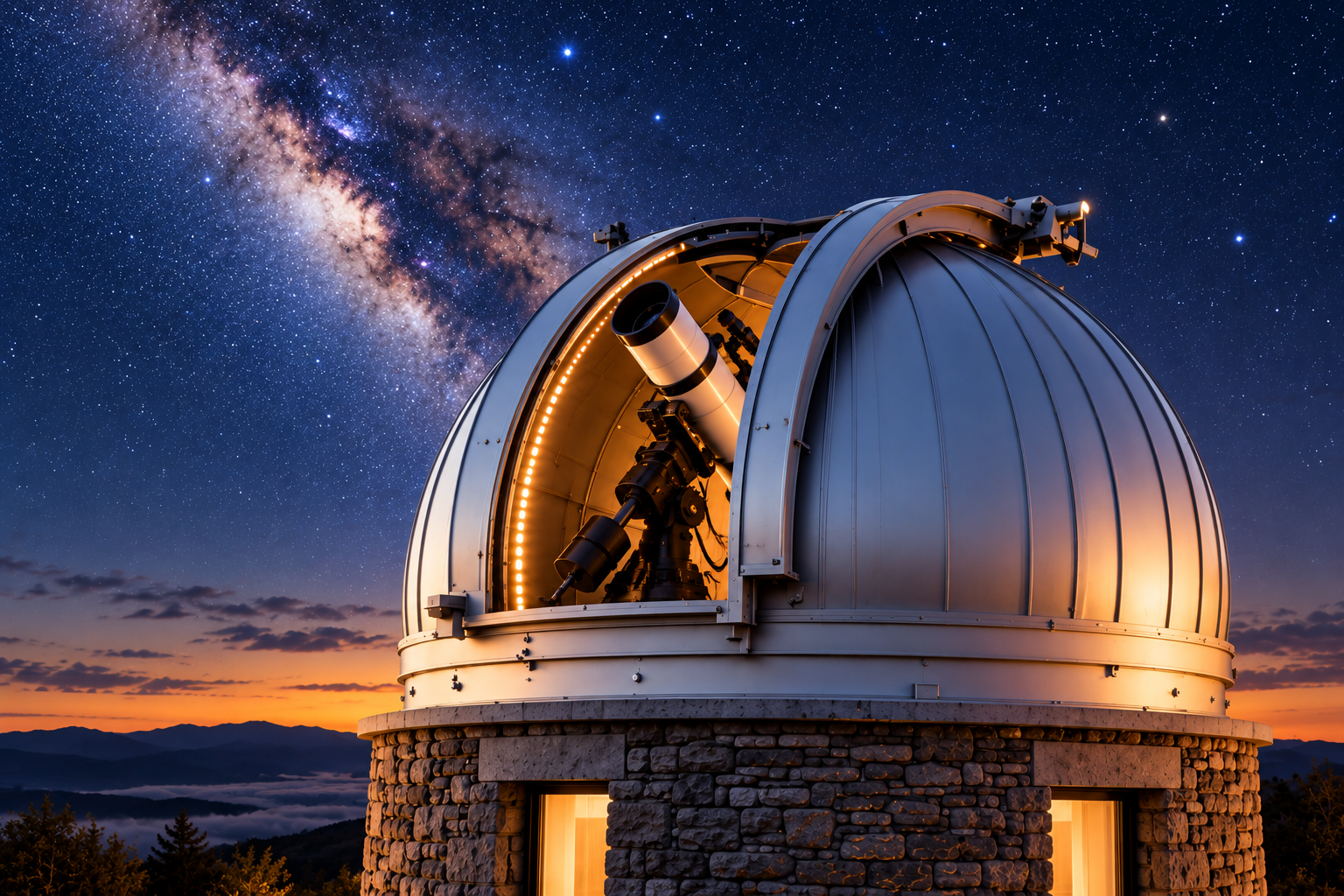
An educational observatory is a coordinated system of people, learning activities, astronomy equipment and shelter. The correct dome depends on the intended science—not just the building appearance.
Apollo NZ Global EditorialPublished 2026-11-02Project intelligence
Editorial guidance — final product, engineering, compliance and site requirements are confirmed for the actual project.
01
Decide the scientific purpose first
School astronomy may emphasise introductory observing, images and group teaching. University programmes may demand calibrated measurements, repeatable tracking, instrument changes and data workflows.
Set out age groups, staff capability, scientific objectives, night sessions, expected class sizes and who will operate and maintain the equipment.
02
Select a suitable site
Assess horizons, light pollution, wind exposure, vibration, weather, safe access and delivery constraints. A rooftop is not automatically the best telescope location.
Power, network reliability, accessible circulation, emergency procedures and long-term maintenance access all belong in the early site brief.
03
Choose enclosure geometry
Rotating domes, all-sky enclosures and roll-off roofs expose different amounts of sky and require different mechanical, travel and support clearances.
Request actual dimensioned diagrams, shutter and roof travel details, weather response and site engineering information. Concept illustrations are not evidence of final mechanical geometry.
04
Match telescope and mount
A telescope's aperture matters, but focal length, mount stability, field of view, tracking, cameras and controls can matter more to a learning or research programme.
Ensure the telescope points through the open shutter throughout its required observing positions. Confirm physical clearance and safe movement limits before designing the supporting pier.
05
Weather and remote-operation safety
A coordinated project may include dome movement, tracking, cameras, weather monitoring, remote access and safety interlocks.
Verify interfaces, service needs, emergency stops, power-loss recovery, available support and manufacturer documentation. Avoid assuming untested cross-brand interoperability.
06
Treat solar observing differently
Sun observation requires a specifically verified complete solar optical setup, trained operators and rigorous supervised use.
Never improvise solar filters. H-alpha and white-light products need model-specific safety evidence and approved procedures before any school use.
07
Create an institutional procurement checklist
Request enclosure drawings, material and load evidence, optical and mount specifications, control compatibility, operator training, maintenance, warranty and service arrangements.
ASTRAVYR can support coordinated equipment supply; project engineering, approvals, construction, installation and commissioning remain with qualified local teams.
Essential site functions work without analytics. With your permission, Apollo uses analytics to understand which products, guides and project pathways are useful. Analytics stays off until you allow it.