
Apollo NZ Global

Built Intelligence · Architecture & Specification · KERVYNT

Industrial Inspection Robots: How to Choose Quadruped and Autonomous Systems for Real Work

Inspection robotics is moving from demonstration videos into real operating environments. Industrial inspection robots can carry cameras and sensors into repetitive, difficult or potentially hazardous areas, helping teams gather comparable data without sending people to every location. Success depends on selecting a machine for a defined inspection workflow—not simply buying the most impressive robot.

Apollo NZ Global EditorialPublished 2026-11-10Project intelligence
Final product selection, technical documentation and local approval requirements are assessed for each project.
Industrial Inspection Robots: How to Choose Quadruped and Autonomous Systems for Real Work
01

Define the inspection mission first

Create a list of assets, routes, readings, inspection intervals and actionable outputs. A refinery patrol checking gauges is different from a tunnel mapping task or a warehouse thermal survey. Decide whether the robot must detect a condition, record evidence, trigger an alert or integrate with maintenance software.

The mission sets the mobility, payload, data and autonomy requirements. A wheeled robot may be cheaper and more energy-efficient on level floors; a quadruped may justify its complexity when steps, grating, uneven ground or obstacles are central to the route.

02

What sensors can inspection robots carry?

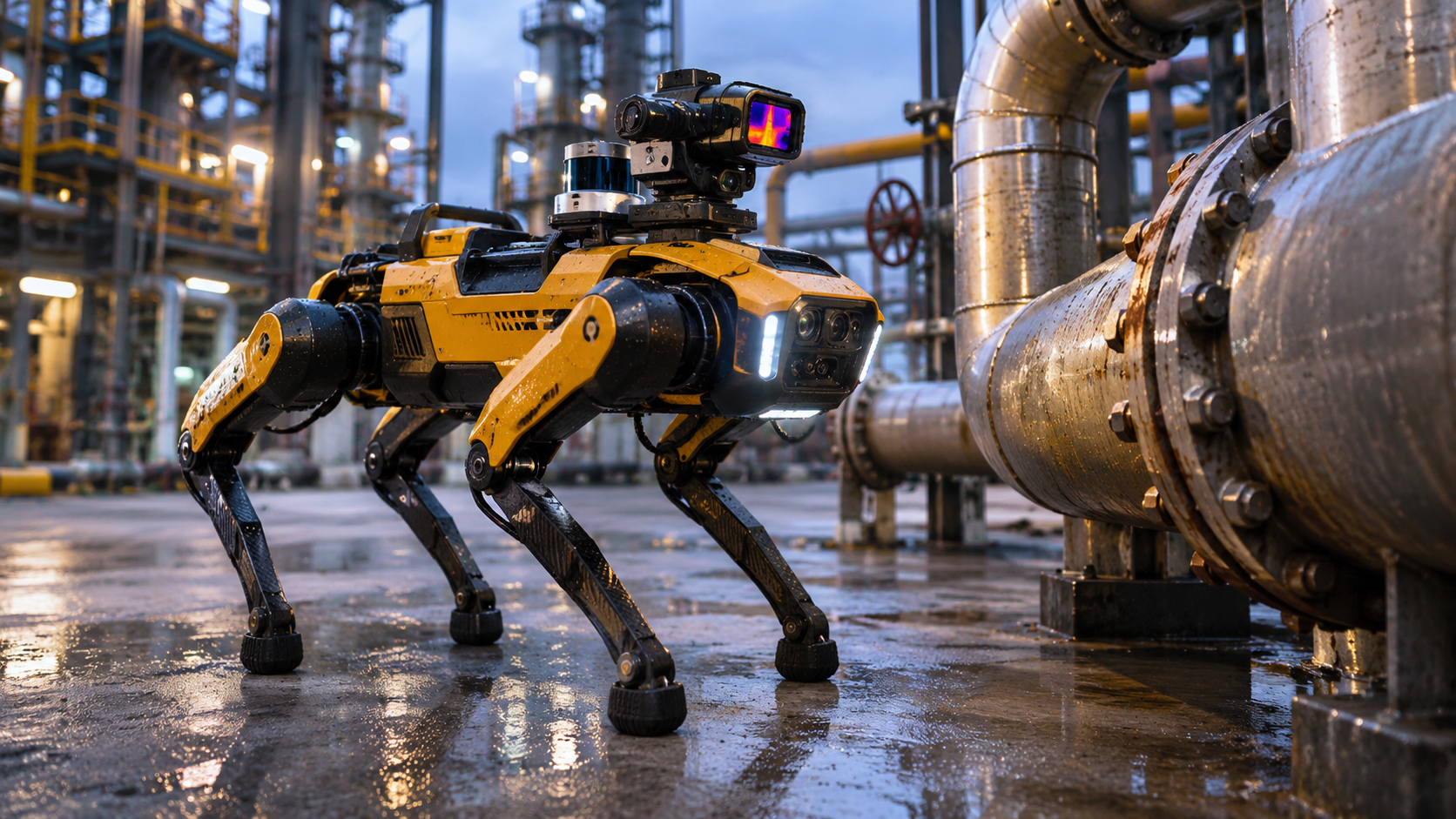
Common inspection payload classes include visible-light cameras, thermal cameras, LiDAR, microphones, acoustic imagers and selected gas sensors. These devices measure different things. A thermal camera can highlight temperature differences; it does not independently establish the root cause of overheating.

Ask for sensor accuracy, calibration documents, detection limits, repeatability, field of view and mounting geometry. Where a reading could trigger a safety or regulatory decision, establish a validation process and confirm whether the complete robot-plus-sensor assembly is certified for that environment.

03

Remote control, assisted operation and autonomy

Teleoperation allows a person to steer from a safe or convenient location. Assisted autonomy may handle balance and obstacle avoidance while a person selects the path. Higher autonomy may follow mapped routes, return for charging and generate repeat inspection records. These capabilities should be individually demonstrated.

Ask what happens when the robot loses localisation, Wi-Fi, mobile coverage or GPS. Assess stair performance, fall recovery, collision avoidance, safe stopping, route changes and docking. For operations involving people, include clear pedestrian interaction rules.

04

Industrial site readiness and hazardous environments

Industrial sites create heat, dust, oil, water, electromagnetic interference and uneven flooring. Review ingress protection, environmental operating range, battery endurance under full payload, grip on wet surfaces, corrosion resistance and ease of cleaning.

Do not assume that a rugged-looking robot is approved for explosive atmospheres. ATEX, IECEx or other hazardous-area requirements must be established where applicable, for the complete fitted system. Site operators should also evaluate cyber security, data ownership, access controls and software support.

05

How to measure return on investment

Start with a pilot covering a representative route and a small number of repeatable inspection points. Record mission completion, quality of measurements, time spent by technicians reviewing exceptions, intervention frequency and charging needs.

Compare robotic inspection with the current process, including any necessary human confirmation work. Value can include more frequent data collection and improved staff allocation; avoid promising labour savings without evidence from the specific operation.

06

Procurement checklist for robotics buyers

Submit route length, terrain, steps, slope, conditions, sensor list, operating schedule, indoor/outdoor coverage, communications architecture, required reports and preferred integration format. Request a demonstration showing the full workflow, not only locomotion.

Through KERVYNT, Apollo NZ Global can assess relevant robotics and autonomous-system supply enquiries. Exact product availability, software features, certifications and service arrangements must be confirmed for each proposed configuration.

07

Frequently asked questions

Is every quadruped an autonomous inspection robot? No. Many platforms are remotely controlled or offer limited assisted functions. Repeatable inspection autonomy, data analysis and automatic docking are separate capabilities.

Can an inspection robot enter hazardous gas areas? Only when the complete proposed equipment is suitably certified and accepted for the particular classified area. A general industrial robot rating is not sufficient.

What is a sensible first pilot? One defined route, several measurable inspection points, a clear reporting standard and a limited trial period provide a useful basis for assessing reliability and data value.

Move from intelligence to project

Apply the thinking to the actual brief.

Open KERVYNT — Robotics & Autonomous Systems Send a project brief
Project