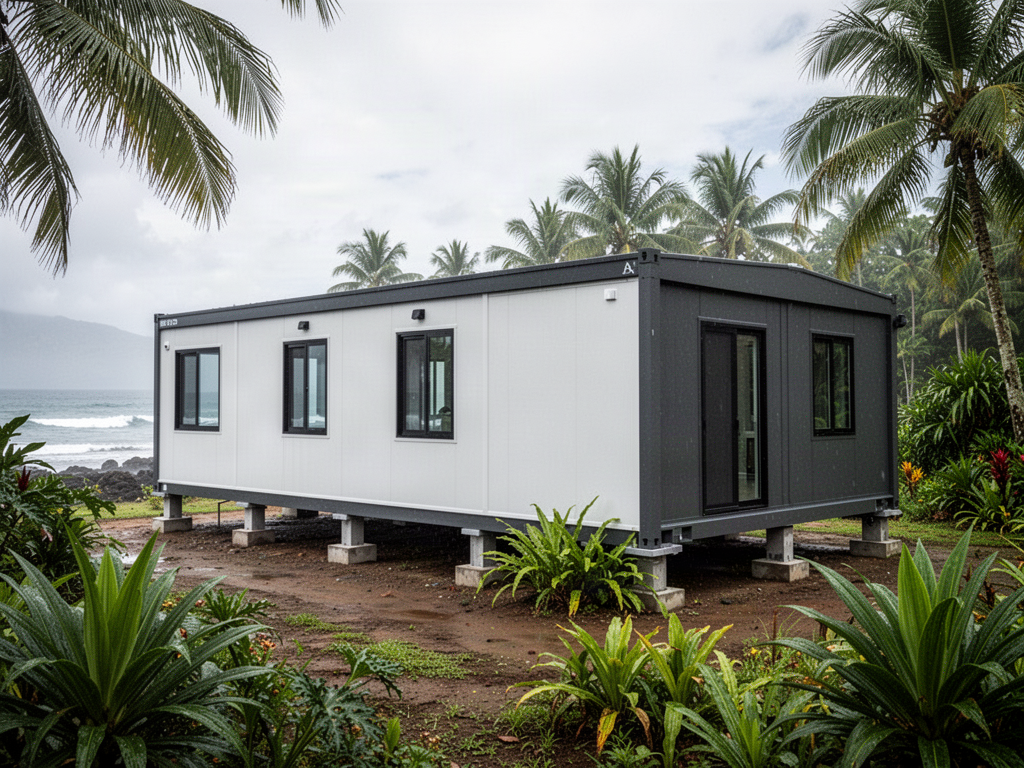
01Salt exposure changes the material strategy
The published Montara pathway includes galvanised and coated structural steel, a zinc-rich epoxy primer, polyurethane marine/UV-resistant topcoat and 316L stainless critical hardware. Coatings still need inspection because cut edges, scratches, fasteners and water traps remain vulnerable points.
Heavy rain tests joints and drainage
Expandable joints, door and window gaskets, service penetrations and roof drainage all matter in driving rain. Integrated building drainage does not replace a site stormwater plan that keeps runoff from collecting under or against the structure.
High-wind performance is site-specific
There is no single universal wind number that should be assumed for every Montara model and destination. Final wind, cyclone, uplift, sliding and overturning requirements depend on the site exposure, configuration, foundation and local engineering pathway.
Maintenance has to suit the location
Remote coastal projects benefit from simple inspection routines, access to seals and drainage, appropriate washing of salt deposits and a realistic spare-parts plan. Durable specification reduces risk but does not eliminate maintenance.