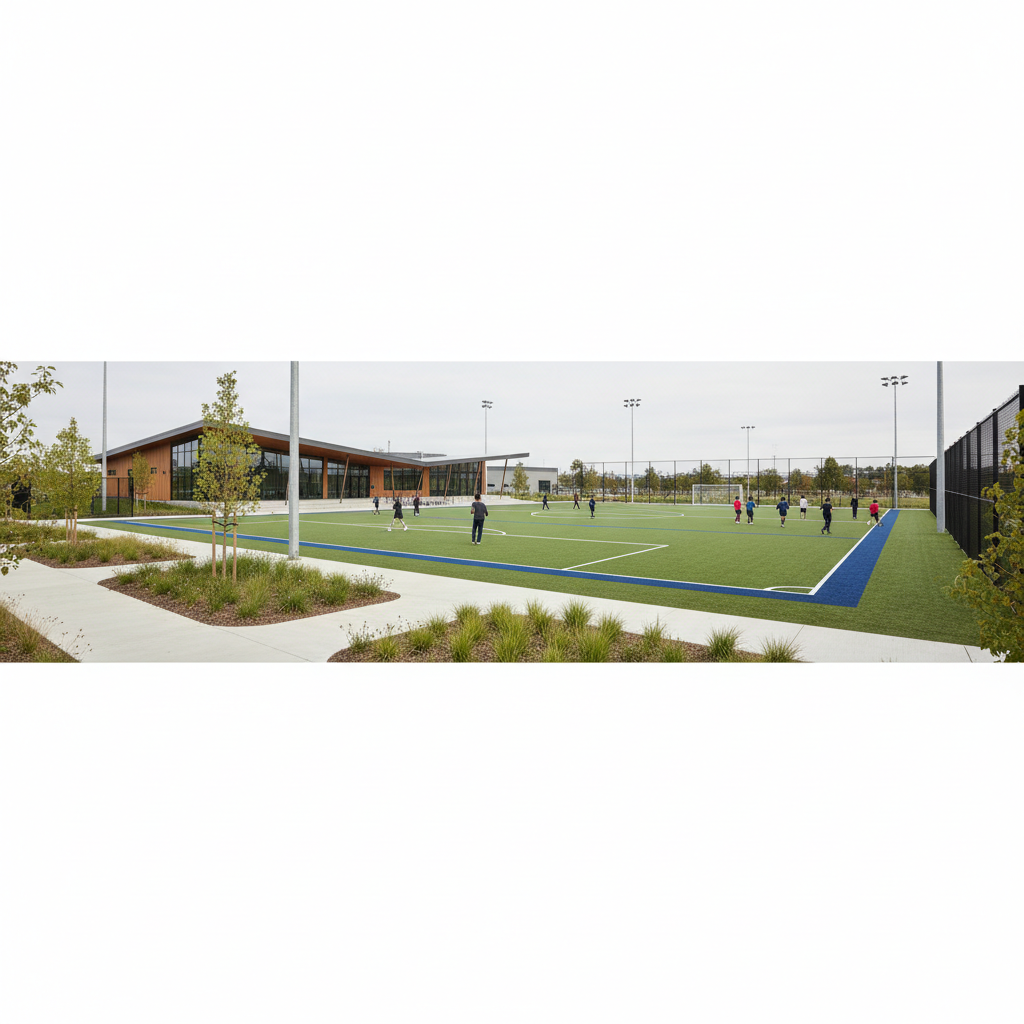
01Use the actual site, not a regional label
Australia, New Zealand and Pacific Island projects can vary significantly within the same market. Record city or island, orientation, shade, rainfall, coastal exposure and operating hours before making climate assumptions.
Treat UV and heat claims as evidence-based
Do not publish or specify generic UV-hour or heat-resistance claims unless they are tied to the exact offered product and a clear test method or current manufacturer document.
Coordinate rainfall with drainage and maintenance
High rainfall affects base drainage, access, infill behaviour where applicable, cleaning and downtime. Surface permeability alone does not solve a poor field drainage system.
Consider user comfort and operating pattern
Field temperature, time of day, shade around waiting areas, drinking water and spectator conditions may affect facility planning even when the turf itself is technically suitable.
Include freight and storage in harsh-climate projects
Remote or island deliveries may need protected storage, staged installation and spare materials. Packaging and site storage should keep rolls and components protected before installation.