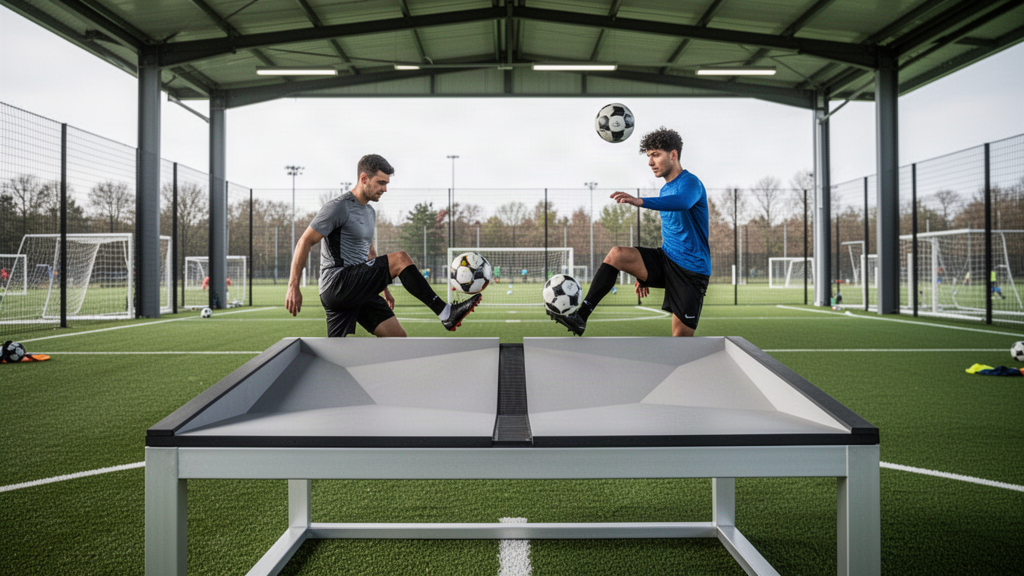
01Define whether the priority is training or recreation
Clubs and academies usually value repeat technical touches, coaching flow and multiple stations. Resorts and public spaces value intuitive play, durability and simple operation.
The project brief should establish that operating model before choosing the exact table or surrounding layout.
Use independent product geometry and positioning
Apollo treats Football Skills Table Systems as an independent training and social-play category. A third-party name, official format or proprietary association should only be used where a documented authorised relationship applies.
The exact panel shape, dimensions and performance characteristics therefore come from the selected system's own technical documentation rather than assumptions based on another brand.
Plan the playing envelope around movement
Players need room to move, receive and return the ball from both sides of the table. Walls, fencing, furniture, planting and neighbouring activities should remain outside that active envelope.
Multiple-station academy layouts also need enough spacing to prevent balls and players from one drill entering another station.
Match materials and anchoring to the environment
Indoor, covered and fully exposed outdoor installations need different approaches to frames, top surfaces, fixings, UV exposure, corrosion and cleaning.
Freestanding systems may suit controlled indoor use, while public or outdoor projects may require a more permanent anchoring strategy.
Plan inspection and lifecycle for public-facing use
Playing panels, divider elements, fixings and frames should be easy to inspect and maintain. Public and hospitality installations benefit from robust materials and simple replacement routes.
Apollo confirms exact dimensions, installation and product suitability against the selected equipment before supply rather than publishing generic performance claims.