Zone Zero is a term increasingly used for the first roughly five feet around a structure and attached elements. The concept is simple: the closer combustible material sits to the building, the easier it can be for a small ember ignition to become a structure fire.
Planning guidance — final supplied configuration remains project-specific.
01
The immediate zone gets first attention
NFPA Firewise material treats the home and immediate 0–5 foot area as the highest-priority ignition zone. California's defensible-space framework also uses a Zone 0 concept closest to the structure.
Exact legal requirements vary. Treat the distance as a planning concept unless the local code or fire authority adopts a specific rule for the project.
02
Look for small combustible bridges
Mulch, leaves, dry grass, stored timber, welcome mats, furniture cushions, planters and fence connections can all sit within this immediate zone.
The useful task is to reduce or relocate easy ignition sources and keep the area inspectable and maintainable.
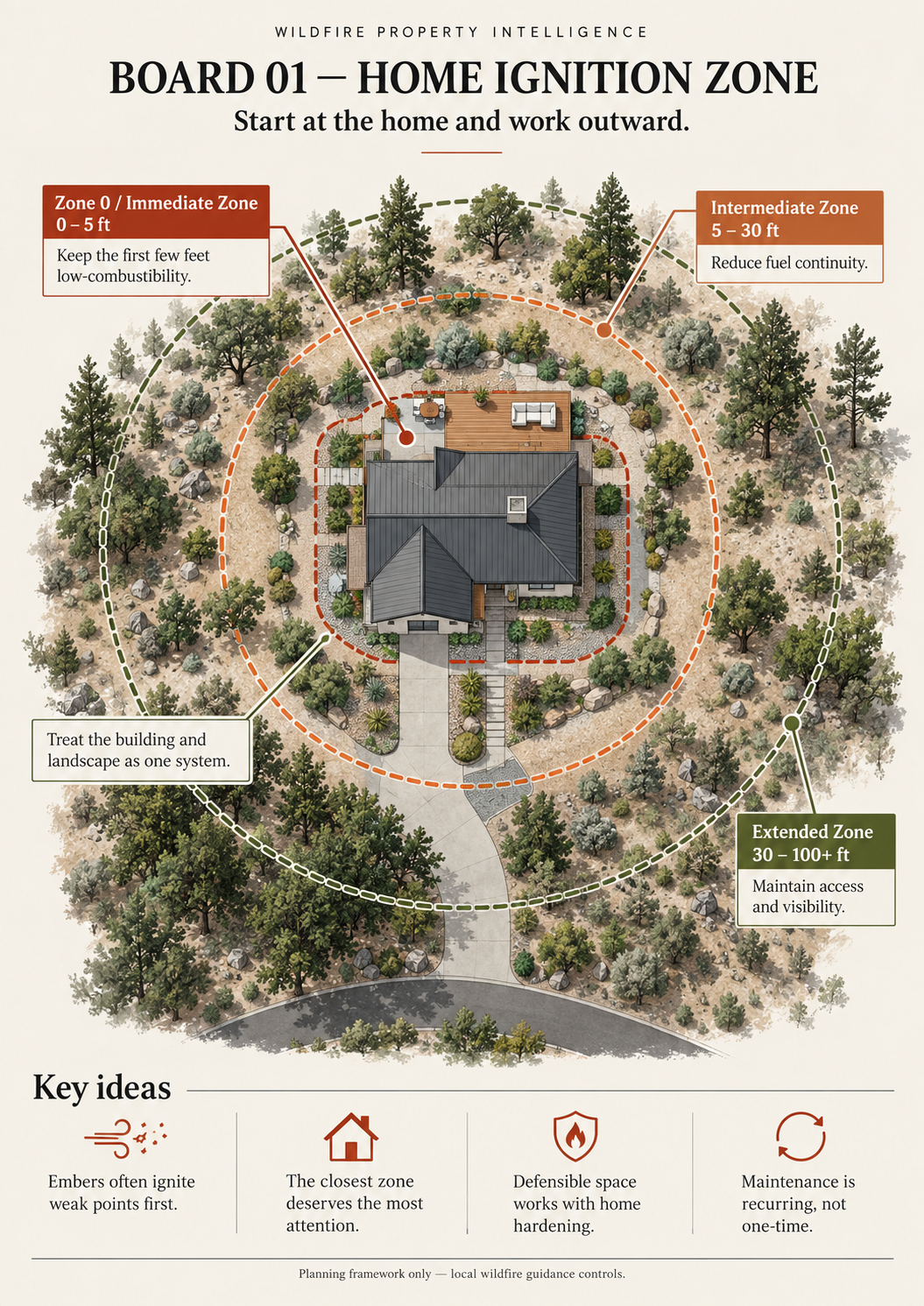
Wildfire visual guide · Board 01
Home Ignition Zone
Start at the home and work outward.A visual overview of the house and surrounding ignition zones, with the first few feet around the structure treated as the highest-priority maintenance area.
Suggested citationApollo NZ Global. What Is Zone Zero Around a Wildfire-Exposed Home?. apollonzglobal.com/knowledge-centre/fire-fuel-live-cooking/what-is-zone-zeroReference & source policy
Essential site functions work without analytics. With your permission, Apollo measures which products and project pages are useful. Analytics stays off unless you allow it.