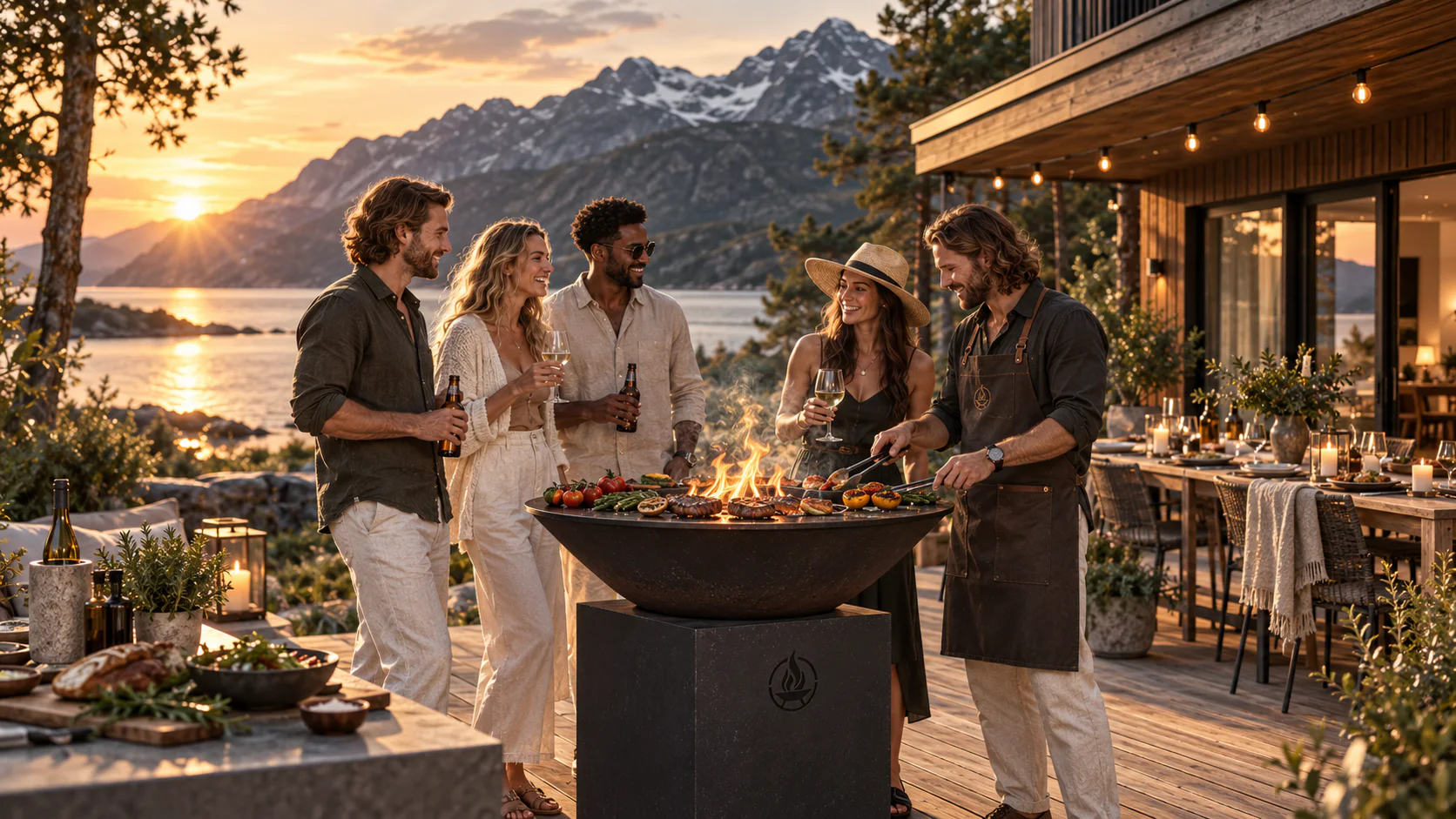
Understanding Live Fire: Fuel, Air, Heat & Control
A useful fire is controlled combustion, not simply a large flame. Fuel condition, airflow, fire size, ember development and the surrounding environment all affect how cleanly, predictably and comfortably an outdoor wood fire behaves.
Planning guidance — final supplied configuration remains project-specific.
01
Fire needs fuel, oxygen and enough heat
A wood fire becomes easier to manage when the fuel is dry, pieces are sized for the stage of the burn and air can move between them. Starving a fire of air or loading wet fuel tends to increase smoke and reduce useful heat.
Start small, establish a stable flame and coal bed, then increase fuel gradually instead of trying to create maximum flame immediately.
02
Flame and embers do different jobs
Visible flame delivers fast radiant and convective heat. A mature coal bed provides steadier energy and is often more useful for plancha cooking, roasting and controlled oven heat.
Fire management is therefore a sequence: ignition, flame development, coal formation, cooking or gathering phase, and controlled shutdown.
03
Moisture changes the whole burn
Energy is wasted driving water out of wet wood before the fuel can burn effectively. Damp fuel generally creates more smoke, slower ignition and less predictable heat.
Dry, seasoned firewood is the default starting point for cleaner outdoor wood burning. A moisture meter can be useful where consistent cooking or low-smoke operation matters.
04
The weather is part of the fire system
Wind can increase combustion, move sparks and embers, redirect smoke and change how people experience radiant heat. Dry vegetation and low humidity can make the consequences of escaped embers much more serious.
Check current local restrictions and fire-weather information before lighting any outdoor fire. In regions that use Red Flag Warnings or similar alerts, treat them as a strong stop-and-review signal rather than normal operating conditions.
05
Control matters more than spectacle
A smaller stable fire is usually easier to cook with, easier to supervise and easier to extinguish than an oversized flame. Build the fire for the job: gathering, plancha cooking, pizza, roasting or retained-heat cooking.
Always follow the exact product instructions and local requirements. Apollo educational material does not override burn bans, local fire rules, appliance clearances or site-specific professional advice.
Reference sources
Official guidance behind this resource.
Use these sources alongside the exact product instructions and the rules that apply at the project location.
Essential site functions work without analytics. With your permission, Apollo uses analytics to understand which products, guides and project pathways are useful. Analytics stays off until you allow it.