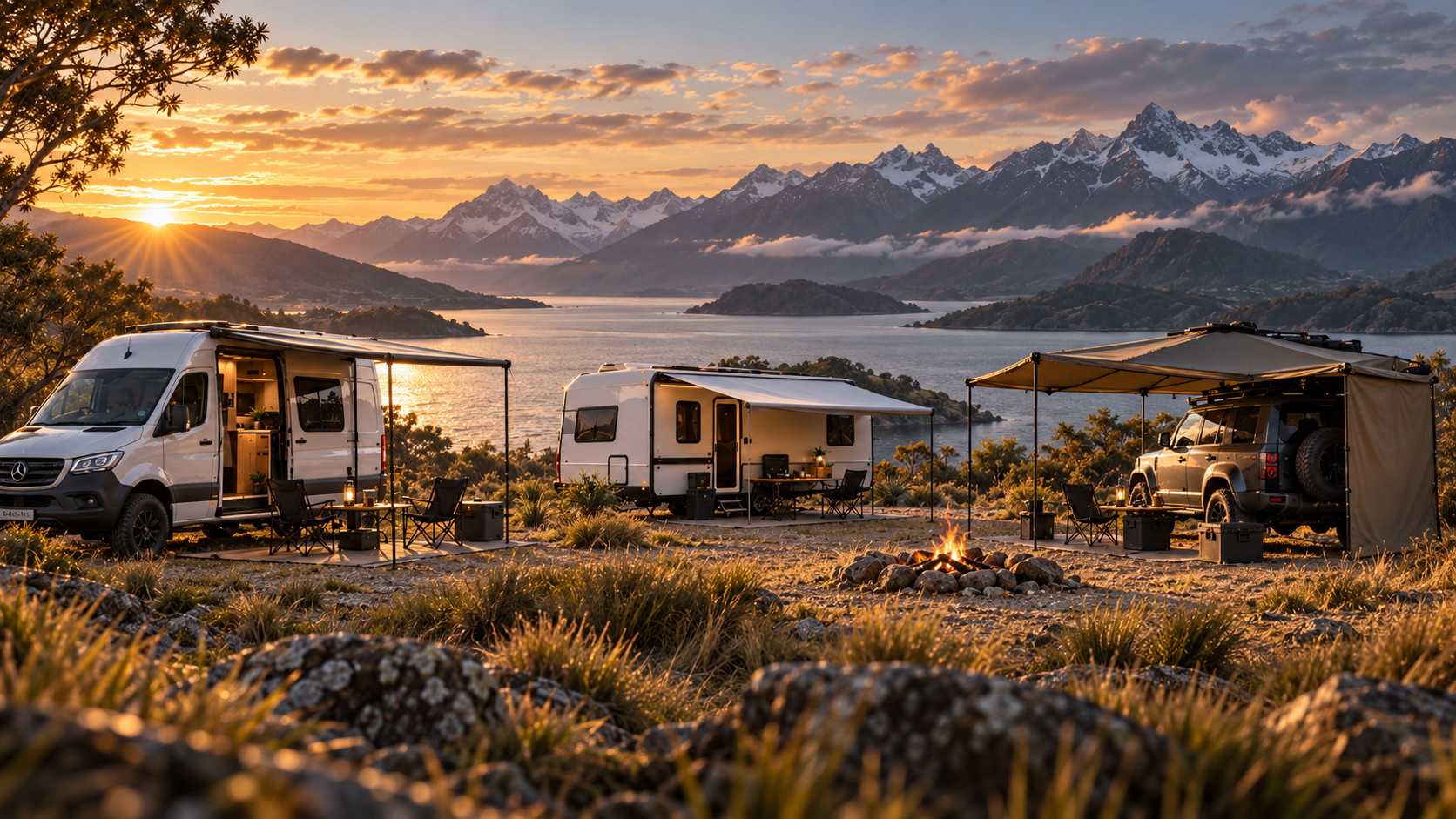
A vehicle awning should be selected around the shelter job and the way people move around the vehicle. VÆRDR separates straight shade, streamlined touring, wraparound coverage, enclosed rooms and privacy so the shelter follows the trip rather than becoming another accessory to carry.
Planning guidance — final supplied configuration remains project-specific.
01
Start with the exact vehicle and mounting zone
Record make, model, year, body style, roof or side mounting arrangement and existing equipment. Doors, tailgates, pop-tops, rooftop tents and roof racks can all affect the available mounting and operating space.
02
Choose the shelter job first
Straight side shade suits fast stops and a simple protected zone. A legless or streamlined pathway can reduce camp hardware where the selected system supports it. A 270-degree system creates broader side-and-rear coverage, while room and privacy products solve enclosure rather than overhead shade alone.
03
Check the deployed circulation
Open every important door and hatch on the plan. Check the rooftop-tent ladder, rear cooking or storage access, passenger movement and any guying or support zones. Shelter is only useful if it does not block the parts of the vehicle used most often at camp.
04
Match setup complexity to camp duration
An overnight touring stop may place more value on fast deployment and pack-down. A multi-day base camp may justify larger coverage, room panels and more defined outdoor living space.
Manual, lighting, electric or selected control pathways should be confirmed against the exact VÆRDR product rather than assumed across the full range.
05
Use weather guidance as operating guidance
Sun, rain, coastal exposure and wind all affect how shelter is used and maintained. A vehicle awning is a deployable shelter, not a permanent storm structure, and users need the operating limits and pack-down guidance for the supplied configuration.
Final mounting hardware, dimensions, fabric, controls, electrical options and operating limits are confirmed against the quoted production configuration.