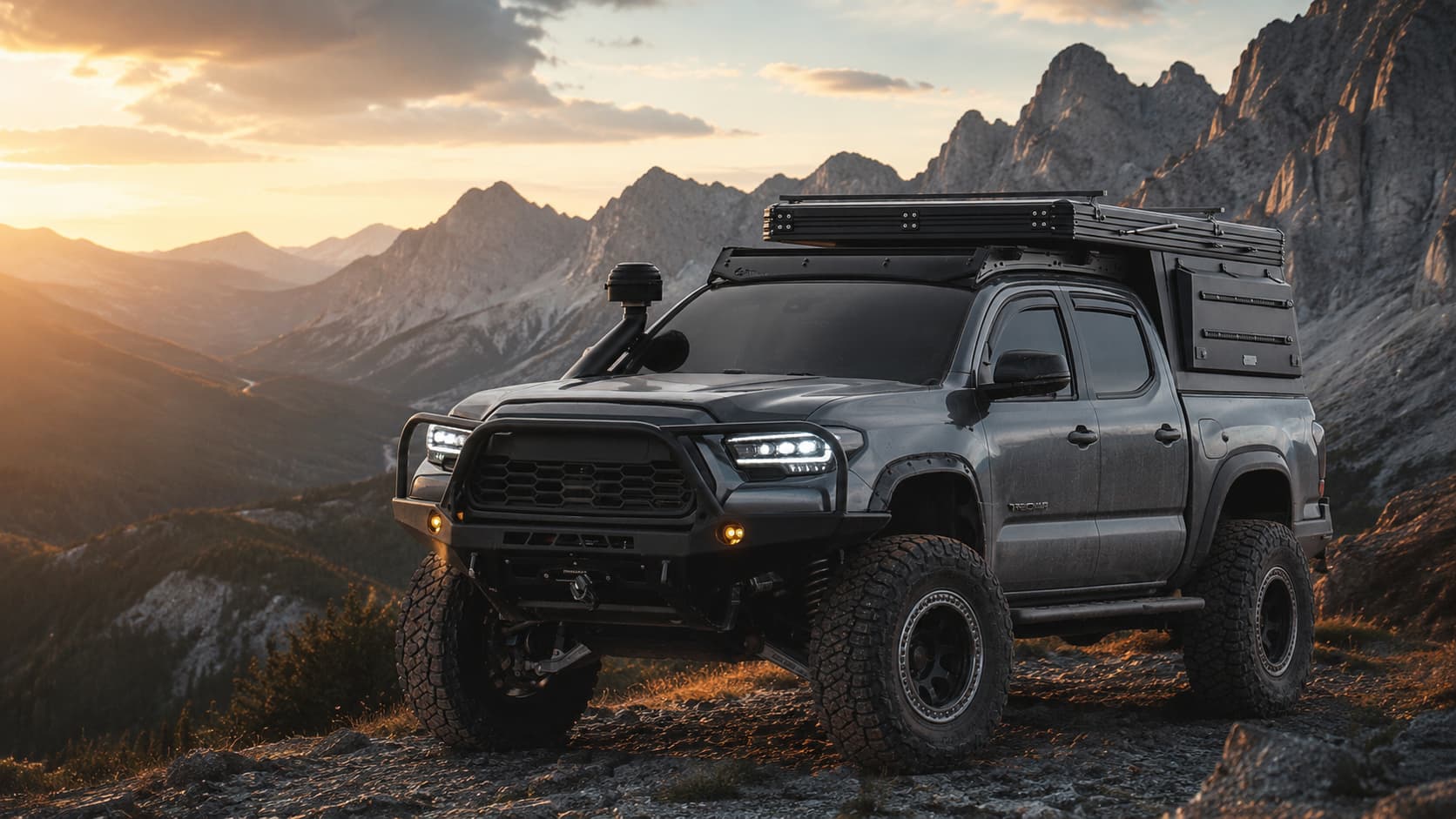
01Fitment starts with exact vehicle data
Record make, model, year, market specification, cab style and bed or tray length. Model-year and market changes can alter dimensions, body details and mounting interfaces even when the vehicle name stays the same.
A current fitment list is a screening tool rather than a universal guarantee. The supplied configuration is confirmed against the actual vehicle before quotation.
Map what is already on the pickup
Bed liners, sports bars, racks, drawers, electrical equipment, spare-wheel arrangements and other accessories can affect installation or access. Send clear photographs of the bed or tray and relevant existing hardware with the fitment request.
Protect payload for the finished vehicle
The canopy is only one part of the eventual load. Rooftop camping equipment, racks, fridge, water, battery, tools, recovery gear, luggage and passengers all consume payload.
Plan the likely finished touring system before adding permanent hardware so the vehicle owner can review the completed configuration against the relevant vehicle limits and road-use requirements.
Declare rooftop use at the beginning
If the canopy may carry a rooftop camping section, tent, awning or other roof-mounted equipment, include that intention in the first brief. Rack positions, access, overall height and the way loads are carried can influence the most suitable configuration.
Keep fitment and local vehicle compliance separate
Apollo / Outdoor Frontier confirms the supplied TerraRise product configuration and current fitment pathway. Local fitting, vehicle modification requirements, certification, payload compliance and destination road-use rules remain vehicle- and market-specific responsibilities unless separately arranged by the relevant project parties.