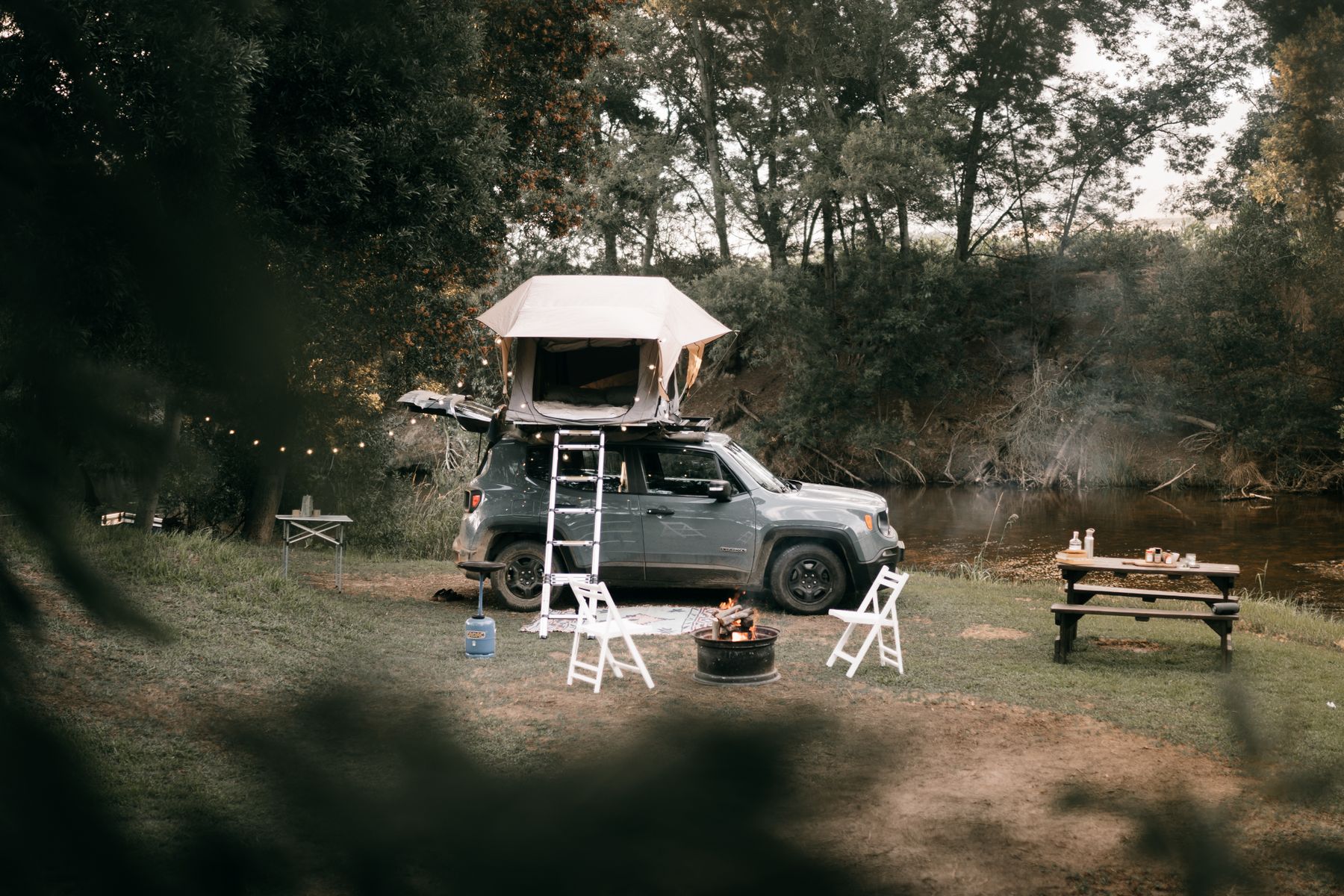
Choosing a camper or caravan should start with the vehicle and the journey, not a floorplan. RIGVAR's developing camper and caravan pathway is organised around four format decisions: carry the accommodation on the pickup, tow a compact sleeping-first trailer, move into a fuller hybrid caravan, or combine accommodation with substantial adventure cargo.
Planning guidance — final supplied configuration remains project-specific.
01
Decide whether the accommodation rides on the vehicle or behind it
A pickup-mounted camper keeps the living system on the vehicle and removes the need to tow, but vehicle payload, mounting, tray or tub geometry and centre-of-gravity considerations become central. A towable separates the accommodation from the vehicle, but introduces towing limits, towball load, trailer mass and manoeuvring into the brief.
This first decision usually narrows the range more effectively than comparing interior features.
02
Match the format to the number of travellers and how they live at camp
A compact two-person towable can prioritise sleeping and simple outdoor living. A couples or family hybrid pathway can justify more enclosed living, storage, kitchen and bathroom requirements. The important question is not maximum berth count; it is how the actual travel party sleeps, cooks, stores equipment and moves through the camp day after day.
03
Treat payload and towing as complete-system limits
Vehicle payload, towing capacity, towball limits and trailer ratings apply to the finished travel setup, not an empty brochure specification. Water, batteries, gas, food, bikes, motorcycles, recovery equipment, luggage and accessories all consume the available margin.
Final weights and ratings must be confirmed against the selected production configuration before quotation or order.
04
Let the route shape the living system
Frequent one-night stops can reward simpler deployment and fewer camp systems. Longer stays can justify more enclosed living space, services and storage. Rougher road use, remote travel, ferries, urban parking, campsite access and destination-country requirements can all alter the practical choice.
Describe the trip pattern before asking for a model recommendation.
05
Cargo-led travel needs a different brief
When motorcycles or other substantial equipment are part of the trip, usable cargo capacity, floor and ramp requirements, tie-down strategy and the effect of cargo on the loaded trailer become central. Accommodation must be planned around the equipment rather than added after the cargo layout is fixed.
RIGVAR's Cargo + Adventure pathway remains an early-enquiry format until production specifications and verified capacities are available.
06
Use the early enquiry to qualify the format before the model
Send the exact vehicle or tow vehicle, traveller count, whether you want to tow, typical trip duration, intended road use, cargo or equipment, sleeping priorities, bathroom and kitchen needs, destination and preferred timing.
Apollo can then narrow the format pathway. Confirmed model pages will follow only once production dimensions, finished weights, imagery, technical documentation, local suitability and service pathways are verified.
Essential site functions work without analytics. With your permission, Apollo uses analytics to understand which products, guides and project pathways are useful. Analytics stays off until you allow it.